Searching for a plumbing press tool in San Jose and Surrounding Areas, CA usually means one of two things: you're pricing one out for a DIY repipe, or you're trying to understand what your plumber is using and why it costs what it does. Either way, the market is crowded with brands, jaw sizes, and price tags that don't mean much without context. This guide breaks down what these tools do, how to choose one, what it actually costs to buy or rent locally, and when it's smarter to just call a licensed plumber.
What Is a Plumbing Press Tool?
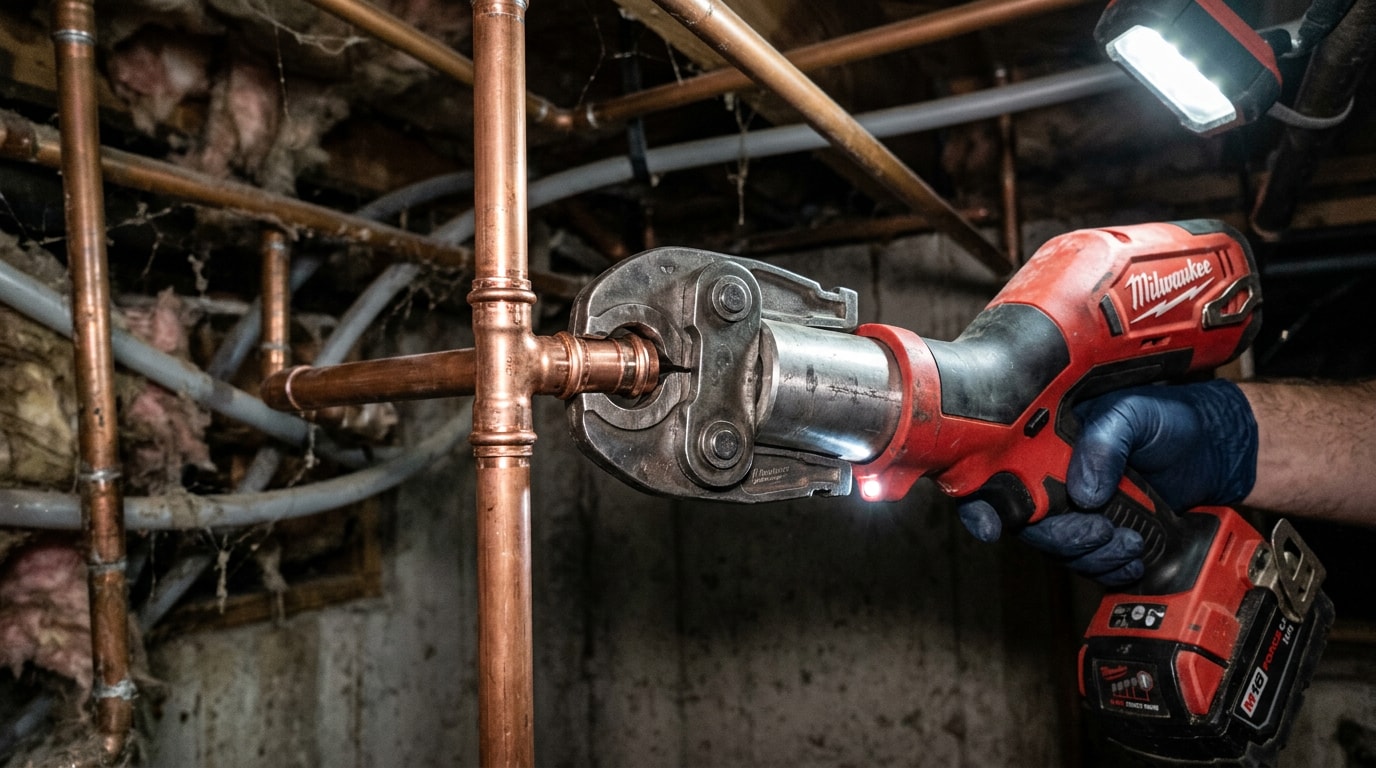
A press tool, also called a pipe press tool or press fitting tool, is a hand-operated or battery-powered device that joins pipes and fittings without welding, gluing, or soldering. It clamps a metal fitting onto a pipe with high-pressure force, creating a watertight seal in seconds rather than minutes.
Most copper press fitting work today relies on this method because it's faster and doesn't require an open flame. These tools generally fall into a few categories:
- Manual press tools — hand-squeezed, no battery required
- Battery-powered (cordless) press tools — hydraulic pressure triggered by a trigger pull
- Standalone hydraulic units — used for larger commercial pipe diameters
Each type serves a different scale of job, which we'll cover further down.
Renting vs. Buying: What San Jose Homeowners and Pros Actually Do
Before you buy a $2,000 tool for a one-time repair, know that equipment rental yards across Santa Clara County stock cordless press tools by the day, week, or month, usually bundled with a set of common jaw sizes, a battery, charger, and carrying case. That makes renting the more sensible option for most homeowners tackling a single repipe or fixture swap.
In our own dispatch experience across San Jose and the surrounding cities, calls that start as a DIY press-tool rental often end with a licensed plumber finishing the last few joints so the work passes inspection. Pressed connections are only leak-free if the pipe is cut square, deburred properly, and the correct jaw is matched to the fitting, which is where a lot of first-time users run into trouble.
If you're weighing the cost of a rental against hiring it out entirely, our plumbing installation team can walk you through both options before you commit to either one.
How Does a Plumbing Press Tool Work?
A plumbing press tool works by clamping special jaws around a fitting and pipe, then applying controlled hydraulic pressure that compresses a metal ring inside the fitting onto the pipe wall, forming a permanent, leak-resistant seal without heat or solder.
The fittings used in this process contain an internal ring, usually stainless steel or a similar alloy, that the tool's jaws crush into the pipe surface. This creates a crimp fitting connection: mechanically sound and sealed tight enough to hold water supply pressure for decades.
A typical install sequence looks like this:
- Measure and cut the pipe to the needed length
- Smooth any rough or burred edges
- Slide the fitting onto the pipe
- Position the press tool's jaws over the fitting
- Trigger the tool to complete the press
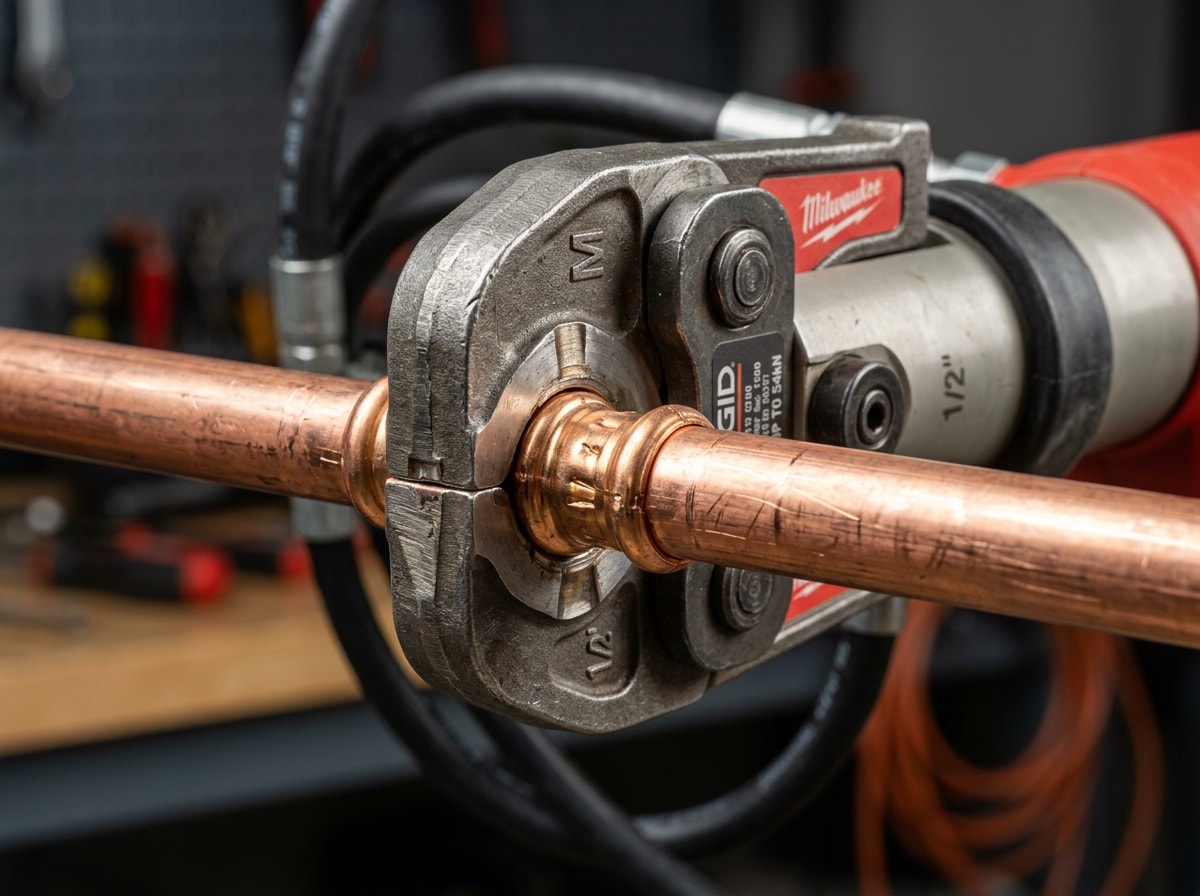
This flameless pipe joining method is popular precisely because it skips the torch. That said, this is a general mechanism explainer, not step-by-step DIY instruction. Pipe sizing, fitting selection, and code compliance vary by project, so an actual install is best left to a licensed plumbing repair plumber familiar with local requirements.
How to Choose a Plumbing Press Tool
Picking the right tool comes down to the kind of work you do, the pipe sizes you handle, and how much you want to spend on upkeep.
What Type of Plumbing Connections Do You Handle Most?
Start by considering whether your work leans toward new construction or repair jobs, or a mix of both. For new-build work, a press tool offers speed since connections go one after another without waiting on solder or adhesive. Repair-focused work often values portability and quick setup in tight, already-finished spaces over raw speed.
What Pipe Sizes and Materials Do You Work On?
Press tools handle a range of pipe diameters, typically from ½ inch up to 4 inches depending on the model, but the tool itself isn't what determines compatibility. The jaws are what matter.
A so-called "copper press tool" is really a tool-plus-jaw combination, and jaw compatibility depends on matching the jaw set to both the pipe material and diameter. Viega's own tool matrix, for example, lists which jaw classes work with which of its fitting systems and in what size range.
Most homeowners get by with half-inch or three-quarter-inch jaws for basic repairs. Professionals working commercial jobs usually keep a wider jaw inventory on hand. Here's a rough standard vs. compact press tool comparison for 2026:
| Feature | Compact Press Tool | Standard Press Tool |
|---|---|---|
| Pipe size range | ½"–1¼" | ½"–4" |
| Typical weight | 4–6 lbs | 7–10 lbs |
| Typical 2026 price | $600–$1,400 | $1,800–$4,000 |
Prices vary by retailer and whether the kit includes a battery, charger, and jaw set. For exact jaw-to-pipe compatibility, always check the manufacturer's press-fitting system specifications before buying or renting.
Maintenance and Battery Life
Many modern cordless press tools include low-battery alerts, service-life counters, and built-in diagnostics that flag when the tool needs servicing. If you're choosing between cordless models, battery life and how easy maintenance is should factor into the decision, especially for daily-use contractors.
Top Plumbing Press Tools Worth Knowing
Here's a quick-reference roundup of the models most often mentioned for residential and light-commercial press tool work, along with realistic San Jose availability.
Milwaukee M12 Force Logic Press Tool
The Milwaukee M12 Force Logic suits fast, repeated pipe installations. It's cordless, so plumbers can work without trailing wires, and its lighter weight helps crews get through large construction projects without fatigue setting in.
Ridgid RP 241 Compact Tool
The Ridgid RP 241 earns its keep in confined spaces. Its compact frame makes overhead and tight-wall connections easier, and smaller tools like this one tend to move smoothly across busy, multi-trade job sites.
iCrimp 1632AF Manual Copper Press Tool
The iCrimp 1632AF is a hand-powered option with no battery or charger required. It's a practical, lower-cost pick for homeowners tackling basic house plumbing fixes rather than full-scale installs.
Rothenberger Romax Compact TT
The Rothenberger Romax Compact TT can be operated one-handed, and its evenly distributed weight gives solid control when working inside narrow wall cavities.
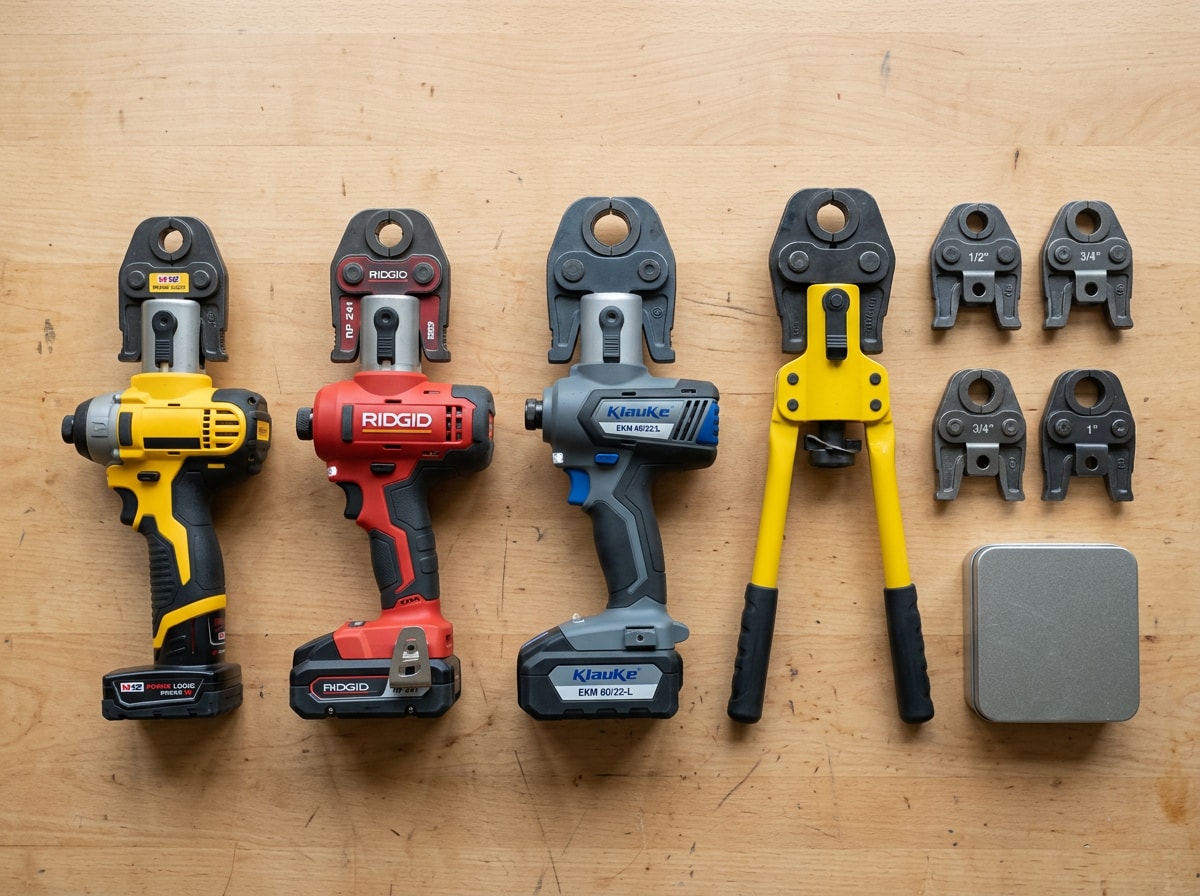
For San Jose area buyers: cordless models like the M12 Force Logic and RP 241 generally run in the $1,200–$2,800 range to buy outright, and local equipment-rental yards in Santa Clara County often carry comparable cordless press tools by the day or week, which is worth checking before committing to a purchase for a one-off repiping job. Manual tools like the iCrimp 1632AF are cheaper to own outright and rarely available to rent, since they're inexpensive enough to just buy.
If you'd rather hire out the work entirely, our guide on plumbing repiping services breaks down what a professional repipe actually costs compared to a DIY attempt.
Benefits of Using a Plumbing Press Tool
Speed and Efficiency
Press connections cut installation time significantly because there's no solder to cool or adhesive to cure. This time-saving method lets plumbers move through multi-fitting jobs noticeably faster than traditional soldering.
Leak-Proof, Durable Connections
Press connections tend to be stronger and more consistent than soldered joints, which reduces the odds of a connection failing down the road. That durability translates into fewer callbacks and lower long-term maintenance costs.
Safety: No Open Flame
Because no torch is involved, flameless plumbing eliminates fire hazards on the jobsite. This matters on properties where OSHA's welding, cutting, and brazing rules would otherwise require a hot-work permit and a fire watch. It also protects nearby insulation, framing, and other combustible materials during the work.
Beyond these three points, press systems also offer solid versatility across copper, PEX, and stainless pipe, plus generally lower upkeep than soldered systems over a building's lifetime.
Common Applications of a Plumbing Press Tool
A press tool works across several pipe materials, including copper, stainless steel, and PEX tubing, which is part of why its use has expanded across residential, commercial, and industrial plumbing. Common uses include:
- Water supply systems — potable water lines in homes and multi-unit buildings
- HVAC systems — chilled and hot water lines for heating and cooling equipment
- Fire sprinkler systems — fast, flame-free installation for fire-protection piping
California's plumbing code is adopted from the national model code published by IAPMO, and press-fit systems are recognized for potable water and fire-protection applications under it, though local jurisdictions can have additional inspection requirements. For help finding a qualified installer, visit our San Jose and Surrounding Areas, CA service page.
We also field calls from homeowners outside San Jose proper who are comparing the same tools. If you're in Santa Clara, Sunnyvale, Campbell, Los Gatos, Palo Alto, Menlo Park, or Redwood City, the same tool advice and local availability notes above still apply.
Should You Buy the Tool or Call a Plumber?
A press tool only pays for itself if you have repeat work lined up. For a single repair or a small remodel, renting or hiring it out is almost always cheaper once you account for the jaw sets, battery, and the learning curve on your first few joints.
Pressed connections also need to pass the same inspection as soldered ones. A joint pressed with the wrong jaw, on a pipe that wasn't deburred, or without full insertion depth can look fine and still fail a pressure test. If you want it done once, correctly, and ready for inspection, request a free estimate and we'll scope the job before any tool comes out of the truck.
At Gomez Sewer and Drain, our plumbers carry pro-grade press tools on every service vehicle, so repiping, fixture replacements, and emergency repairs in San Jose and the surrounding area get a factory-rated connection, not a rental-counter guess.
FAQ
What Size Press Fitting Tool Do I Need?
The size you need depends on the diameter of the pipes you're working with. Larger pipes require tools and jaws capable of delivering greater pressing force. Always check the tool's specifications and the fitting manufacturer's instructions for jaw size and compatibility before starting a job.
Can You Reuse Copper Press Fittings?
No. Copper press fittings are designed for single use. Once a fitting has been pressed, it can't be removed and reused on another connection.
How Long Does Press-Fit Plumbing Last?
Lifespan varies by material, but manufacturers commonly rate copper and stainless steel press fittings at 40 to 50+ years of service, while PEX press fittings typically run 25 to 40 years depending on water conditions and installation quality.
Is Press-Fit Plumbing Any Good?
Yes, for most applications. Faster installation is the main advantage, since pressing connections takes less time than soldering or welding, which reduces labor hours and project timelines.
Can I Rent a Plumbing Press Tool in San Jose?
Yes. Several equipment rental yards in Santa Clara County carry cordless press tools with common jaw sizes by the day, week, or month. It's a cost-effective option if you only need the tool for one project.
Do I Need a Permit for Press-Fit Plumbing Work in California?
Most repiping and water line work requires a permit and inspection under the California Plumbing Code, regardless of whether the joints are pressed or soldered. Check with your local building department, or ask your plumber to pull the permit as part of the job.
For the actual install, it's worth getting a free estimate from a licensed local plumber rather than tackling code-sensitive work solo. You can also browse our garbage disposal plumbing guide for more on how under-sink connections tie into the rest of your home's plumbing.