Homeowners rarely shop for plumbing repiping services until the third leak in two years soaks a hallway ceiling. Repiping is disruptive and expensive, and sometimes it is the only honest fix left. Here is what the job costs in 2026, which pipe material fits your house, and how to tell a fair bid from a padded one.
What Plumbing Repiping Services Actually Include
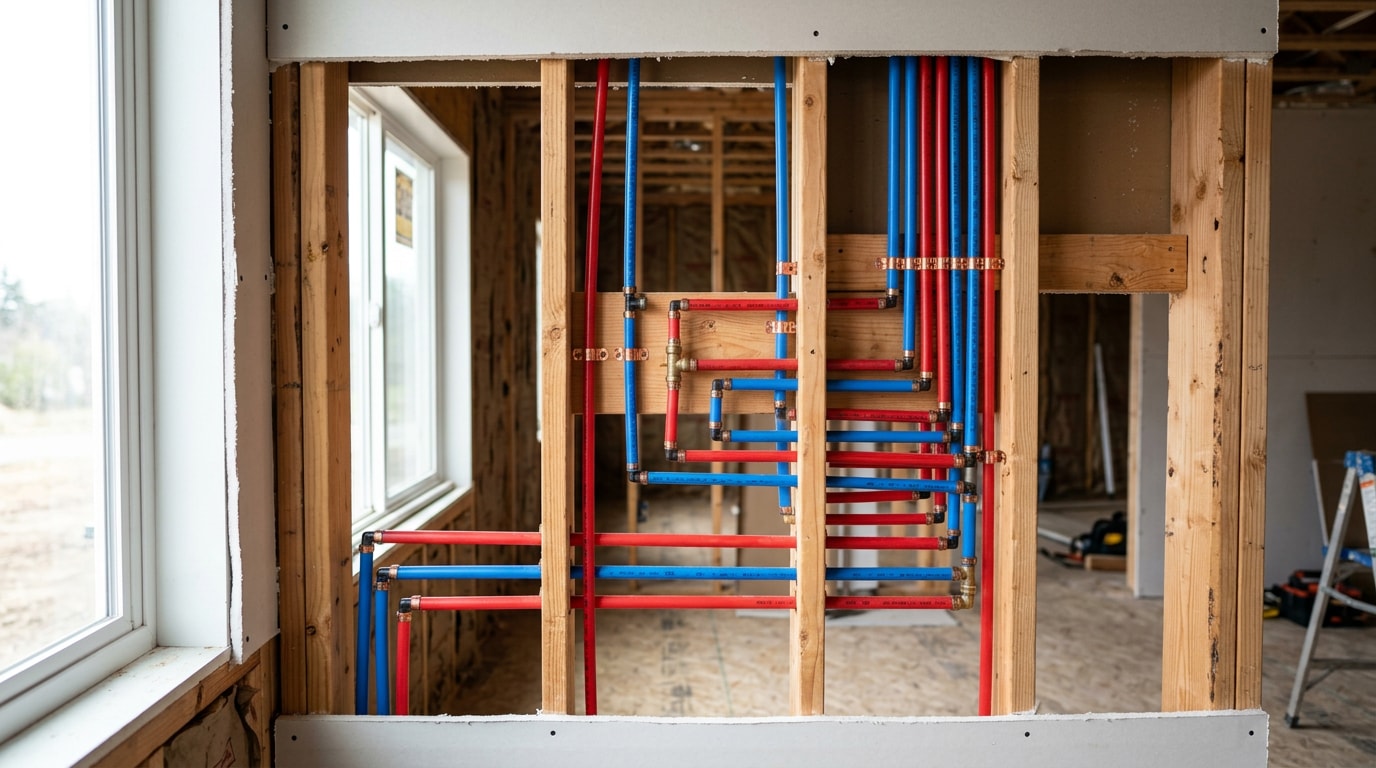
A whole house repipe replaces all of the home's water supply lines: the hot and cold pipes running from the main shut off to every faucet, shower, toilet, and appliance.
It is a full system replacement, not a spot fix on one failed section.
What it usually does not include: drain, waste, and vent lines. Those are a separate system with separate pricing, so ask every bidder to state in writing which lines are in the quote.
A complete repipe scope should list:
- New hot and cold supply runs to every fixture
- New shut off valves and supply stops at fixtures
- Water heater reconnection
- Permit and inspection
- Drywall access cuts, patch, and prime
- Debris haul off and cleanup
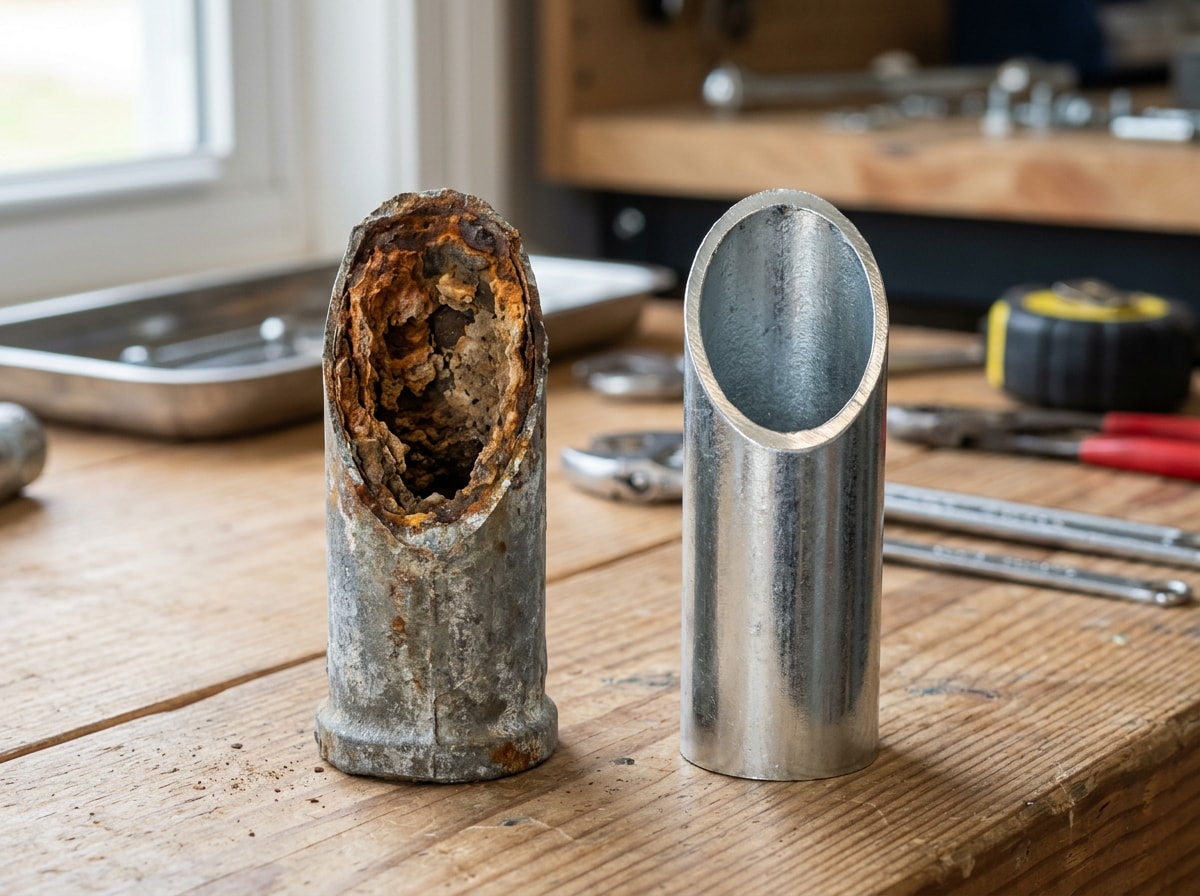
Most repipes are triggered by legacy materials: galvanized steel from pre 1975 homes, polybutylene from the late 1970s and 1980s, brittle early CPVC, or copper with chronic pinhole leaks. Replacing them restores pressure at every fixture and ends the cycle of emergency leak calls. Start with a contractor who treats plumbing replacement as a routine service rather than an occasional add on.
Signs You Need a Repipe (Not Just a Repair)
One failure is a repair. A pattern is a system problem. These signs rarely show up alone, and when two or three appear in the same house, the pipe itself is usually the common denominator.
Frequent or Repeat Leaks
The number that matters is not how bad one leak was. It is how many leaks, in how many different locations, over the last few years.
Two or three repeat leaks in separate walls or under the slab point to material wide corrosion, not bad luck.
To be direct: one isolated leak does not justify a whole house repipe. But recurring pinhole leaks, or a second slab leak after a first repair, means the rest of the system is on the same clock. A targeted plumbing repair is still the right call for a one off failure.
Low Water Pressure Everywhere
Scale and rust build on the inside wall of older metal pipe, narrowing the bore year after year. Flow drops at every tap at roughly the same time.
That is the tell. Whole house pressure loss is a systemic symptom.
One slow fixture is almost always a clogged aerator, a partly closed supply valve, or a failing cartridge. Fix that before anyone quotes you a repipe.
Discolored or Rusty Water
Rust brown or yellow water at first draw, especially after the house sits unused overnight, usually means corrosion inside your own pipes. A metallic taste points the same direction.
If discolored water shows up cold only and citywide, call the utility first.
Homes built before the 1986 federal lead solder ban carry extra risk. EPA notes that lead enters drinking water when plumbing materials containing lead corrode, and among homes without lead service lines the most common problem is brass or chrome plated brass faucets and plumbing with lead solder.
EPA also notes that lead particles can attach to the surface of galvanized pipes and later enter drinking water. Review the federal guidance on lead in drinking water before you decide.
Aging Pipe Materials
Home age is a shortcut to material era.
- Pre 1975: often galvanized steel, typically 40 to 60 years before the interior rusts shut
- Roughly 1978 to 1995: possible polybutylene, which fails at the fittings and is no longer accepted by most codes or insurers
- Mid 1990s: early CPVC, now old enough for embrittlement on hot lines
- Copper: often 50 plus years, shortened by acidic or heavily chlorinated water
Water chemistry moves all of these numbers, so treat them as planning ranges, not expiration dates. A plumbing inspection will confirm what is actually in your walls.
How Much Does Repiping Cost in 2026?
Repiping a house typically runs $4,000 to $15,000, with most single family jobs landing near $7,500. That works out to roughly $4 to $10 per square foot of living space, or about $3 to $10 per linear foot of installed pipe.
Use that math to sanity check a bid, not to replace one.
| Home size | Typical PEX repipe | Typical copper repipe |
|---|---|---|
| Under 1,200 sq ft, 1 bath | $3,500 to $6,000 | $6,000 to $10,000 |
| 1,500 to 2,000 sq ft, 2 baths | $5,000 to $9,000 | $9,000 to $15,000 |
| 2,500 sq ft plus, 3 baths, two story | $8,000 to $13,000 | $13,000 to $22,000 |
Ranges are national planning estimates for 2026 and move with regional labor rates and copper commodity prices.
Four variables move your number:
- Material choice. Copper can nearly double a PEX bid on the same floor plan.
- Fixture count, not just square footage. More bathrooms means more runs.
- Access. Slab homes with finished ceilings and no crawlspace cost more than a house with open attic access.
- Labor. On most jobs labor is half the total or more, which is why install speed drives price.
Line items that often sit outside a base quote: permit fees, drywall finishing beyond prime, water heater reconnection, and replacing the water main between the meter and the house. Any of those can add hundreds to a few thousand dollars.
The Break Even Math Most Guides Skip
Here is the calculation our estimators actually run at the kitchen table, and it is the one number that settles the argument.
Track three figures over the last 36 months:
- Total spent on supply line repairs
- Total spent on drywall, flooring, and water damage cleanup from those leaks
- Your insurance deductible, multiplied by the number of claims filed
An illustrative example: a 1,700 square foot San Jose ranch with two pinhole repairs at about $600 each, one ceiling patch at $1,400, and a $1,000 deductible has already absorbed roughly $3,600 against a $6,500 PEX repipe. At a second slab leak, the repipe becomes the cheaper path, and the leak risk goes to near zero instead of staying flat.
When accumulated repair spending crosses about half of a full repipe quote, stop repairing. Below that line, targeted repair still wins.
Copper vs. PEX vs. CPVC
Three materials dominate residential repipes. Four variables decide between them: budget, local code, water chemistry, and how accessible the runs are.
| Factor | PEX | Copper | CPVC |
|---|---|---|---|
| Installed cost (2026, per sq ft) | $4 to $8 | $8 to $15 | $4 to $7 |
| Expected service life | 40 to 50 yrs | 50 to 70+ yrs | 30 to 50 yrs |
| Freeze behavior | Expands, often survives | Splits | Cracks |
| Water chemistry sensitivity | Very low | Sensitive to acidic or high chlorine water | Low, degrades with high chlorine over time |
| Install speed | Fastest | Slowest (soldering) | Moderate |
| Code acceptance | Near universal, verify locally | Universal | Common, some jurisdictions restrict |
Which one for which house? PEX is the practical default for slab homes and long attic or crawlspace runs, where flexibility cuts fittings and labor hours. Copper still earns its price in high end resale markets, in exposed mechanical rooms, and where hot runs sit near heat sources. CPVC makes sense as a budget option in mild climates with neutral water chemistry, and only where your inspector signs off.
PEX
Cross linked polyethylene bends around corners, so one run can reach a fixture with fewer concealed fittings. Fewer hidden joints means fewer future leak points.
PEX A is the most flexible grade and uses expansion fittings. PEX B is stiffer and slightly cheaper.
Either way, PEX installs fast, and that speed is where most of the savings come from. The governing standard, ASTM F876, covers pressure ratings at three water temperatures plus test methods for burst pressure, environmental stress cracking, and oxidative stability in potable chlorinated water , and you can review the ASTM F876 tubing specification directly.
Honest limits: PEX degrades in sunlight, so it cannot be run outdoors uncovered, and some homeowners report a taste change in the first weeks after install.
Copper
A copper repipe is the long life option. Fifty plus years is common, and copper handles high water temperatures without softening.
The downsides deserve equal weight. Material costs more, and soldered joints take far more labor hours.
In acidic or heavily chlorinated water, pinhole leaks can appear well before copper's expected lifespan runs out. Rigid pipe also needs more wall openings to route, and copper sitting on an open job site is a real theft target.
CPVC
CPVC is usually the cheapest of the three up front, and it handles hot water better than standard PVC. Because it is rigid, expect more glued joints than a comparable PEX layout.
The long term concern is embrittlement, which shows up on hot runs first. Some CPVC installed in the mid 1990s is already being replaced.
That does not rule it out. In the right climate, with neutral water chemistry and a code official who accepts it, CPVC is a reasonable value choice. Make that call locally.
What to Expect During the Repipe
A well run repipe is a staged project of a few days, not an open ended teardown. Crews should restore water service by the end of each work day.
Any bid you accept should describe these three stages out loud, in this order.
1. Walkthrough, Permit, and Prep
The job starts with a walkthrough to set scope: whole house, or one failing section. The plumber maps fixtures, counts runs, confirms material, and identifies access points in walls, ceilings, attics, or crawlspaces.
The permit gets pulled here. Replacing supply lines is permitted and inspected work in most jurisdictions, under the local adoption of the International Residential Code plumbing administration provisions and your building department's rules.
Then floors, furniture, and fixtures get covered.
One piece of advice worth more than the rest: get permit fees and drywall repair listed in writing. Those two omissions cause most quote overruns.
2. Installation and Switch Over
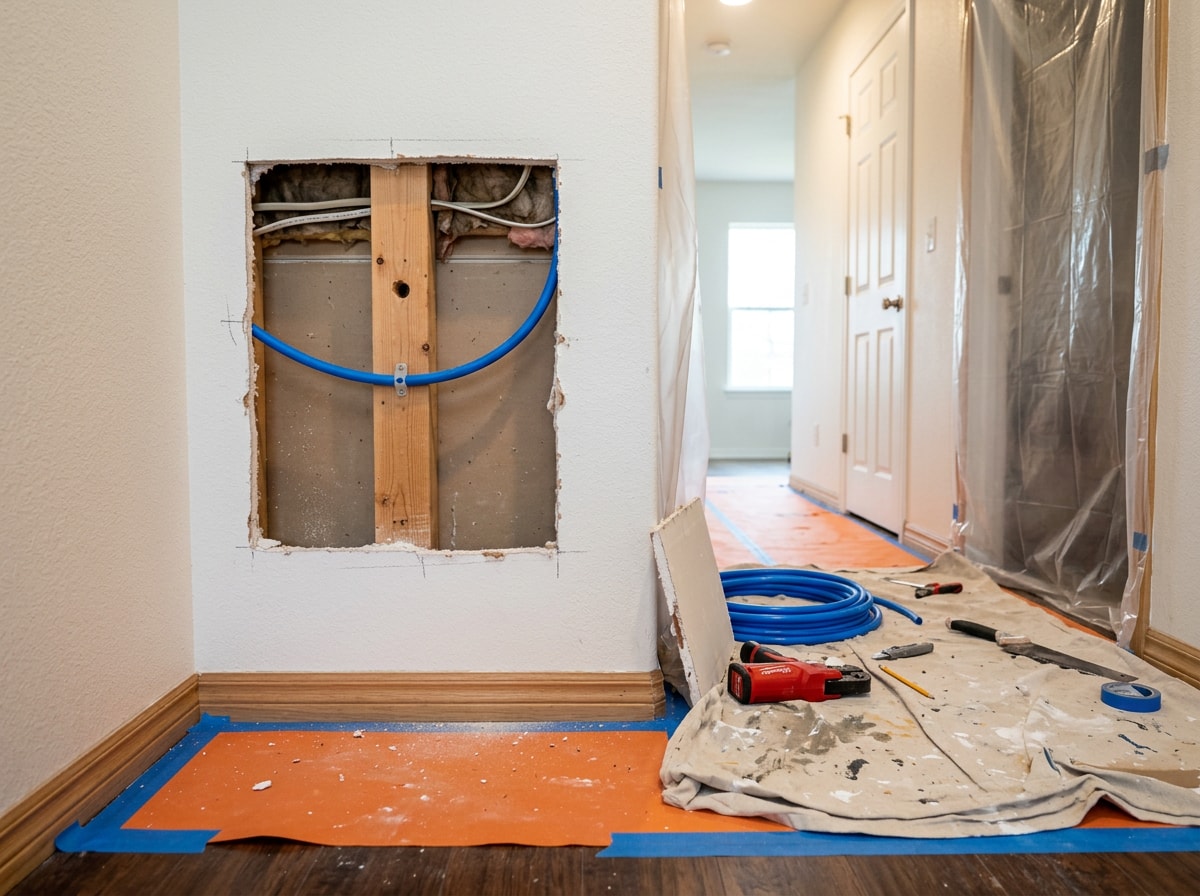
Crews route new lines through the least destructive path available, using attic and crawlspace runs where possible and opening walls only where necessary.
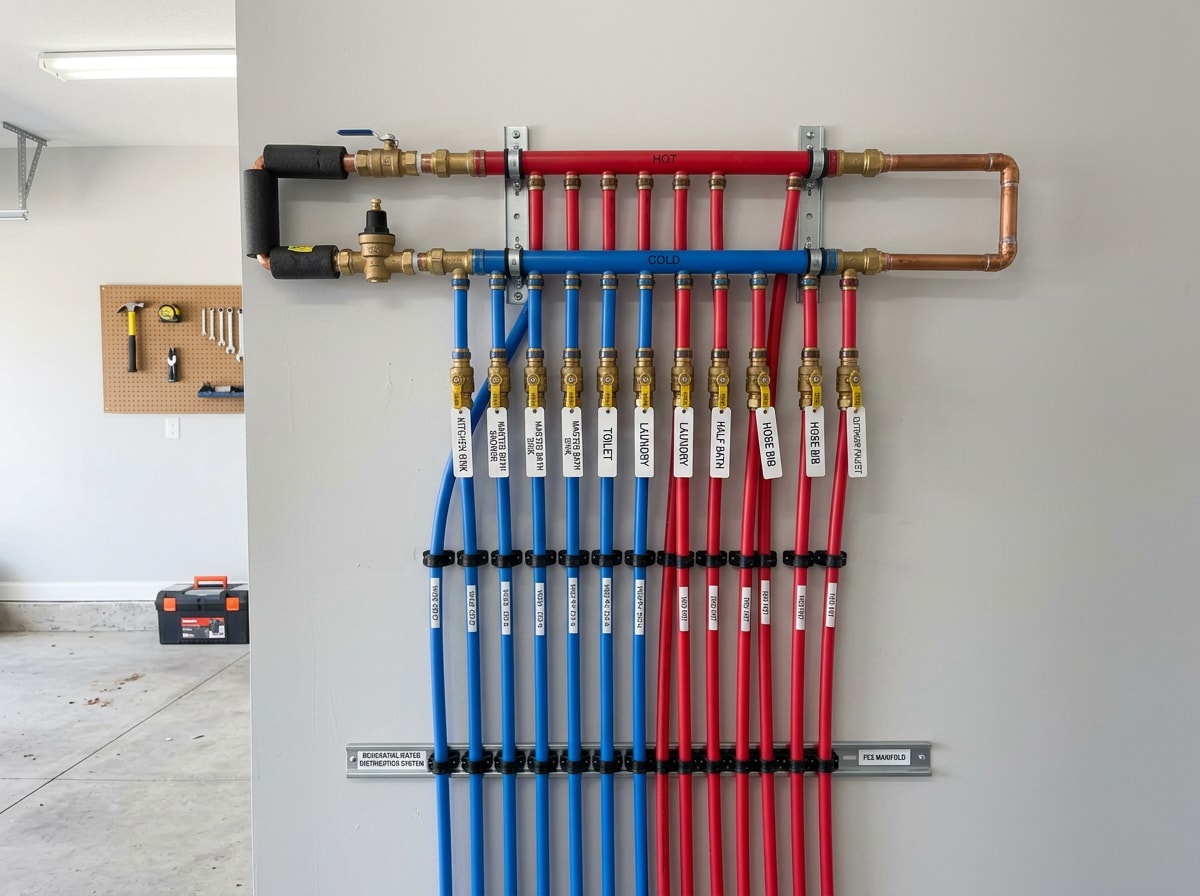
Most installers build the new system alongside the old one first. That keeps the water off window down to hours instead of days.
Then comes the switch over: connections at every sink, tub, shower, toilet, and appliance, plus the water heater tie in. If your heater is near end of life, this is the cheapest moment to handle water heater installation because the crew is already at the connections.
You will also be asked whether to remove the old pipe or cap and abandon it in place. Abandoning is standard, cheaper, and structurally fine in most homes.
3. Pressure Test, Inspection, and Patch
Before anything closes up, the system is charged and held under pressure to prove it is leak free. The inspector signs off on open piping next.
Never let drywall go back up before that inspection happens. We have seen homeowners pay twice to reopen a wall because a crew closed it early.
Then patching: cut pieces set, taped, mudded, sanded, and primed.
Here is the detail most contractors gloss over. Patch and prime is usually included. Texture and paint match often is not, and matching aged paint rarely looks seamless anyway. Ask before you sign.
How to Vet a Repiping Contractor
Bids for the same house can differ by thousands. The gap is almost always scope, not skill.
Ask every bidder these six questions:
- Which lines are included, supply only or supply plus drain?
- Are permit fees and the inspection in this price?
- Does the quote include drywall patch, prime, texture, or paint?
- Is the water heater reconnection included?
- What is the warranty on labor, and on material, separately?
- Who does the drywall work, your crew or a subcontractor?
Get all six answers in writing. A contractor who resists written scope is telling you something.
If the leak that started all this is still active, handle the emergency first and the repipe second. Our guide to 24 hour emergency plumbing service covers what qualifies as urgent, and our emergency plumbing service team can stop the water tonight.
FAQ
How long does it take to repipe a house?
Most standard single family homes take 2 to 5 days. Large homes, multi story layouts, and slab foundations with difficult access can run closer to a week. PEX installs faster than copper because there is no soldering at each joint. Confirm whether drywall and restoration days are counted separately from plumbing days.
Can you live in your house during a repipe?
Yes, in most cases. Crews typically restore water service each evening, so you have working toilets and showers overnight. Expect dust, noise, and blocked access to some rooms during the day. Plan alternate arrangements only if the house has a single bathroom or you have severe dust sensitivities.
Do you need a permit to repipe a house?
Almost always. Replacing water supply piping is permitted and inspected work in most jurisdictions, and the piping must be inspected before it is concealed. An unpermitted repipe can surface as a problem at resale or during an insurance claim, so make sure the permit is in your contractor's scope.
Does homeowners insurance cover repiping?
Generally no. Standard policies cover sudden water damage caused by a failure, not the planned replacement of worn out pipe. Insurers may pay to repair the damaged ceiling or flooring while you pay for the new piping. Some carriers also surcharge or decline coverage on homes with polybutylene or galvanized supply lines, which is its own reason to upgrade.
Is PEX better than copper for repiping?
For most homes today, PEX wins on installed cost, install speed, freeze tolerance, and resistance to aggressive water chemistry. Copper wins on service life, heat tolerance, and buyer perception in premium markets. If your water is acidic or heavily chlorinated, PEX is usually the safer long term choice.
Can you repipe a house without removing drywall?
Almost never entirely. A minimally invasive repipe uses small, strategic access cuts at fixture walls and routes the bulk of new lines through attic or crawlspace. Expect a handful of neat openings, not gutted rooms. Any complete bid should include patch, mud, and prime at minimum.
Is repiping a house worth it?
For a genuinely failing system, yes. Repeat leaks, a slab leak history, or confirmed galvanized or polybutylene pipe all point the same direction. Once stacked repairs plus water damage cleanup approach half the cost of full replacement, repiping stops being a close call. For isolated problems, targeted repair still wins.
Does repiping a house increase its value?
Treat it as risk removal rather than a value bump. Aging galvanized or polybutylene pipe is a standard home inspection red flag and can complicate buyer financing or insurance. Updated supply lines take that objection off the table at resale. Specific ROI percentages get quoted often and sourced rarely, so treat them cautiously.
Get a Real Number for Your House
National ranges are a starting point, never a quote. Access, fixture count, and local labor decide your price.
Gomez Sewer and Drain has repiped slab ranches, two story Eichlers, and 1920s bungalows across Santa Clara County, and the same pattern repeats: the homes that wait for a fourth leak pay more than the homes that plan the job. See recent work on our projects page, browse the full range of plumbing services, or check coverage for San Jose and surrounding areas, Palo Alto, and Santa Clara.
Schedule a free inspection and we will map your existing lines, confirm the material, and give you a written scope you can compare against any other bid. More about the company on our homepage.
Reviewed by the licensed and insured plumbing team at Gomez Sewer and Drain, a family operated plumbing and drain contractor serving San Jose and the Peninsula. Questions about your own system? Contact us and ask for the repipe estimator.