I'll research the SERP landscape before revising. I need to confirm the external source URLs before using them. One more check to confirm a standards-body source for PEX certification.
The types of plumbing pipes behind your walls decide how long your water lines last, what a repipe costs, and whether a remodel passes inspection. Seven materials cover almost every home in North America, and each one fails in its own way. Here is what each pipe is for, what it costs in 2026, and how to tell which one you already have.
The 7 Types of Plumbing Pipes at a Glance
| Material | Best use | Typical cost/linear ft (2026, material only) | Joining method | Expected lifespan | Key limitation |
|---|---|---|---|---|---|
| PEX | Hot and cold supply | $0.60 to $2.50 | Crimp, clamp or expansion | 40 to 50+ yrs | UV and rodent damage |
| Copper | Supply, exposed runs | $4 to $10 | Solder or press | 50 to 70+ yrs | Cost, pinhole leaks |
| PVC | Drains, vents, buried cold | $0.50 to $2 | Solvent weld | 50 to 80 yrs | Not for hot water |
| CPVC | Hot and cold supply | $0.75 to $3 | Solvent weld | 40 to 60 yrs | Brittle with age |
| ABS | Drains and vents | $1 to $3 | One step cement | 50 to 80 yrs | UV sensitive, code dependent |
| Cast iron | Sewer stacks, main drain | $10 to $30 | Hub or no hub coupling | 75 to 100 yrs | Weight, internal rust |
| Galvanized steel | Legacy supply only | $5 to $12 | Threaded | 40 to 60 yrs | Scale, corrosion, lead risk |
Costs are material only and move with diameter, market pricing and region. Labor and fittings land on top.
The 7 Types of Plumbing Pipes Explained
For each material below you get what it is, where it belongs, how it is joined, how long it lasts, and the drawback that actually matters.
1. PEX Pipe
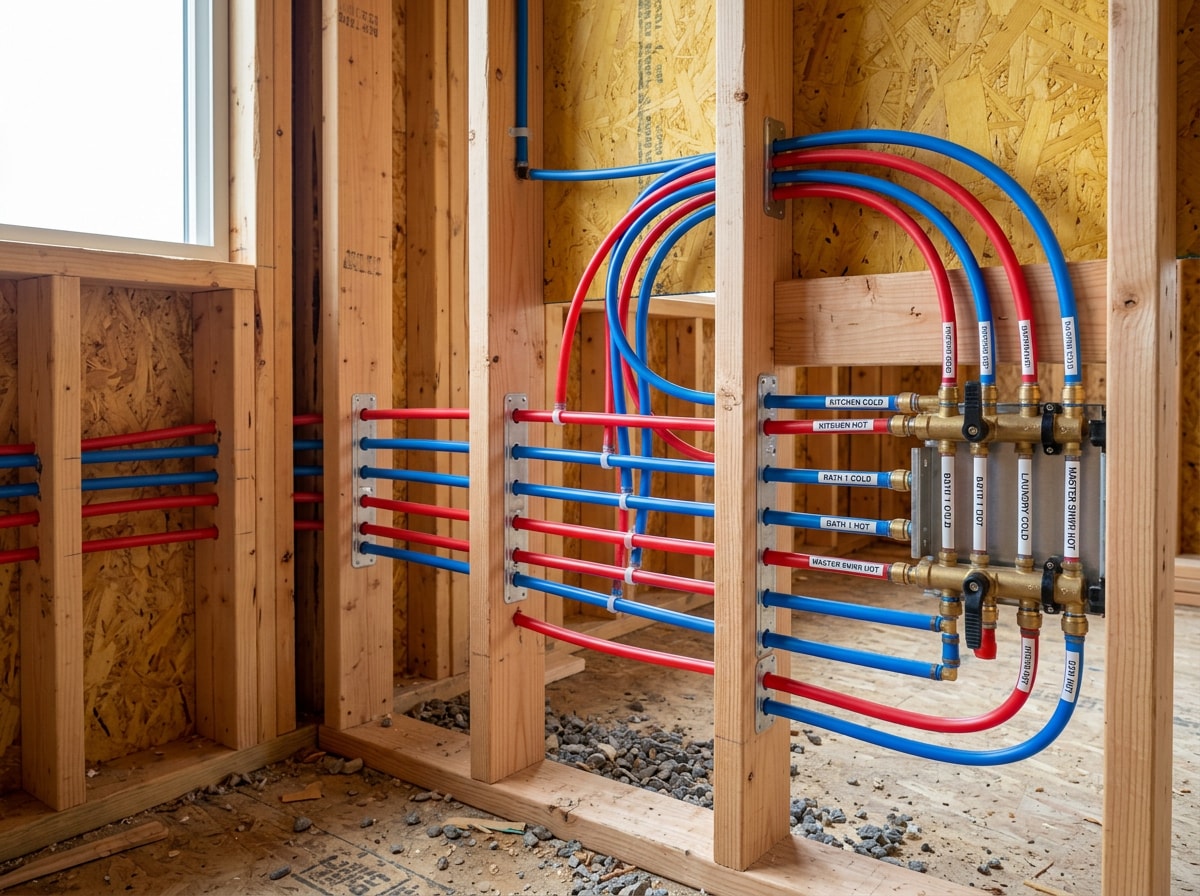
PEX, or cross linked polyethylene, is the flexible tubing that dominates new supply work.
It bends around corners and snakes through joists, so one run often reaches a fixture with no fittings in between. Fewer fittings means fewer leak points.
Color coding keeps it straight: red for hot, blue for cold, white for either, orange usually for radiant floor heat. Connections are made with copper crimp rings, stainless clamps, or cold expansion rings, depending on the system.
The letter grades describe manufacturing, not quality tiers:
- PEX-A: most flexible, used with expansion fittings, easiest to repair after a kink.
- PEX-B: stiffer and cheaper, extremely common on crimp installs.
- PEX-C: mostly repair kits and small jobs.
Downsides are real. PEX degrades in sunlight, so it cannot be used outdoors uncovered, and rodents will chew it in crawlspaces.
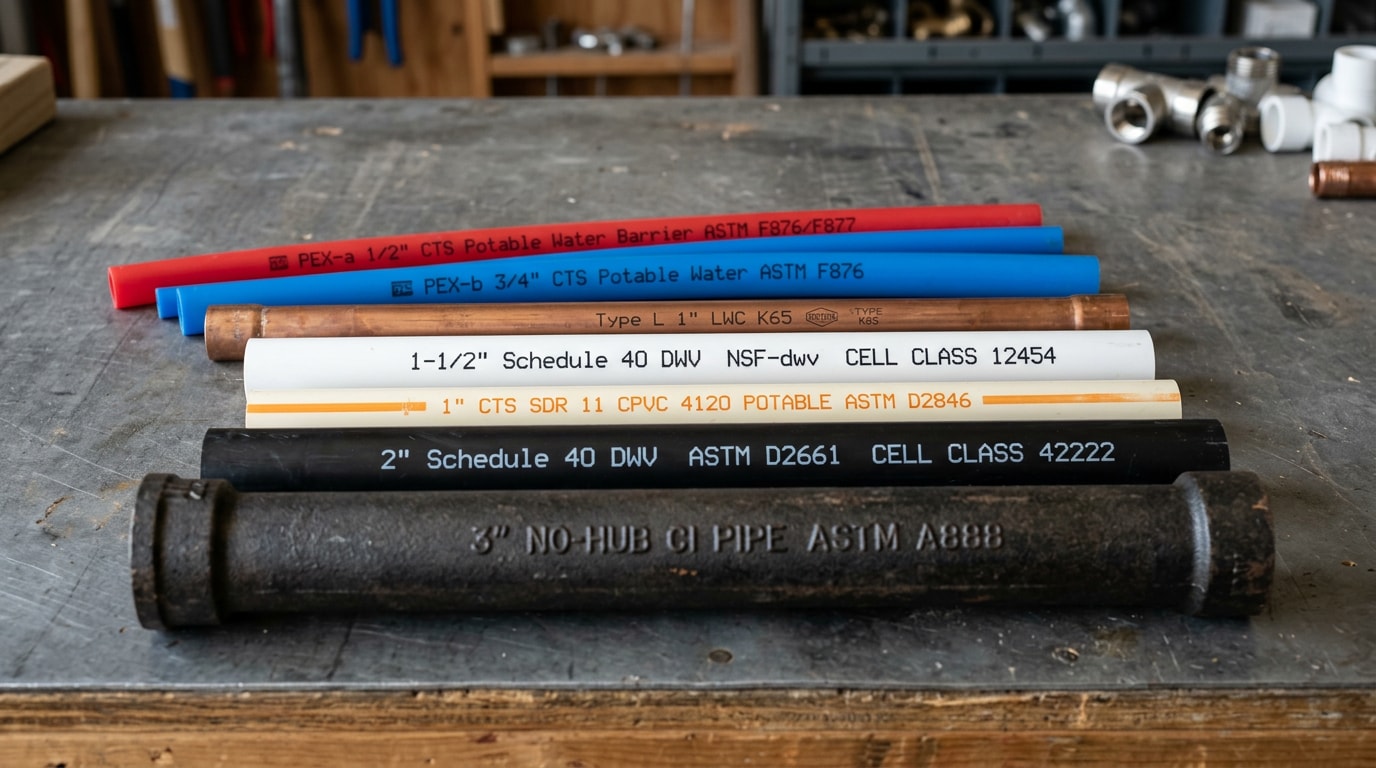
Before anything goes in a wall, read the print line on the tubing. It should show the hot water temperature and pressure rating plus third party certification for potable water. Pipe, fittings and even solvent cements that touch drinking water should be certified to NSF/ANSI/CAN 61.
2. Copper Pipe
Copper comes rigid in straight lengths or soft and coiled for tight spaces and short runs.
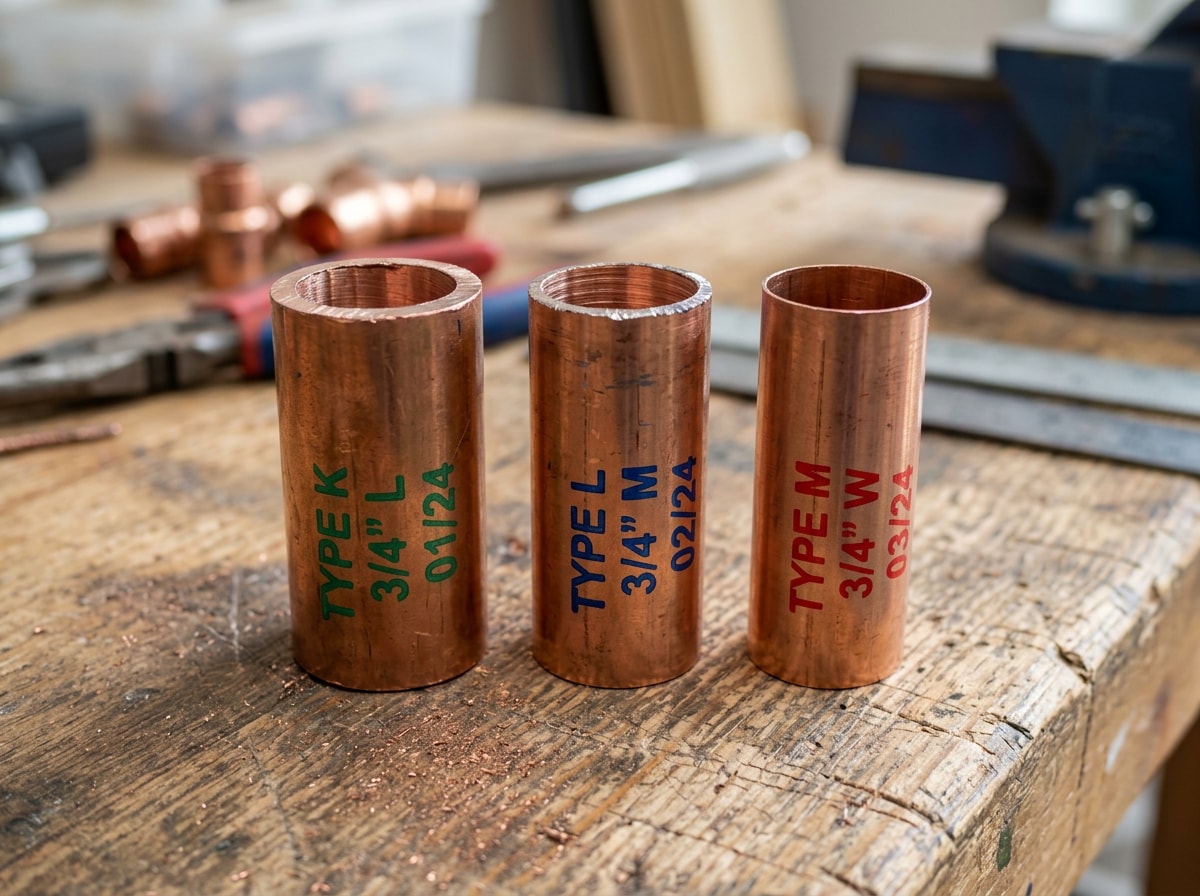
Wall thickness is graded by letter. Type K is thickest and typically used underground, Type L is the standard for interior supply, and Type M has the thinnest wall, allowed in some jurisdictions and restricted in others. The outside diameter is identical across all three, which is why one fitting size accepts them all. The trade's Copper Tube Handbook lists the wall thickness and pressure ratings for each type.
Joints are soldered with a torch or made with press fittings, which crimp a sealed connection in seconds using a hydraulic tool. Press work costs more up front and keeps open flame away from framing.
Well installed copper routinely lasts 50 years or more. Its weakness is water chemistry. Acidic or aggressively mineralized water eats the pipe from the inside and produces pinhole leaks that soak drywall before anyone notices.
Copper also splits more readily than PEX when a line freezes, and material prices stay high. It is an excellent pipe, just not automatically the right one.
3. PVC Pipe
Polyvinyl chloride is the white rigid pipe behind most modern drains.
In homes you will see schedule 40 PVC on sink, tub, toilet and vent lines. The smooth interior resists buildup and shrugs off the corrosion that destroys metal drains.
Joining is simple: clean the surfaces, apply primer, then solvent weld with cement that chemically fuses pipe to fitting. Done right, that bond is permanent.
The hard limit is heat. Standard PVC is a cold water and drainage material only. Sustained hot water softens and deforms it, and it is not approved for hot supply lines. That is why it is fine on a drain carrying brief slugs of hot dishwater and never on the line feeding a shower valve.
It is also the cheapest option per foot, which makes it the default for buried cold water service and exterior irrigation where the pipe stays shaded or underground.
4. CPVC Pipe
Chlorinated polyvinyl chloride is PVC that has been through an extra chlorination step. That single change raises its temperature rating enough to handle hot water. Visually it is cream or light yellow instead of white.
Unlike standard PVC, CPVC is approved for both hot and cold supply. For years it was the budget copper replacement in retrofits, since it cuts with a hand tool and glues together without a torch.
Age is its enemy. CPVC grows brittle over time, and older runs crack from a sharp knock or an over tightened fitting. It is still a legitimate choice, though most crews now reach for PEX on full repipes.
5. ABS Pipe
ABS, or acrylonitrile butadiene styrene, is the black rigid drain pipe found in many homes built from the 1970s onward. Like PVC, it is strictly a drain, waste and vent material, used for waste arms, stacks and vents.
Installers like it because it cements in one step with no separate primer, and it stays less brittle than PVC in cold weather, which matters in unheated crawlspaces and attics. Sunlight is its weak point: exposed ABS warps and loses strength.
The deciding factor usually is not preference. Many jurisdictions permit one and not the other, so local code dictates whether your drains are black or white.
6. Cast Iron Pipe
Cast iron carried waste in American homes for over a century, and plenty of older houses still have it in the main drain and the vertical sewer stack.
Its best quality is acoustic. A cast iron stack hushes the sound of water falling inside a wall far better than plastic does.
It is heavy, needs solid support, and often lasts 75 to 100 years. When it fails, it fails from the inside. Rust scale narrows the bore, catches debris, and eventually the bottom of a horizontal run rusts through completely.
Partial repairs are routine. Cut out the bad section, slide in PVC, and bridge the two materials with a shielded no hub coupling rated for the transition. If the corrosion runs the length of the stack, read our breakdown of repiping cost, materials and timeline before committing to a patch.
7. Galvanized Steel Pipe
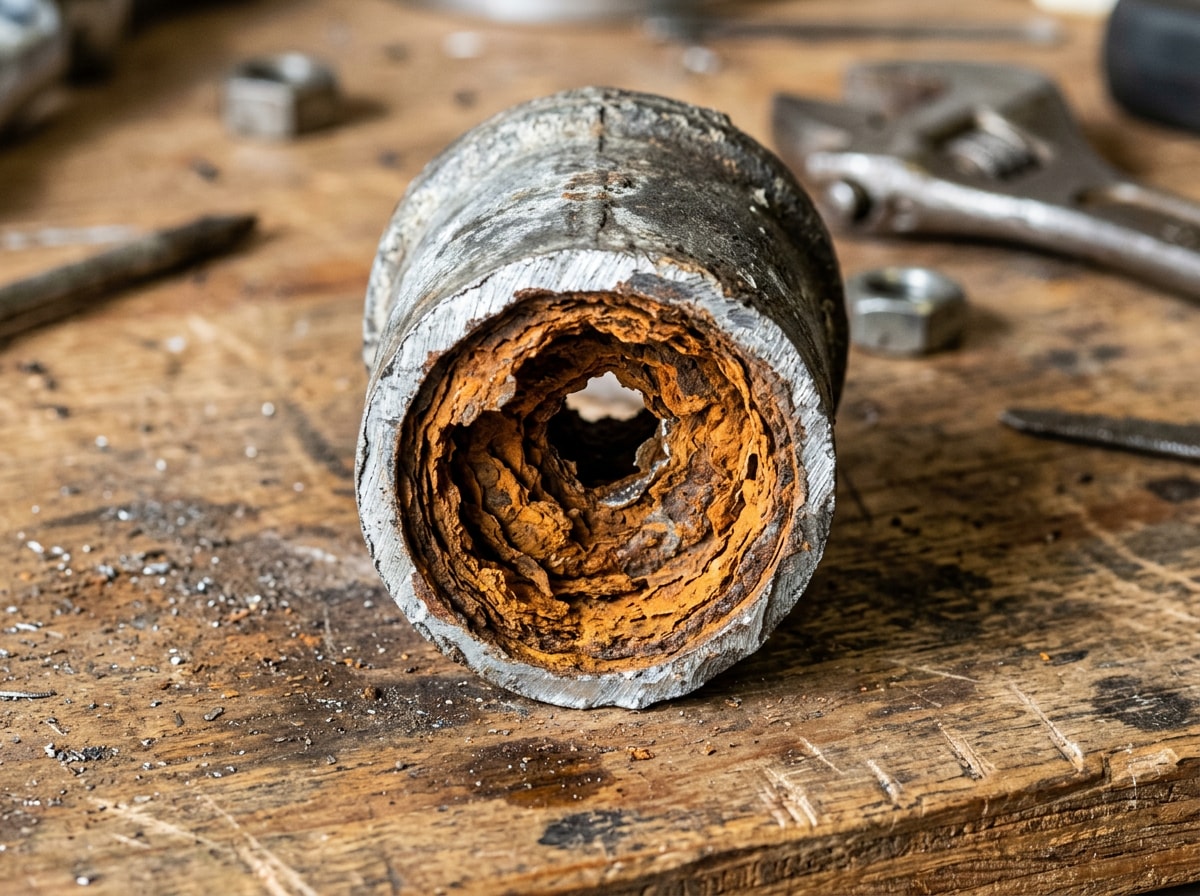
Steel pipe dipped in zinc was the standard supply material in homes built before roughly 1960. The zinc coating wears away, and then the steel beneath it corrodes.
That corrosion builds scale inside the pipe and shrinks the opening year by year. Homeowners notice brown or rusty water, weak flow at upper floor fixtures, and gradual low water pressure throughout the house.
There is a regulatory angle most pipe guides skip. Under the EPA's 2024 Lead and Copper Rule Improvements, galvanized service lines that are or ever were downstream of lead are classified as "galvanized requiring replacement," because lead can adhere to the inside of galvanized steel and release later. Water systems must replace those lines under their control, and EPA's national estimate of roughly four million lead service lines counts them inside that figure.
In plain terms: if your home still has galvanized supply piping, the fix that ends the problem is a whole home repipe, not another patch.
Supply Lines vs Drain, Waste and Vent Lines
Every house runs two systems at once, and pipe rated for one is often wrong, sometimes illegal, in the other.
- Supply: pressurized, usually 40 to 80 psi, holding that pressure continuously for decades. PEX, copper and CPVC qualify.
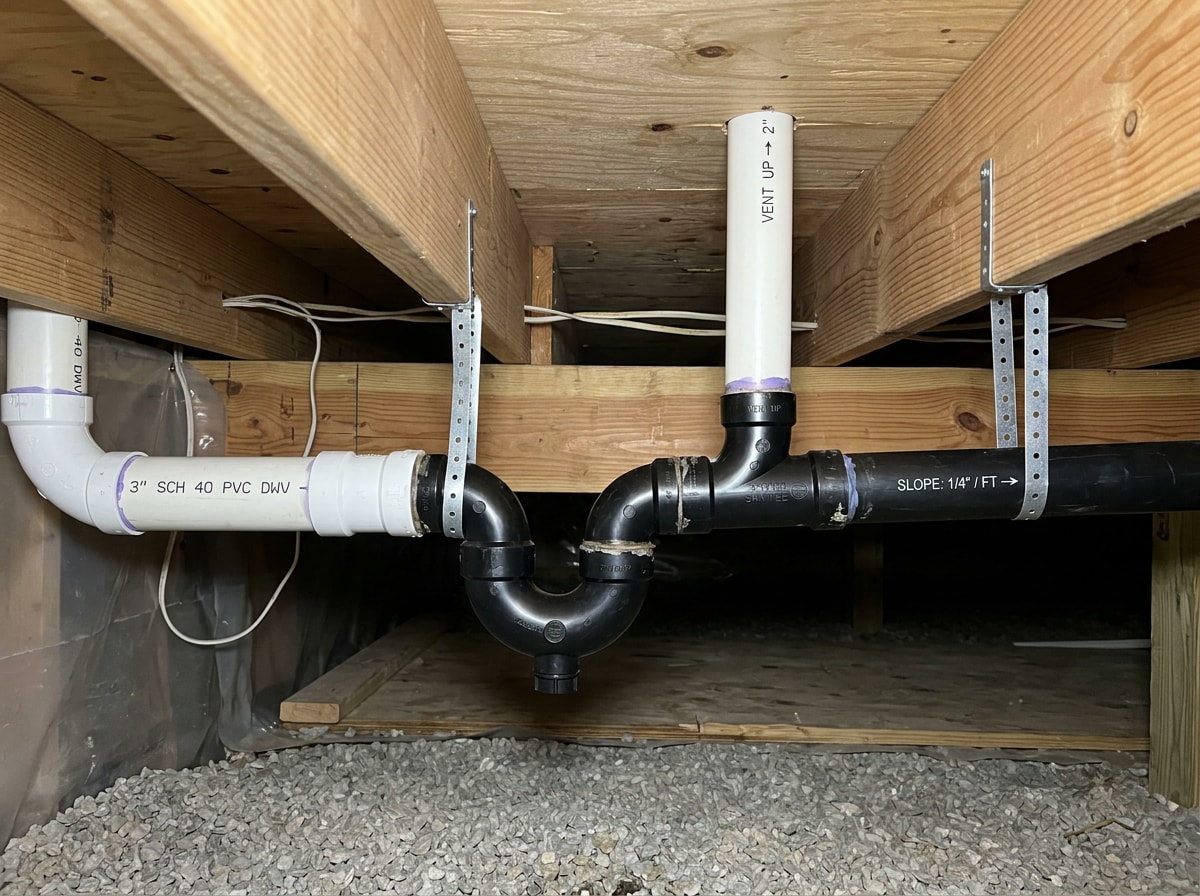
- Drain, waste and vent: gravity fed, almost no pressure. Sized for slope and airflow instead. PVC, ABS and cast iron qualify.
Small horizontal drains are commonly pitched about a quarter inch per foot so solids keep moving. Vent lines let air in behind draining water so traps keep their water seal. Without that air, traps siphon dry and sewer gas enters the room.
The second way to sort pipe is by what it is made of. Thermoplastics (PEX, PVC, CPVC, ABS) are lighter, cheaper and faster to join. Metals (copper, cast iron, galvanized steel) handle heat and physical abuse better.
How to Choose the Right Pipe for Your House
Work the decision in this order:
- Application. Supply, DWV, or buried service line.
- Temperature. Hot supply rules out standard PVC immediately.
- Water chemistry. Aggressive water shortens copper's life more than anything else on this list.
- Freeze risk. PEX tolerates a freeze cycle longer than rigid pipe before bursting.
- Budget. Installed cost, not material cost, is the number that matters.
- Local code. Last in sequence, first in authority. A material approved two counties over can be rejected at inspection here.
What we actually install: PEX-A on the large majority of repipes in the homes we serve. It survives a freeze better than copper, routes behind finished walls with less demolition, and keeps a whole house job affordable. We still run copper where pipe is exposed in a garage or mechanical room, because exposed PEX takes UV and impact damage it never recovers from.
One pattern from our own trucks: on 1950s houses around the valley, the galvanized we cut out is routinely scaled down to a pencil width opening at the first elbow after the meter, even when the exterior of the pipe still looks sound. That is why pressure complaints almost never trace back to the fixture.
Not sure what you have? A plumbing inspection identifies every material in the house in one visit. You can also request a free estimate before you plan a kitchen or bath project.
How Long Each Pipe Material Lasts
Treat every published lifespan as a range, not a promise.
Copper generally runs 50 to 70 years. PEX and CPVC run roughly 40 to 50 plus. PVC and ABS drains run 50 to 80. Cast iron runs 75 to 100. Galvanized steel runs 40 to 60 before corrosion takes over.
Condition beats age every time. Installation quality, water chemistry, pressure and soil conditions around buried lines can cut those figures sharply or stretch them well past the estimate.
Supply and drain lines also age on separate clocks:
- Supply piping is under constant pressure, so it announces failure through leaks and pressure loss.
- Sewer and drain lines fail slowly through scale, root intrusion, bellies and cracks, which is why they are judged by drain camera inspection rather than by the calendar.
If your home is approaching 50 years on original piping, have it looked at before you remodel, not after the new tile goes down.
Signs It Is Time to Replace Your Pipes
- Rusty or brown water at more than one fixture. Usually corroding galvanized steel or a failing water heater, not one bad faucet.
- House wide pressure drop. Scale narrowing those same steel lines.
- Repeat pinhole leaks. One is bad luck. Three in two years means water chemistry is working on every foot of copper in the building.
- Green or white crust on copper, flaking rust on steel. The same corrosion, visible from outside.
- Clogs that return after every cleaning. Often a rough, scaled cast iron drain rather than anything you put down it.
- Banging or rattling pipes. Usually loose strapping or pressure issues. Annoying, rarely a reason to repipe on its own.
Any combination of these deserves a real look before you spend money. Same day plumbing repair handles the single failure; a repipe handles the pattern.
How to Identify the Pipe You Already Have
Check where pipe is exposed: at the water heater, in the garage, in a crawlspace, and under sinks.
- Copper is dull bronze and turns green where it corrodes.
- Galvanized steel is silver gray with threaded joints, and a magnet sticks to it.
- PEX is red, blue or white flexible plastic.
- PVC is white and rigid, ABS is black and rigid.
- Cast iron is thick, dark and dull, and a magnet sticks to it too.
Then read the print line. Manufacturers stamp material, diameter, schedule or type, standard numbers and certification marks directly on the pipe. That stamp settles arguments faster than any visual guess.
FAQ
What is the best type of pipe for plumbing?
It depends on the application. For hot and cold supply, PEX offers the best balance of cost, freeze resistance and installation speed, with copper as the premium alternative. For drains and vents, PVC or ABS, whichever local code accepts. Cast iron still wins for quieting sewer stacks.
What are the 5 most common types of plumbing pipes?
PEX, copper, PVC, ABS and cast iron. CPVC and galvanized steel round out the seven you will realistically encounter, galvanized mostly as legacy pipe awaiting replacement.
Are copper pipes better than PEX?
Neither wins outright. Copper handles higher temperatures, resists UV and has a longer proven record in exposed locations. PEX costs far less installed, flexes around obstacles with fewer joints, and tolerates a freeze cycle better before bursting. Budget and layout usually decide it.
Is PEX or PVC better?
They are not competitors. PEX is a pressurized supply pipe for hot and cold water. Standard PVC is a drainage and cold water pipe that is not approved for hot supply. Choose by application, not preference.
What type of pipe is best for underground water lines?
Type K copper, PEX rated for direct burial, and HDPE are the common choices for pressurized underground service lines. PVC works for buried cold water in many areas. Local code governs the material, burial depth, bedding and tracer wire, so confirm before you dig.
What pipe is used for sewer lines?
Modern sewer laterals are typically schedule 40 PVC or SDR 35 PVC. Older homes often have cast iron, clay or Orangeburg, all of which are replacement candidates when they crack or collapse.
Can you connect two different pipe materials together?
Yes, with the correct transition fitting. Copper to PEX uses a rated adapter, cast iron to PVC uses a shielded no hub coupling, and galvanized to copper needs a dielectric union to prevent galvanic corrosion. Direct metal to metal contact between dissimilar materials is what causes early failure.
How much does it cost to repipe a house?
Cost depends on material, fixture count, number of stories and wall access, which is why the honest answer comes from a walkthrough rather than a chart. Material alone ranges from under a dollar per foot for PEX to ten dollars or more for copper, and labor exceeds material on nearly every job.
How do I know what type of pipes I have in my home?
Look where pipe is exposed, then confirm with the printed markings. Copper is dull bronze, galvanized steel is silver gray and threaded, PEX is colored flexible plastic, PVC is white and ABS is black. A magnet sticks to steel and cast iron, not to copper.
---
Written by the licensed plumbing team at Gomez Sewer and Drain, who repipe, repair and inspect residential water and drain systems daily across San Jose and surrounding areas. Questions about what is in your walls? Contact us and we will take a look.