Trenchless plumbing rebuilds a failing sewer or drain line through one or two small access pits instead of a trench across the yard. That one change moves the driveway, the patio and the 40-year-old maple out of the demolition budget.
Here is how the two main methods work, what they cost in 2026, and which pipe conditions rule trenchless out entirely.
What Is Trenchless Plumbing?
Trenchless plumbing is a set of methods for repairing or replacing buried sewer, drain and water lines through a small number of access points rather than an open trench.
Crews rebuild the pipe from the inside, so driveways, patios, mature trees and finished slabs usually stay untouched.
Two umbrella methods cover nearly all residential work:
- Pipe lining (CIPP) installs a new resin pipe inside the old one.
- Pipe bursting destroys the old pipe and pulls a new one into the same path.
These methods apply to sewer laterals, interior and exterior drain lines, and in some cases water service lines.
One honest caveat: no-dig pipe repair means minimal digging, not zero digging. Every job still needs access, typically a pit at the cleanout and a second one near the property line or connection point.
Anyone promising absolutely no excavation on an underground pipe is overselling it.
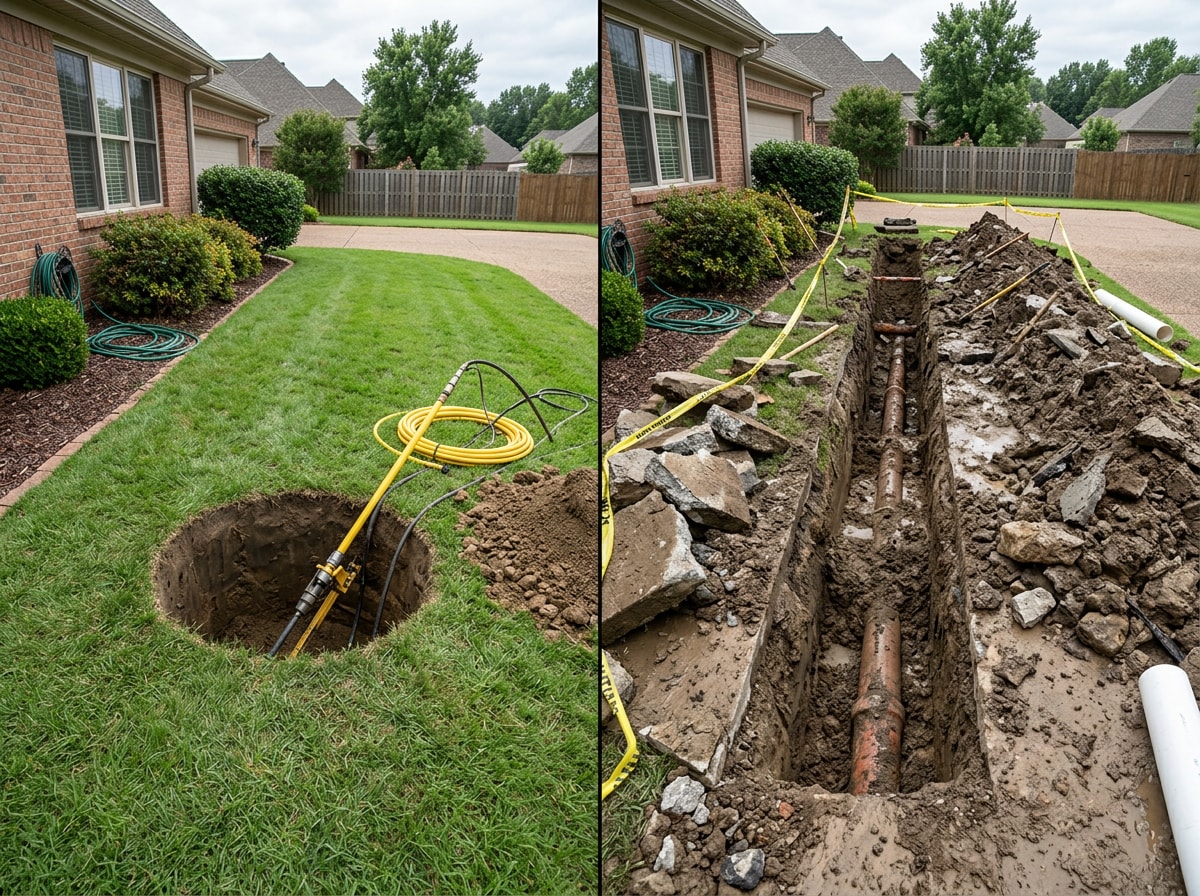
Our trenchless sewer repair page covers which of these methods we run in the field.
How Trenchless Plumbing Works
Every job follows the same front-end sequence, inspect, clean, measure, before it splits into one of two repair paths.
Inspection, Cleaning and Access
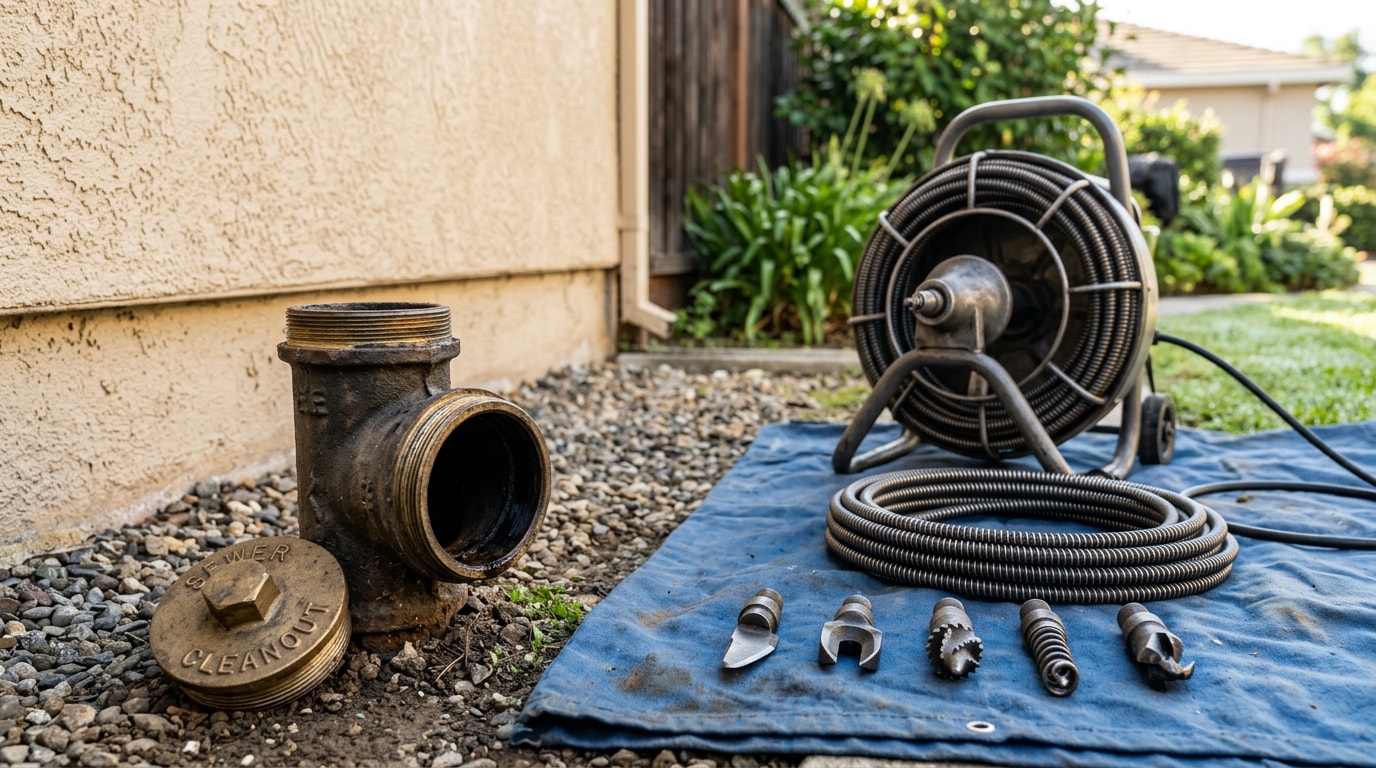
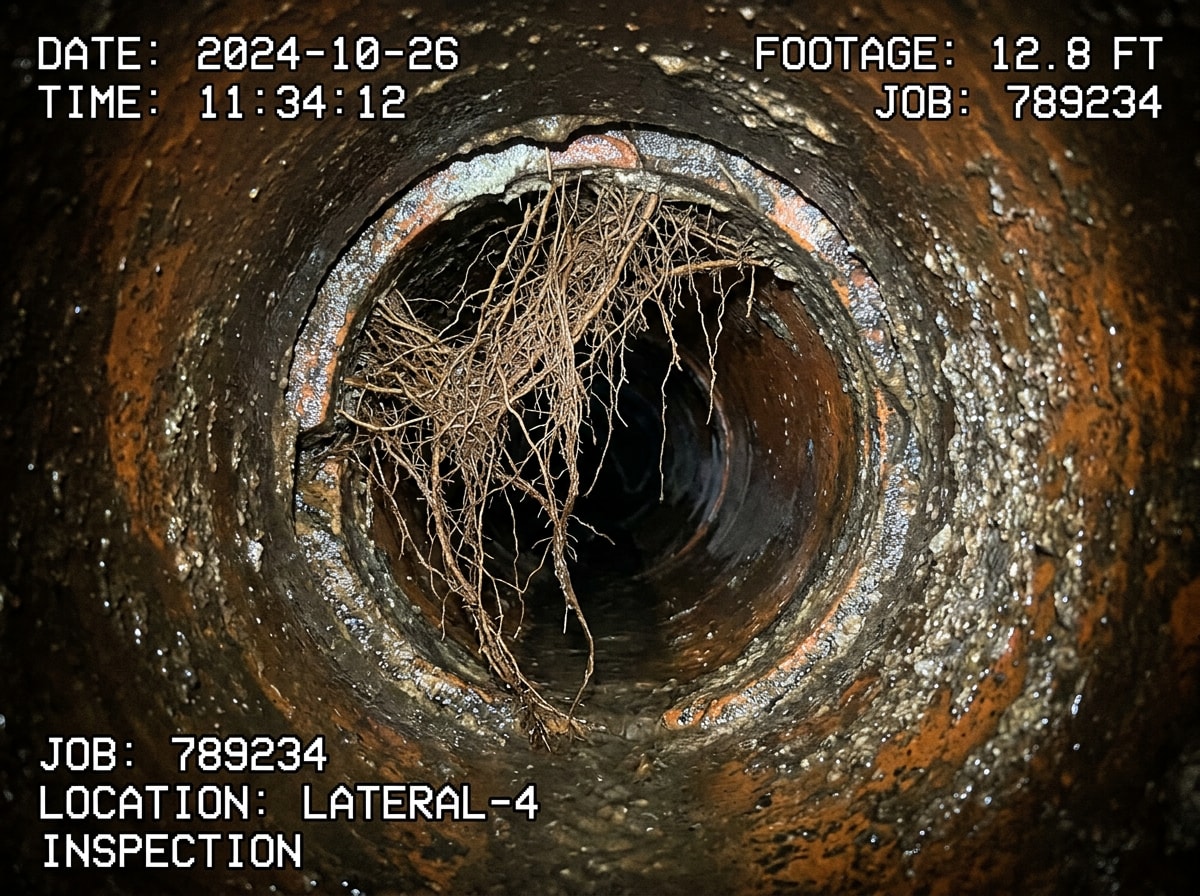
Prep starts with a camera inspection.
A self-leveling CCTV head travels the line while a locator tracks its position above ground. That pins the fault's depth and distance and reveals why the pipe failed.
Without a sewer line inspection, method selection is guesswork.
Next comes cleaning. Hydro jetting or a mechanical cutter strips roots, grease and hardened scale off the host pipe wall.
This step is non-negotiable for lining. Resin will not bond to a scaled or root-filled surface, and a liner cured over debris leaves voids that fail early.
Then the crew measures the run and excavates the access points. Pit placement depends on the fault location, the depth of the line, and what sits above it.
Fewer and smaller pits mean less restoration later, so this is worth planning rather than rushing.
Pipe Lining (Cured-in-Place Pipe)
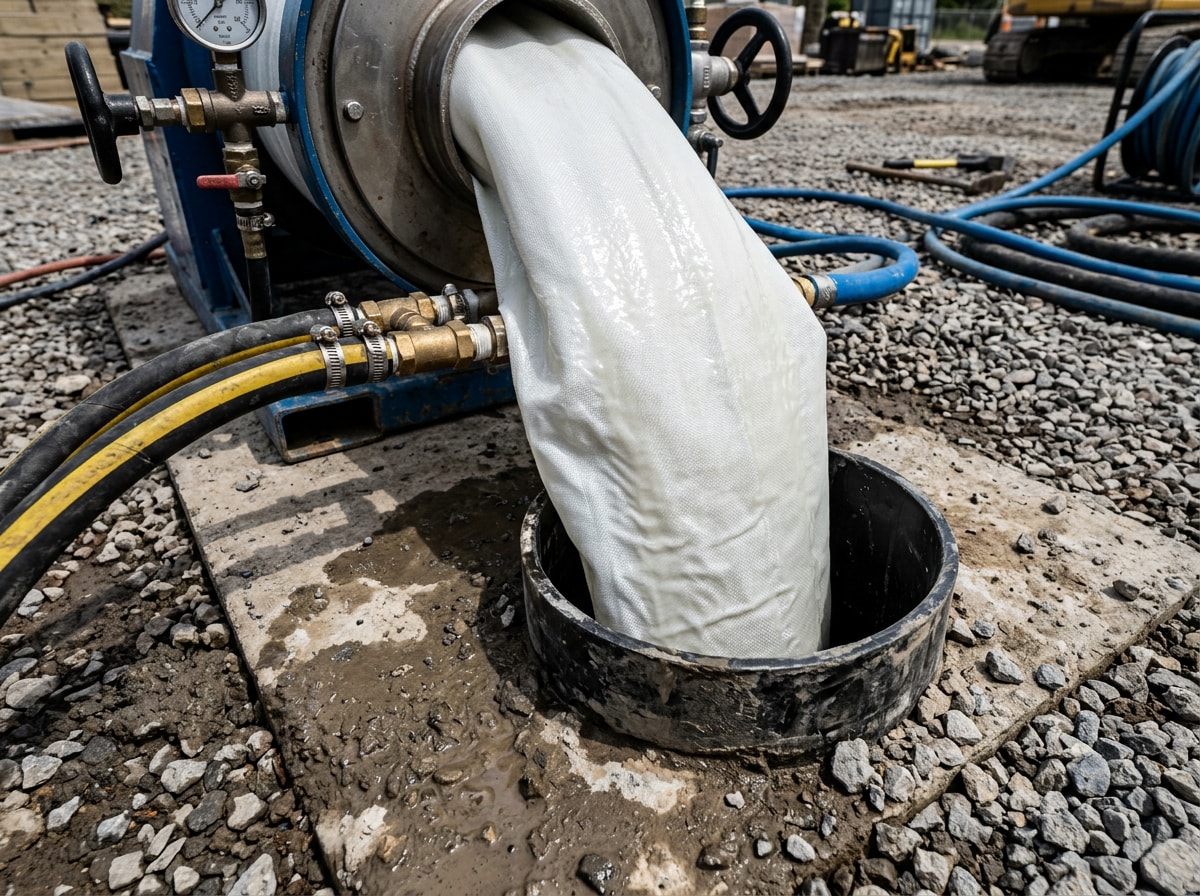
Cured-in-place pipe starts with a felt or fiberglass sleeve saturated in epoxy resin.
The crew either inverts it with air or water pressure or pulls it into position with a cable, then inflates a bladder to press the liner tight against the host pipe wall.
Curing happens through ambient temperature, hot water, steam or UV light, depending on the resin system and run length.
Once cured, the liner is a structurally independent pipe within a pipe. A cutting robot reinstates branch connections, and a post-cure camera pass verifies the result.
Most CIPP lining jobs run one to two days including cure time. Expect a short window, often a few hours, where you cannot run water through the line.
Yes, the liner shaves a small amount of interior diameter. In practice the smooth, jointless surface usually flows better than the pitted clay or cast iron it replaced.
Quality lining work follows published installation standards such as ASTM F1216 for inverted and cured resin-impregnated tubes. Ask which standard a bid is written to before you sign.
Pipe Bursting
Bursting removes the old pipe instead of lining it.
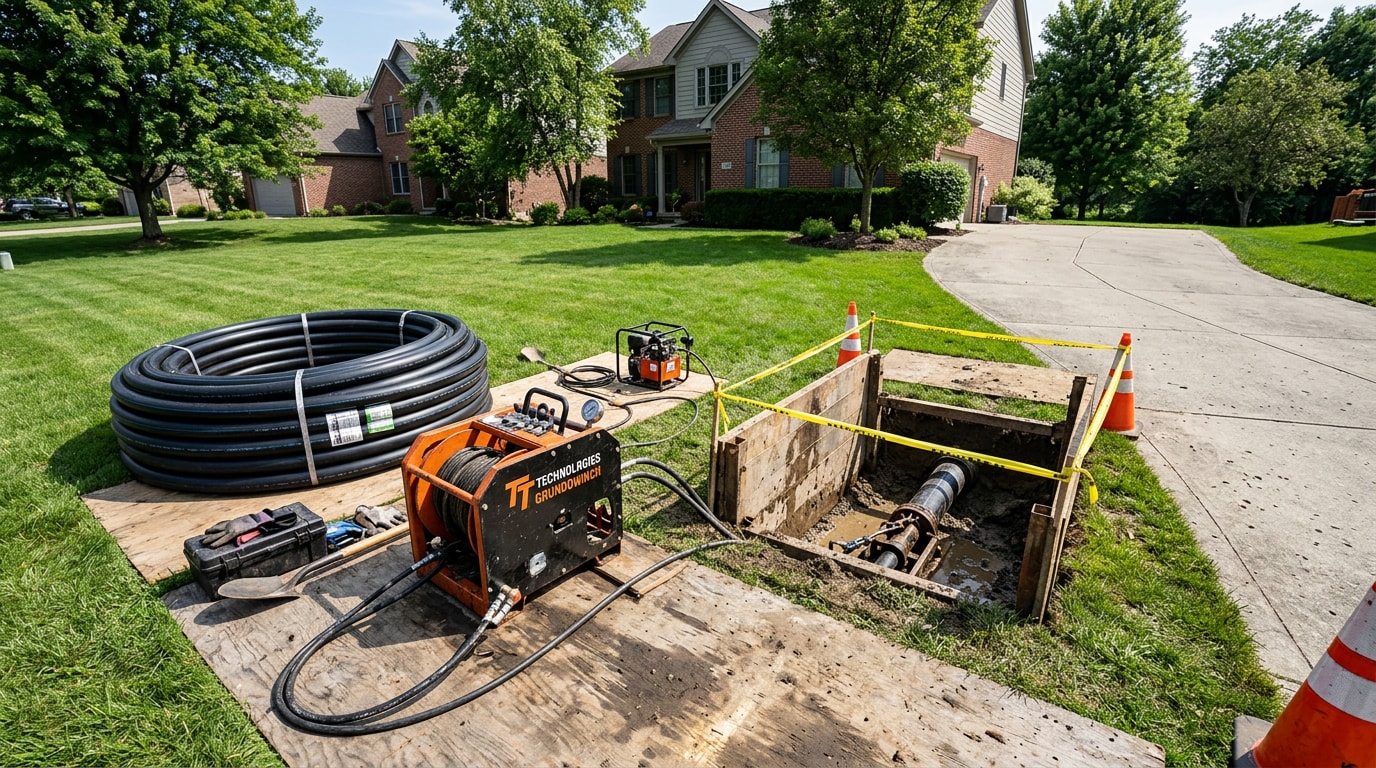
Crews dig a launch pit at one end and a receiving pit at the other, then thread a cable or rod through the existing line.
A hydraulic winch pulls a cone-shaped bursting head back through the pipe. The head fractures the old clay, cast iron or Orangeburg outward into the surrounding soil while towing a continuous length of HDPE pipe behind it.
The crew then ties the new line in at both ends.
The use case is different from lining. Bursting performs full sewer line replacement, and because the head displaces soil it can handle upsizing, going from a 4-inch to a 6-inch line for example.
That makes it the answer when the host pipe is collapsed, badly offset or simply undersized.
It is not universal. Rocky or heavily compacted soil, shallow burial depth, and gas or water utilities running close alongside the sewer can all rule bursting out. The EPA's technical fact sheet on pipe bursting covers the same site constraints that utilities screen for.
Trenchless vs Traditional Sewer Repair Cost
| Factor | Trenchless | Open-cut excavation |
|---|---|---|
| Excavation footprint | 1 to 2 access pits, roughly 3 x 4 ft each | Continuous trench the full run, 2 to 4 ft wide |
| Typical project timeline | 1 to 2 days | 3 to 7 days, longer with hard surfaces |
| Restoration scope | Backfill and seed two small areas | Sod, driveway, walkway, patio, fence, slab |
| Commonly cited service life | 50+ years for CIPP and HDPE | Comparable for new PVC, if bedding is correct |
| Cost per linear foot | Often $80 to $250 installed | Often $50 to $200, before restoration |
Here is the part most quotes bury: on a per-foot basis, trenchless frequently prices at or above dig and replace.
The savings live in the line items that never appear, concrete, asphalt, sod and tree replacement.
Take an 80-foot lateral running under a concrete driveway. Trenchless might land near $14,000 all in. Open-cut can come in lower on the pipe work and still finish higher once driveway replacement is added.
Open-cut still wins sometimes: short, shallow runs under bare lawn with nothing of value above the pipe.
What We See on Local Jobs
One of our crews recently scoped a 1958 clay lateral in a post-war San Jose neighborhood: root intrusion at three joints, no sagging, two mature maples directly over the run.
Lining was the call. The pits went in at the cleanout and the property line, and the trees never got touched.
That pipe profile, clay, four inch, roots at the joints, is the single most common candidate we line in San Jose and surrounding areas.
The Local Detail That Changes the Math
Who owns the pipe changes what you pay for, and South Bay rules are not uniform.
San José's Department of Transportation states that the property owner maintains the sanitary lateral, and that the City will maintain the lower portion from an approved property-line wye cleanout to the main only if that city-approved wye cleanout is installed within five feet of the sidewalk.
Two practical consequences:
- If you have no approved cleanout, the entire run to the main is your bill.
- Adding the cleanout during a trenchless job can shift future street-end repairs off your plate.
Ask for that cleanout to be priced as a line item on every quote. It is the cheapest piece of leverage on the whole project.
Why Homeowners Choose Trenchless Plumbing
You keep the driveway, the patio, the retaining wall and the mature trees whose root systems a trench would sever.
You get your property back faster. Most jobs wrap in one to two days instead of a week of fencing, plywood and mud.
Fewer access points also mean less soil disturbance near foundations and buried utilities, which matters on tight lots where the sewer runs within a few feet of the footing.
Then there is the long game. A jointless liner gives roots nothing to exploit, and joints are where root intrusion almost always starts.
That directly reduces the odds of paying for repeat drain cleaning every spring. If recurring backups are what brought you here, we can scope the line first and tell you whether cleaning alone will hold.
Not sure whether you need a cable, a jetter or a liner? Our guide to rooter plumbing services breaks down which call to make first.
Is Trenchless Plumbing Right for Every Situation?
It solves a large share of residential line failures, but not all of them. Only a camera inspection settles the question for your specific pipe.
Here is what tends to disqualify a line:
- Fully collapsed pipe. No host structure remains for a liner to bond to.
- Belly or sag. Lining follows the existing path exactly and cannot correct slope, so standing water stays standing.
- Severe offsets or several tight bends in a short span, which stop a liner from seating properly.
- Very short runs. Mobilization and equipment setup do not shrink with footage, so economics can favor digging.
- Potable water lines, which demand certified materials and narrow the product options.
Regardless of method, sewer lateral work almost always requires a permit and an inspection before backfill. Budget for that.
Ideal for Older Plumbing Systems
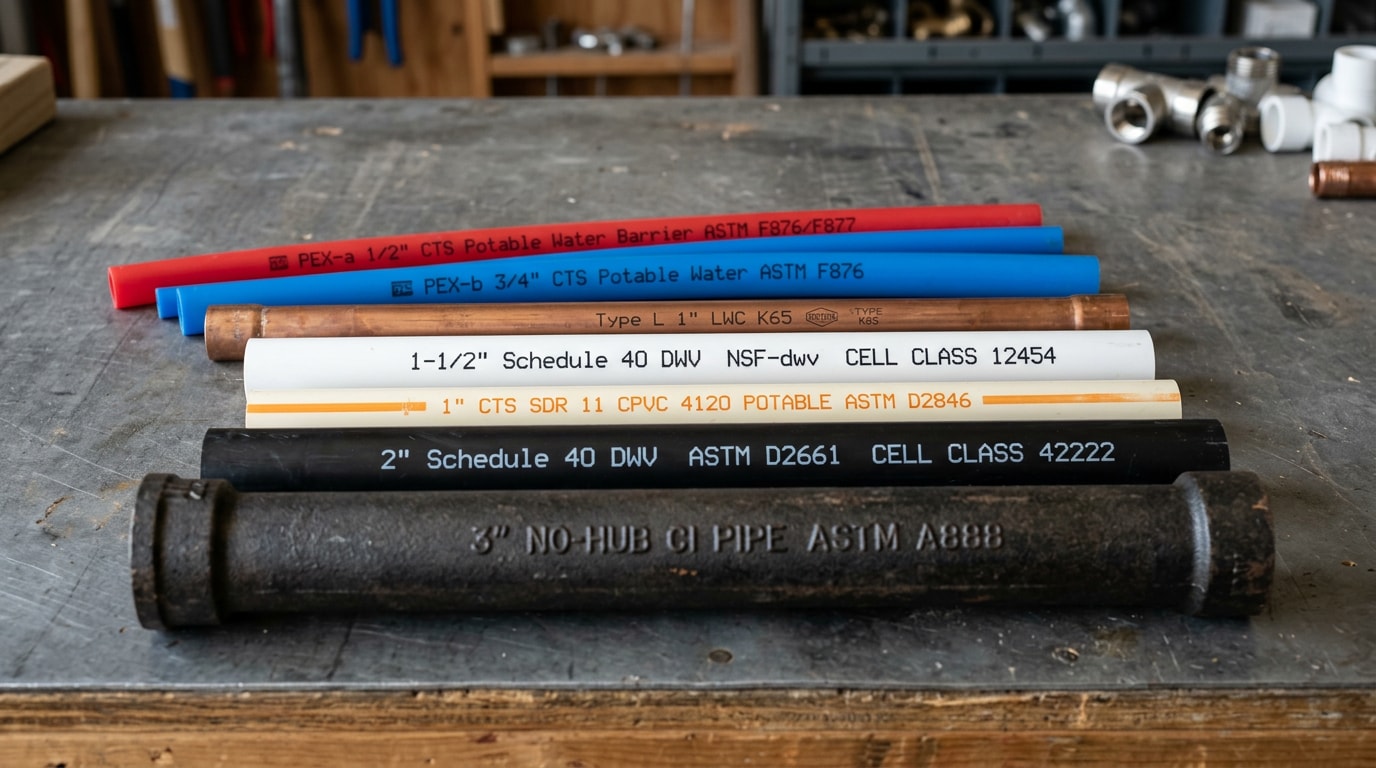
The strongest candidates are mid-century and older homes on clay, Orangeburg or cast iron laterals, pipe that is degraded but still structurally present.
Root intrusion at the joints, scale buildup, hairline cracks and minor offsets all line well.
The symptoms usually show up well before a failure:
- Recurring backups that return a few weeks after each cleaning
- Slow drains across multiple fixtures at once, not just one
- Sewer odor near a floor drain
- A patch of lawn that stays soggy in dry weather
If your home predates 1980 and any of that sounds familiar, a scope is worth scheduling. Schedule a free inspection and we will put a camera in the line before anyone quotes a method.
FAQ
How much does trenchless sewer repair cost?
Most residential trenchless sewer repair runs roughly $80 to $250 per linear foot, with whole-job totals commonly between $5,000 and $20,000. Pricing follows linear footage, pipe diameter, method, access difficulty and local permit fees.
Is trenchless cheaper than digging?
Often no on the pipe work alone, and often yes on the total. Per foot, trenchless frequently prices at or above open-cut. The gap closes or reverses once you add driveway, patio, sod and tree replacement to the excavation bid.
How long does trenchless pipe lining last?
Properly installed CIPP is generally expected to last 50 years or more, and HDPE from pipe bursting is rated similarly. That assumes quality resin, a sound host pipe, correct curing and reasonable maintenance. Warranty terms vary, so ask what is covered in writing.
Does trenchless really mean no digging?
No. It means two small pits instead of a full-length trench. Crews still need a launch point and a receiving or termination point, usually a few feet square each.
Can I use water and toilets during the job?
Not for the whole job. Expect a few hours of no water use while the liner cures or the new pipe is pulled and tied in. Most crews will tell you the exact window the morning of.
What are the disadvantages of trenchless pipe lining?
Lining slightly reduces interior diameter, costs more per foot than excavation on short runs, and struggles with multiple tight bends or very small-diameter pipe. It cannot repair a fully collapsed line or correct a belly. Those need bursting or conventional replacement.
Do I need a permit for trenchless sewer work?
Yes, in almost every jurisdiction. Repairing or replacing a building sewer typically requires a plumbing permit and an inspection before the pit is backfilled, and work extending into the street or sidewalk usually requires a separate public works permit. Your contractor should pull both.
Does homeowners insurance cover trenchless sewer replacement?
Standard policies usually exclude gradual failure, root intrusion and normal wear on buried lines. Some insurers sell a service line endorsement that covers sudden damage to the lateral. Check your policy wording before assuming coverage.
Can I DIY trenchless pipe repair?
No. It requires inversion or bursting rigs, CCTV and locating equipment, resin handling with controlled cure conditions, and permits a homeowner cannot sign off on. A licensed contractor also carries the liability if the line fails inspection.
Get the Line Scoped First
Method selection without a camera is a guess, and a guess on a buried pipe is expensive.
See examples of completed work on our projects page, browse what else we handle at Gomez Sewer and Drain, or book an inspection and get a written recommendation tied to actual pipe condition.
Written by the licensed plumbing and sewer crew at Gomez Sewer and Drain, who scope, line and burst residential laterals across Santa Clara and San Mateo counties. Questions about your line? Reach the team through our contact page.