Searching for plumbing suppliers near me usually means one of two things: a part failed and you need it today, or you are pricing a project and want to know whether the trade counter beats the big-box aisle. The answer depends far less on sticker price than on what a second trip across town costs you. Here is how the three buying channels actually compare, who is allowed to buy at each, and how to vet a branch before you drive over.
Find Plumbing Suppliers Near You: The 5-Minute Version
If you need a part today, work this order:
- Search by part, not by store. Type the exact model or SKU plus your city. Live-inventory pages from distributors surface faster than a generic store list.
- Call the counter, not the main line. Ask for the plumbing or PVF counter directly. Showrooms and HVAC desks often sit at the same address with separate stock.
- Ask three questions. Is it on the shelf right now, can you hold it under my name, and what time does the counter close (not the showroom)?
- Bring the broken piece. A cracked cartridge in your hand beats a description every time. A phone photo of the valve body and any stamped numbers is the backup.
- Confirm the return policy on special orders before you pay. Special-order trim and long-lead equipment are frequently non-returnable.
That sequence prevents the single most expensive outcome of a parts run: driving to a branch that does not stock your category.
Supply House vs. Hardware Store vs. Big Box: Honest Comparison
Neither channel wins on everything. The right answer depends on what is in the cart, because a bag of commodity fittings and a commercial water heater are not the same purchase decision.
| Plumbing supply house | Big-box home center | Neighborhood hardware store | |
|---|---|---|---|
| Who it serves | Licensed trades, builders, informed DIY | General homeowners | General homeowners |
| Inventory depth | Multiple sizes, schedules and grades of the same item | Fast-moving consumer SKUs | Narrow, convenience-focused |
| Counter expertise | Trained on specs, submittals, substitutions | Varies widely | Varies widely |
| Commodity price | Competitive to higher | Usually lowest | Highest |
| Specialty and OEM parts | Strong, plus special order | Limited | Rare |
| Delivery | Jobsite and home delivery common | Limited, often fee-based | Rare |
| Hours | Early open, short Saturday, often closed Sunday | Long daily hours | Moderate |
Use both channels deliberately. Grab commodities wherever is closest, and source anything specified, specialty or time-critical from a full-line distributor with real depth behind the counter.
What Is a Plumbing Supply House and Why It Matters
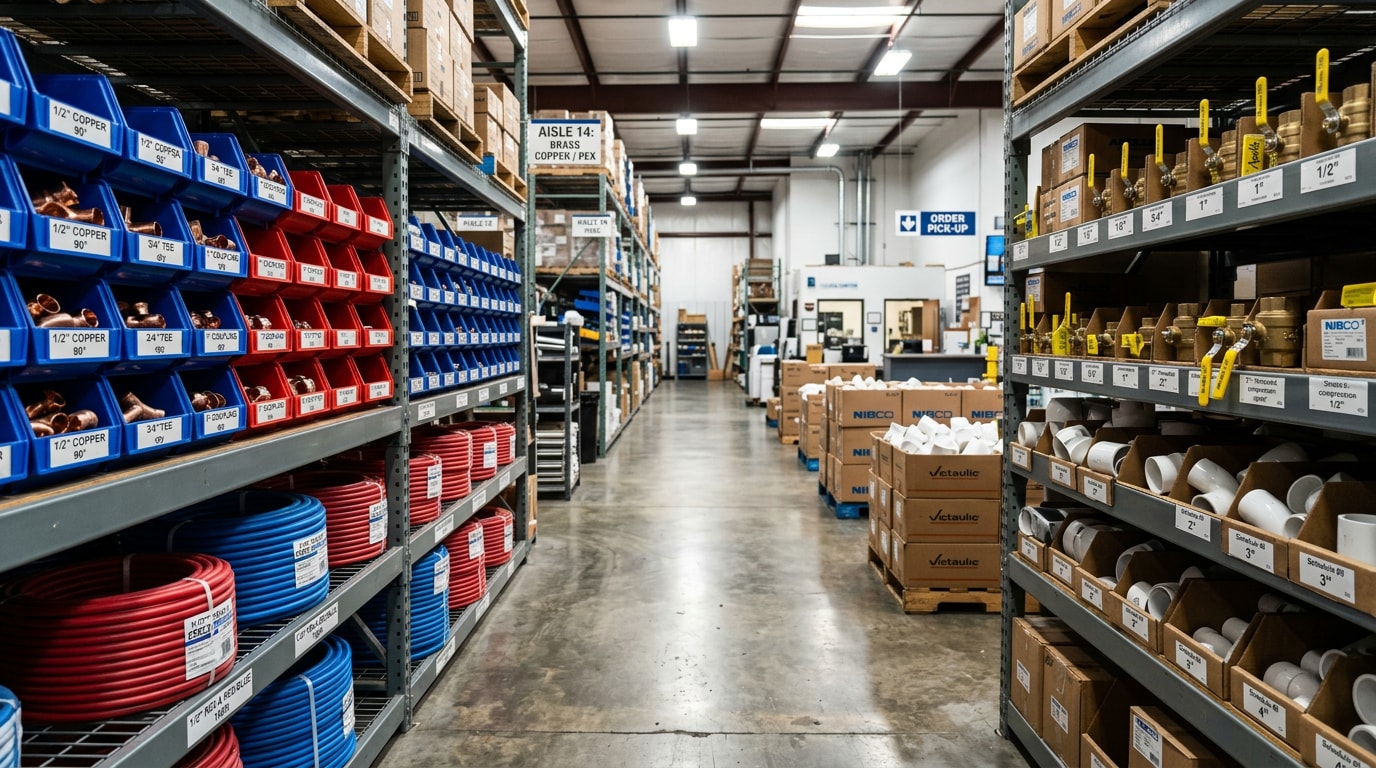
A plumbing supply house is a wholesale distributor stocking professional-grade plumbing and mechanical materials for licensed trades, builders and knowledgeable homeowners. It is not a hardware store and not a home center. Its inventory is built around what installers specify on real jobs, not around what sells well on an end cap.
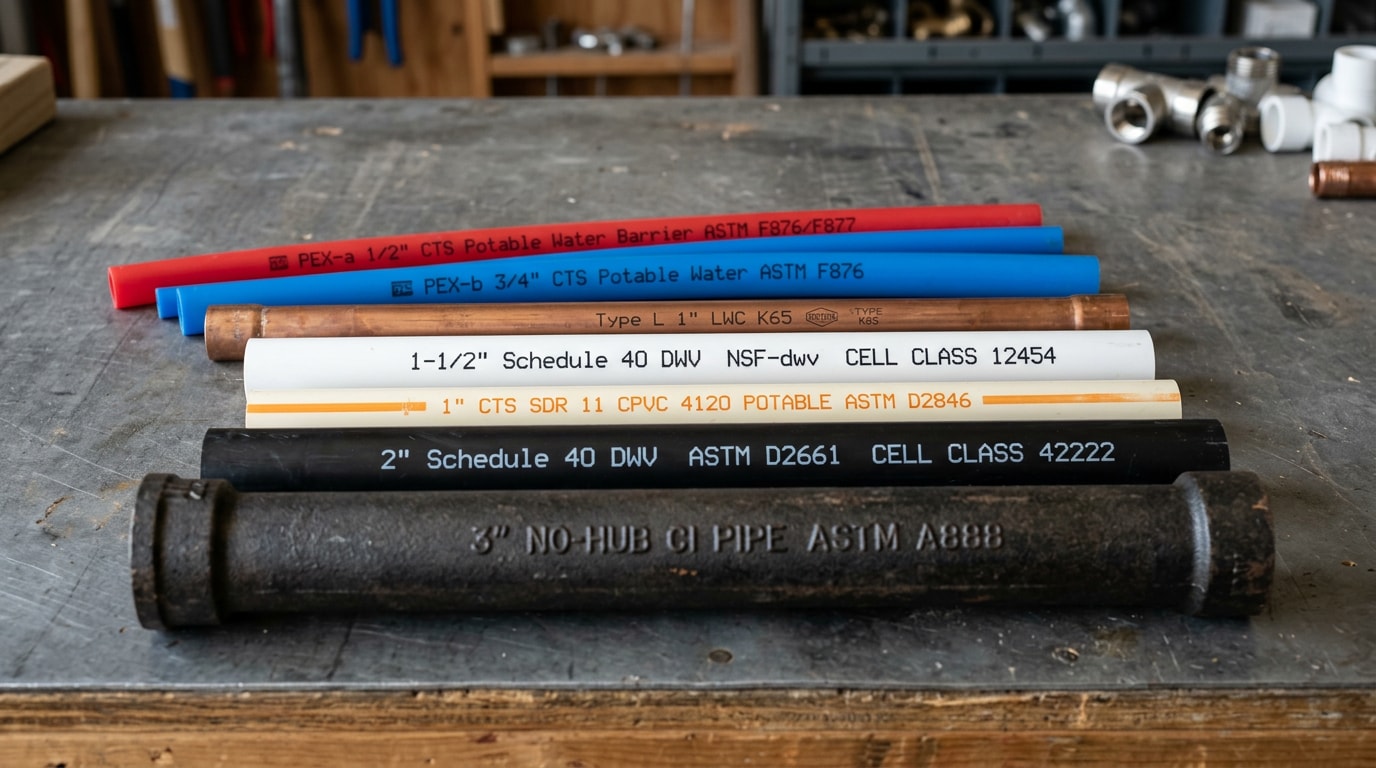
Walk the aisles and the difference shows up fast. Copper comes in Type K, L and M rather than one generic option. PEX-A and PEX-B sit beside CPVC for hot-water runs, PVC for drain-waste-vent, and cast iron for commercial drainage.
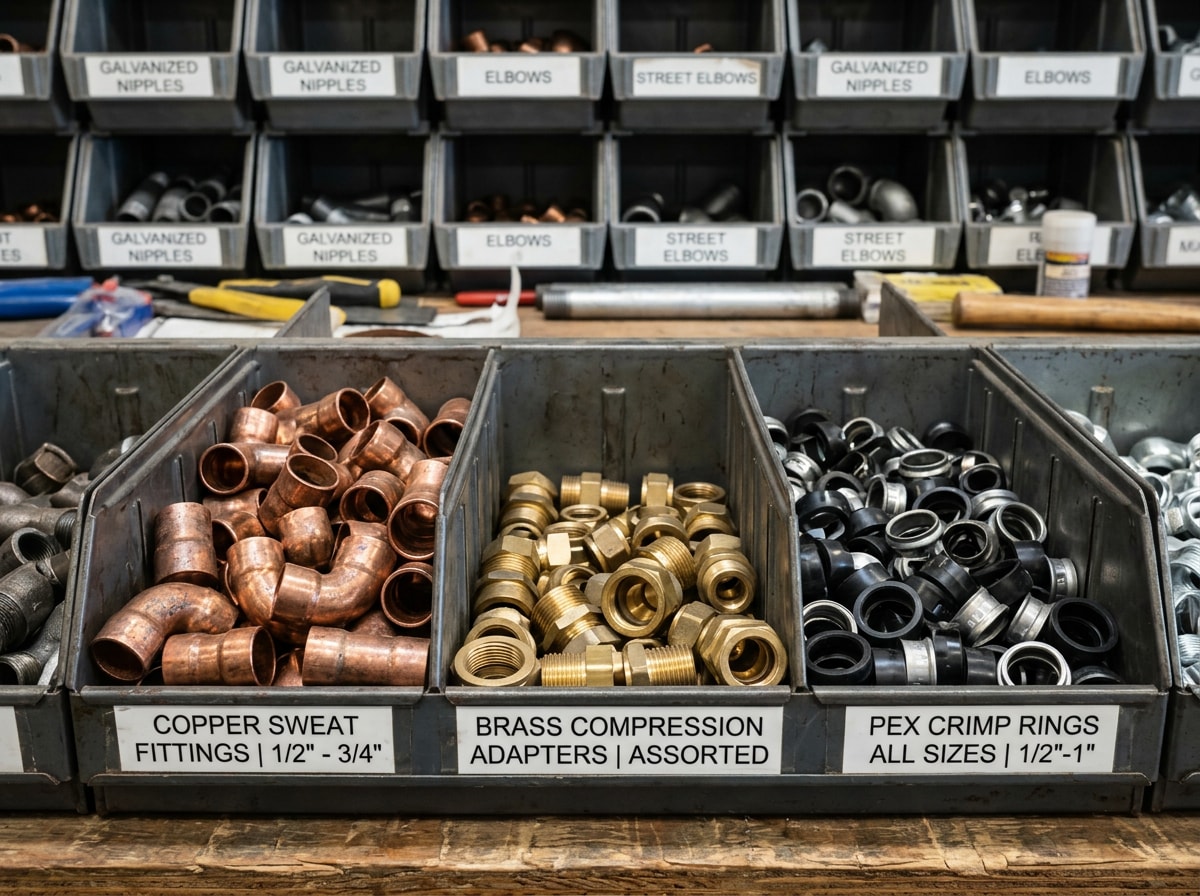
Three things define the channel:
- Inventory depth. More than one size and schedule of everything.
- Product grade. The lines manufacturers build specifically for the trade.
- Technical counter staff. People who can identify a part from a photo or a broken piece.
The channel is large and local by design. The American Supply Association, the national trade body for plumbing, heating, cooling and piping distributors, represents the distributor network that serves the trade, which is why there is usually a branch closer than you think.
Who Can Buy at a Plumbing Supply House?
Two groups make up most counter traffic.
The first is licensed plumbers and mechanical contractors. They open a trade account for contractor pricing, net terms and predictable job costing. They also lean on counter staff to confirm a spec, pull a submittal, or find a working substitute when a part gets discontinued mid-job.
The second is homeowners who have done the research and want the same grade their plumber would install. That is a legitimate reason to shop the trade channel, and most branches welcome it.
So can you walk in without a business? In most cases, yes. What changes is the pricing tier and the paperwork:
- Cash and card customers typically pay list or a standard retail tier, not negotiated contractor pricing.
- Tax-exempt purchasing and net terms require an approved account.
- Some branches restrict certain commercial equipment or warranty-registered items to licensed buyers.
Policies vary by distributor, so call the branch nearest you before loading the truck.
What Supply Houses Stock That Big Boxes Do Not
Big-box retailers stock for fast-moving homeowner demand: standard faucets, basic toilets, small repair kits, the twenty parts that cover eighty percent of weekend projects. A supply house carries the rest.
Typical depth includes:
- Commercial water heaters and high-capacity residential units
- Copper, brass and cast-iron fittings in odd configurations
- Press fittings, press jaws and specialty installation tools
- Repair parts for fixture lines discontinued a decade ago
- Backflow preventers, mixing valves and code-specified assemblies
- Full fixture packages in matched finishes for multi-unit work
Toilets make the quality gap obvious. Two units can share a brand and a model family while differing in ways no product photo shows: a metal fill valve versus plastic, a fully glazed trapway versus a partially glazed one, solid brass flush hardware versus molded plastic.
Installers also report running into channel-specific SKUs, meaning the same model name built to slightly different specs depending on where it is sold. Treat that as a field observation rather than settled fact, since manufacturers generally dispute it. Either way, comparing full model numbers across channels is worth a minute before assuming two boxes hold the same thing.
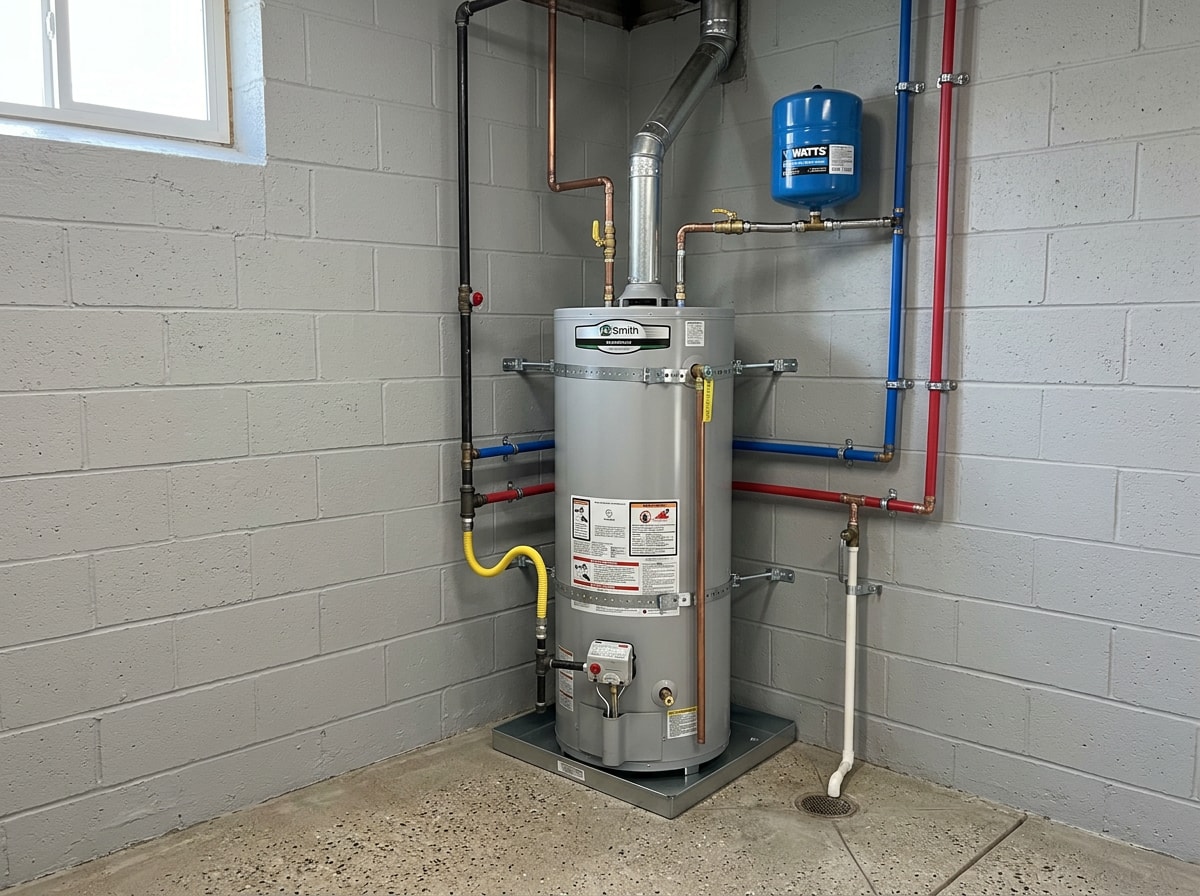
Equipment stock is also shaped by regulation. Water heaters on the floor must meet current federal minimum efficiency levels, which the U.S. Department of Energy sets through its appliance and equipment standards program. A good counter can tell you what changed and what it means for sizing a replacement. If the unit is already leaking, skip the parts hunt and book water heater installation instead.
The Real Price Comparison: Unit Cost vs. Total Cost
Commodity items often do cost less at a home center. Volume buying is real. But specialty gear, exact-model OEM parts and jobsite delivery flip the math quickly once labor enters the equation.
Here is the part most comparisons skip. The table below uses representative U.S. pricing observed in early 2026, a loaded labor rate of $85/hour, and a 40-minute round trip for an unplanned parts run, which is roughly $57 in lost billable time. Prices move constantly and vary by market, so re-run the numbers with your own rate.
| Item | Big box (typical) | Supply house (typical) | With one unplanned parts run |
|---|---|---|---|
| ½" copper coupling | ~$1.20 | ~$0.95 | ~$0.95, in stock, no second trip |
| ½" PEX crimp ring (each) | ~$0.35 | ~$0.20 | ~$0.20 |
| Mid-tier kitchen faucet | ~$220 | ~$265 | ~$265 with metal internals and longer warranty |
| 50-gal gas water heater | ~$750 | ~$820 delivered | $750 + $57 pickup trip = ~$807 |
| OEM cartridge, discontinued line | often not stocked | ~$38 | ~$38 today vs. shipped in three days |
Two cheap couplings do not justify a special trip. One missing cartridge on a Friday afternoon does.
That is the whole argument. Unit price is a small slice of total project cost once drive time, stock reliability and delivery are counted. On a job we ran in Santa Clara, a $38 counter cartridge saved a three-day wait on a shipped part, which would have left a second-floor bathroom out of service through a weekend. The cheaper part would have been the more expensive decision.
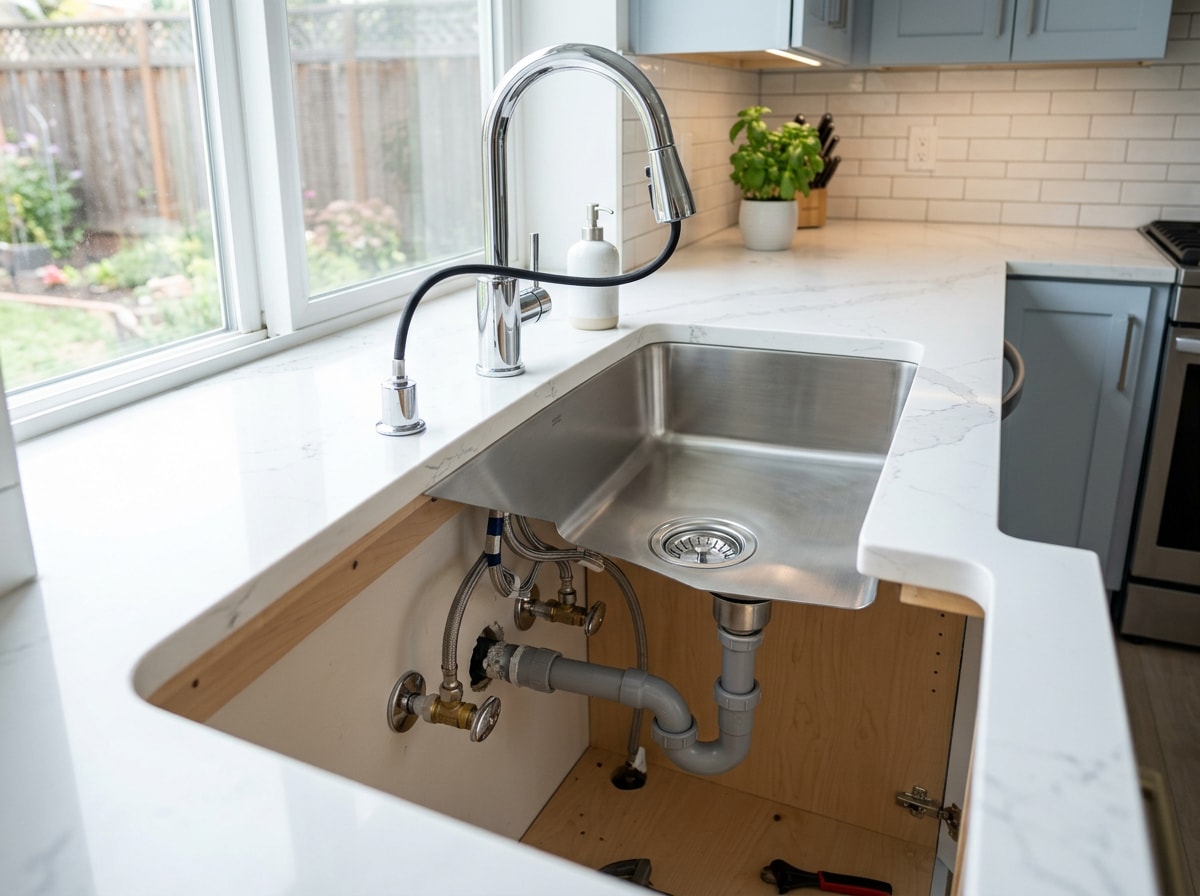
How to Choose a Local Plumbing Supplier
Picking a supplier works better as a repeatable process than a gut call.
Start with scope and logistics
- Repair work pulls from a different inventory than new construction. One needs breadth of small parts, the other needs quantity and lead-time reliability.
- Measure distance from your usual jobsites, not from your house.
- The closest branch is not automatically the cheapest once you count how often it is out of stock.
- A branch 25 minutes out that stages your SKUs reliably beats a 10-minute branch that sends you home empty-handed.
- Ask about the delivery radius. It is frequently wider than advertised.
Research stock, terms and staff
- Check which brands the supplier genuinely stocks, not which ones appear in a catalog.
- Standardizing on one water heater or faucet line keeps your truck inventory simple.
- Look at depth on the SKUs you buy most, not the full catalog.
- Confirm the return policy on special orders, credit limits and billing cycles.
- Triangulate reputation: ask two or three other contractors where they buy and why, then read published reviews against what they told you.
Put quality ahead of price gap
A failed fitting costs far more than the price gap that tempted you, because the callback, the drywall and your reputation all ride on it.
Filter selections three ways:
- Match materials to local water conditions. Hard water favors ceramic disc cartridges and scale-resistant components.
- Confirm code compliance. Requirements genuinely differ between neighboring municipalities, and most jurisdictions build on a model code such as the International Plumbing Code with local amendments layered on top.
- Look for third-party certification marks, including lead-free compliance. The EPA's lead-free requirements under the Safe Drinking Water Act apply to pipe, fittings and fixtures carrying water for human consumption.
When the Supplier Is Not Your Problem
Plenty of parts runs are wasted motion. Before you shop, rule out these:
- Water on the floor right now. Shut off the supply and call for emergency plumbing service. No part fixes an active flood.
- Repeat clogs in the same fixture. That is usually a line issue, not a fitting issue. Drain cleaning or a camera inspection answers it faster than new hardware.
- A fixture that needs swapping, not patching. Bathroom fixture replacement handles supply, shutoffs and trim in one visit.
- Pipe that fails in more than one spot. Isolated leaks get a plumbing repair. Recurring pinholes point at the system.
- A part you are not sure how to set. Our walkthrough on plumbing fixture installation covers the sequence before you commit to the purchase.
Buying the right part and setting it wrong still ends in a service call. If the install is beyond comfortable, book plumbing installation and let the materials come from the trade channel through us.
Not sure whether to buy the part or book the job? Request a free estimate and we will tell you which one actually costs less.
Searching Locally in the Bay Area
Supply density is good across Santa Clara County and the Peninsula, and most branches keep early counter hours for contractors loading out before 7 a.m.
Two local habits save real time:
- Check counter hours separately from showroom hours. They often differ, and the counter usually opens earlier and closes sooner.
- Confirm whether online stock levels are live or estimated before driving.
We work out of San Jose and surrounding areas and cover Santa Clara, Sunnyvale and Redwood City, so our trucks carry the common failure parts for this region already. Hard water here is the usual culprit behind scaled cartridges and short water heater life.
FAQ
What is a plumbing supply house and what do they stock?
A plumbing supply house is a wholesale distributor of plumbing and mechanical materials. Typical stock includes pipe and fittings, valves, fixtures, water heaters, specialty tools and repair parts that general hardware stores do not carry. Depth is the point: multiple sizes, materials and grades of the same item.
What is the difference between a supply house and a hardware store?
A hardware store carries a broad range across many home-improvement categories, from paint to fasteners. A supply house specializes in plumbing and mechanical systems and sells primarily to the trade. The scope is narrower and the inventory within it is far deeper.
Can anyone buy from a plumbing supply store, or do you need a license?
Most branches sell to the public. A license is not usually required to walk in and buy. An approved trade account is what unlocks contractor pricing, net terms and tax-exempt purchasing.
Do plumbers get a discount at supply houses?
Yes, through account pricing negotiated by volume and buying history. That is why a plumber's material line item can be lower than the shelf price you were quoted, even before counting delivery and warranty support.
Are plumbing supply houses cheaper than big-box stores?
Not on commodities. Big-box pricing usually wins on standard couplings, crimp rings and basic repair kits. Supply houses win on specialty items, exact-model OEM parts, equipment delivery and anything you need in stock today.
Can I buy my own fixtures and have a plumber install them?
Usually yes, though many contractors will not warranty a part they did not supply. Ask before you buy. If the fixture turns out to be defective, you handle the return and pay for the second visit.
Do plumbing supply stores deliver?
Most do, to jobsites and often to homes. Scheduled delivery typically requires an account, while will-call pickup is open to everyone. Ask about the radius, since it is frequently wider than the website states.
What should I bring to identify an unknown part?
Bring the failed piece if you can remove it safely. Otherwise bring a clear photo of the valve body, any stamped model or casting numbers, and a measurement across the threads or tube. That combination identifies most parts at the counter in a few minutes.
Are plumbing supply houses open on weekends?
Many run a short Saturday morning counter and close Sunday. Verify before driving, and ask whether an emergency after-hours contact exists for contractors on account.
---
Gomez Sewer and Drain is a licensed plumbing, drain and sewer contractor serving San Jose and the surrounding Bay Area. See our work on the projects page, browse services from our homepage, or contact our team with a photo of the part and we will tell you what it is.