A plumbing leak rarely starts as a flood. It starts as a faint stain, a bill that climbs for no reason, or a sound in the wall at 11 p.m. Here is how to confirm one in about an hour, what the repair actually involves, and what it costs in 2026.
Signs of a Plumbing Leak
The most common signs are a sudden spike in your water bill, stains or bubbling paint, the sound of running water with every fixture off, unexplained low pressure, a warm patch on the floor, and a musty smell that keeps coming back.
Two or more of those together raises the urgency.
Unexplained Water Bills
Billing data is often the first honest witness.
A sharp increase with no change in how your household uses water usually points to a hidden leak somewhere in the system.
Compare the same month year over year instead of month to month. That strips out seasonal irrigation and holiday guests.
If the spike still has no explanation, confirm it with the meter test below before you open any walls.
Visible Water Stains or Discoloration
Stains carry evidence in their shape and color.
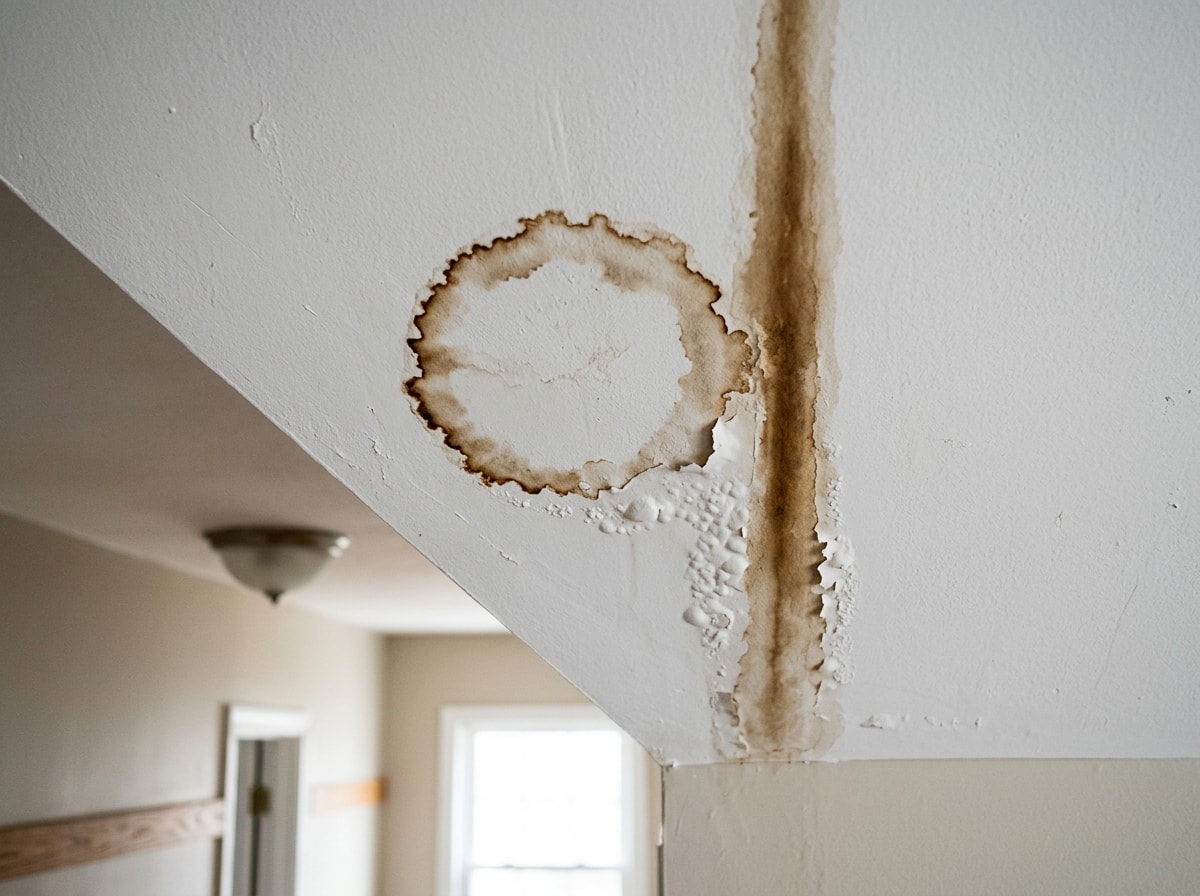
Yellowish brown, irregular marks on drywall or plaster are classic water damage. A roughly circular ring suggests an active leak directly above or behind that spot. Downward streaks suggest water traveling from somewhere higher up.
Bubbling paint, peeling wallpaper and soft drywall that gives under light pressure belong to the same family of clues. So do damp spots on a floor or around an appliance where the surface has no business being wet.
Sound of Running Water
Noise travels further than moisture.
If you hear water running or dripping while every tap and appliance is off, water is moving somewhere it should not be.
Hissing points to pressurized water escaping through a small opening. Listen late at night when the house is quiet, then trace the sound to a specific wall or section of floor. Sound under a concrete floor can indicate a slab leak.
Low Water Pressure
Water escaping before it reaches a fixture means less arrives at the tap.
The pattern matters. If one fixture is weak, suspect a clogged aerator or a problem on that branch. If pressure drops across the whole house, that is more consistent with a supply line leak.
A Warm Spot on the Floor
A localized warm patch on tile, vinyl or hardwood over a concrete slab usually means a hot water line is leaking inside the slab. It is one of the few signs that points almost directly at a location.
Musty Odors
A musty or mildew smell that returns after you clean is a moisture problem, not a cleaning problem.
Trapped dampness behind cabinets and inside wall cavities creates conditions mold needs, often before anything is visible. NIOSH notes that <a href="https://www.cdc.gov/niosh/mold/about/index.html">indoor dampness and mold are linked to respiratory and other health problems</a>, so the fix is removing the water source, not masking the odor.
Confirm It in About an Hour: The Water Meter Test
This is the step most homeowners skip, and it is the one that settles the question.
- Shut off every water using fixture and appliance, including the ice maker and any irrigation timer.
- Write down the exact meter reading, including the small sweep hand or digits.
- Wait at least one hour without using water. Overnight is better for slow drips.
- Read the meter again. Any movement means water is leaving the system somewhere.
Two details most guides leave out.
Most residential meters read in cubic feet, and one cubic foot equals about 7.48 gallons. So if the meter moves 2 cubic feet in an eight hour overnight test, that is roughly 15 gallons, or about 45 gallons a day running out of sight. That math turns a vague suspicion into a number you can act on.
Many modern meters also have a small leak indicator triangle or star. If it rotates while the house is idle, you almost certainly have a leak.
Narrow It Down Before You Call
- Inside or outside: close the main house shut off valve and re-read the meter. Movement with the house isolated points to the service line or irrigation.
- Hot side or cold side: close the cold water inlet valve on top of the water heater. If the meter stops, the leak is on a hot line, which matters a lot for slab leak routing.
- Toilet or not: put a few drops of food coloring in each tank. Color in the bowl within 10 minutes without flushing means a failed flapper.
The EPA reports that <a href="https://www.epa.gov/water-sense/fix-leak-week">household leaks waste nearly a trillion gallons nationwide each year, and 10 percent of homes lose 90 gallons a day or more</a>. That 90 gallon figure is roughly what a hidden pinhole or a running toilet looks like on your bill.
A moisture meter helps narrow a damp wall. Acoustic listening gear and thermal imaging, used during a professional plumbing inspection, find leaks under slabs and behind finishes that no DIY tool reaches.
What to Do in the First 10 Minutes
For a minor drip, close the fixture's own supply valve.
For anything larger, shut the main water shut off valve, usually near the meter or where the service line enters the home. Then open a faucet below the leak to relieve line pressure before you touch the pipe.
If water is near outlets, wiring or the electrical panel, kill power to that circuit first and stay out of standing water.
Active flooding, a hot water line failure or a leak over a finished ceiling is a same day call. Our emergency plumbing service exists for exactly that window, and requesting a free estimate is the right move the moment the water is off.
What Causes Plumbing Leaks
Knowing the likely cause shapes the cost, because a worn rubber washer and a failing supply line sit at opposite ends of the scale.
- Worn fixtures: faucet cartridges, showerhead connections, toilet flappers and supply hoses.
- Corrosion: pinholes in aging copper and galvanized steel, the usual reason a home needs pipe replacement rather than another patch.
- High water pressure: sustained pressure stresses joints, fittings and appliance valves.
- Thermal movement and soil shift: pipes expand, contract and get loaded by settling ground, especially under slabs.
Pressure is worth a meter check. Residential static pressure is generally expected to sit between 40 and 80 psi, and readings above that range usually point to a failed or missing pressure reducing valve. Treat these as likely contributors, not a confirmed diagnosis. One leak can have more than one cause.
Where Leaks Actually Start
Start where failures cluster:
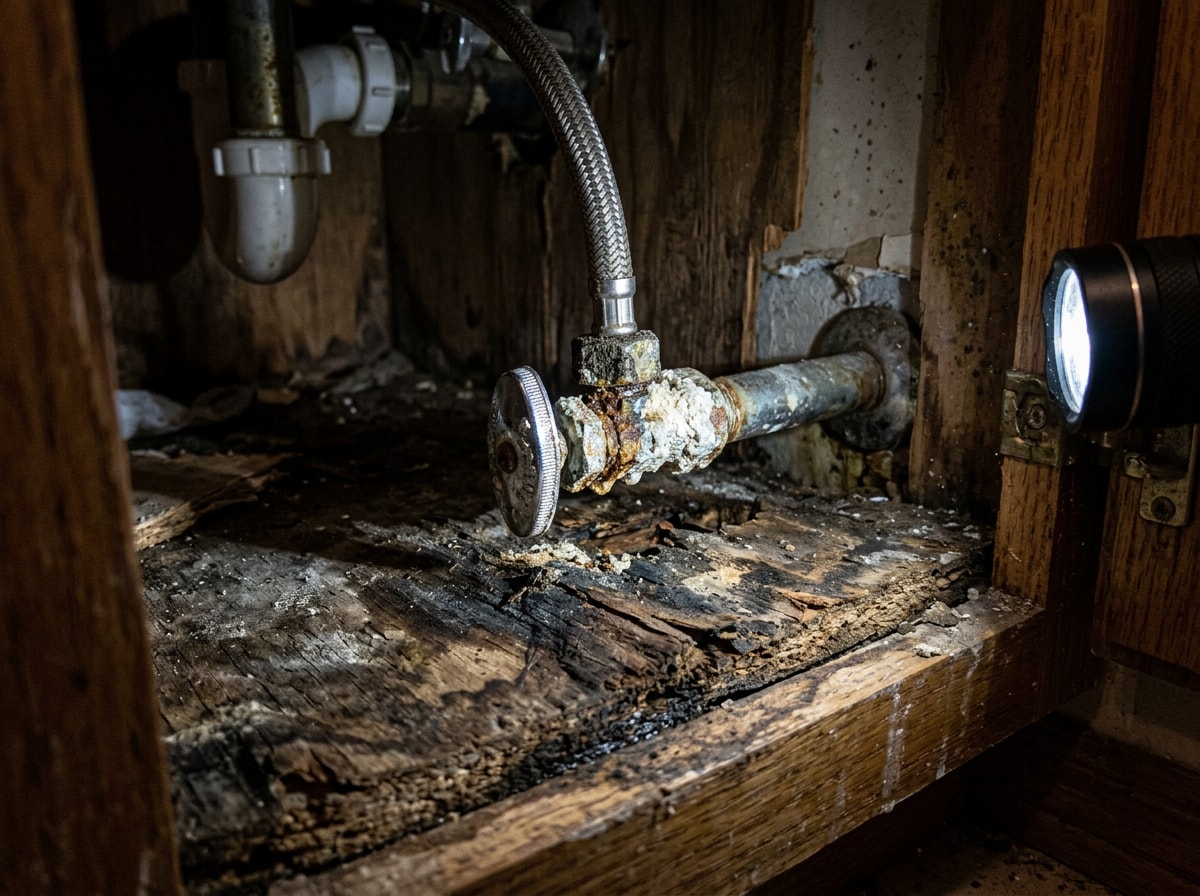
- Under sinks: worn seals and loose compression fittings, with slow moisture collecting on the cabinet floor.
- Around appliances: washing machine hoses, dishwasher connections and refrigerator ice maker tubing fail at the hose and the connection.
- Water heaters: check the base, the T and P discharge pipe, and the connections on top.
- Toilet bases: a failed wax ring usually shows as soft or darkened flooring, not standing water.
- Exterior hose bibbs: freeze and strain damage often shows up inside the wall behind the spigot.
On service calls across San Jose and the Peninsula, the two we find most are a weeping angle stop under a bathroom sink that has been slowly rotting the cabinet base, and a slab hot line pinhole in a mid century home where the only symptom was a warm tile floor.
How to Repair a Plumbing Leak
Temporary Fixes That Buy You Time
Three stopgaps hold while you schedule a real repair.
- Plumber's tape wraps pinholes or loose joints for a short term seal.
- Epoxy putty is kneaded and pressed onto the leak and works on PVC, metal and PEX.
- A pipe repair clamp tightens around a compromised section and holds pressure.
None of these is a repair. Think days, not months.
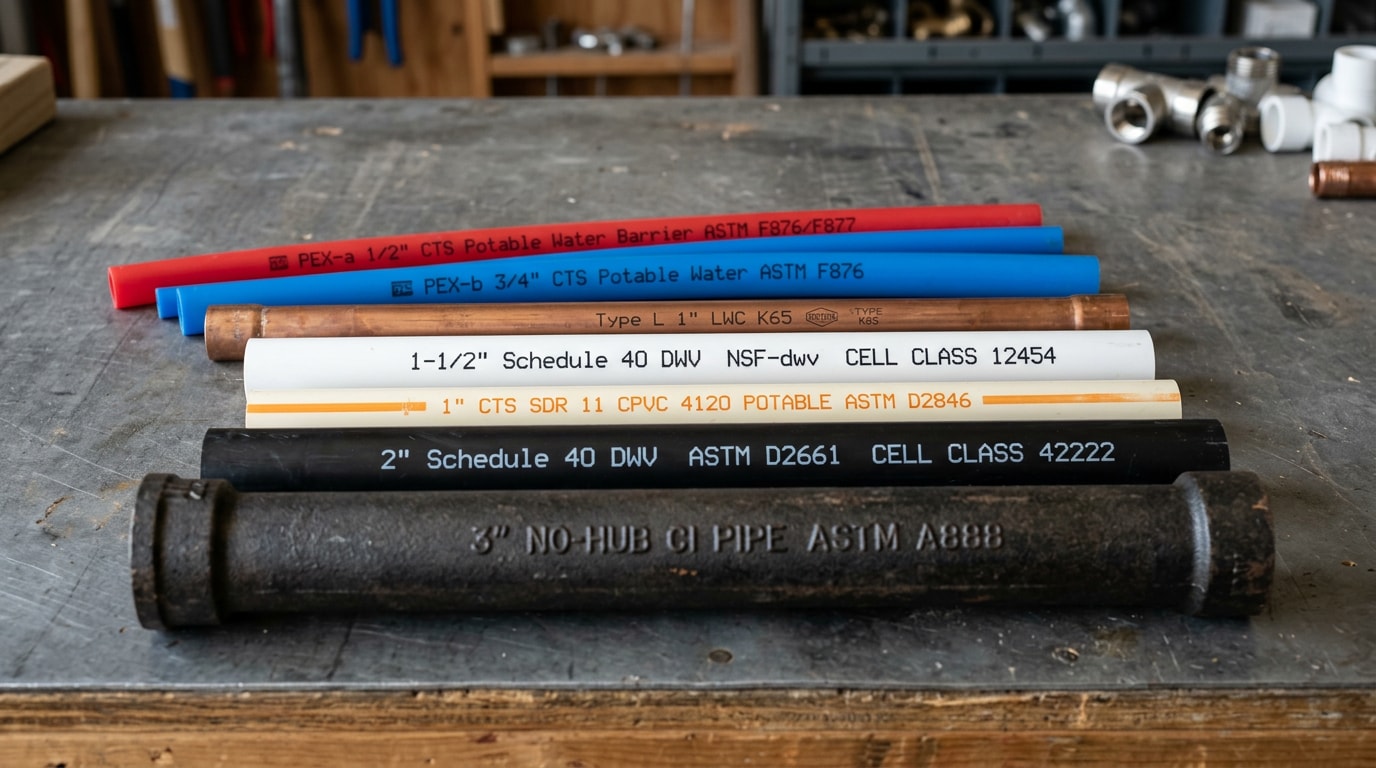
Permanent Repairs by Pipe Material
- PVC: cut out the damaged section, dry fit matching pipe, clean the ends with primer, then solvent weld with the correct cement.
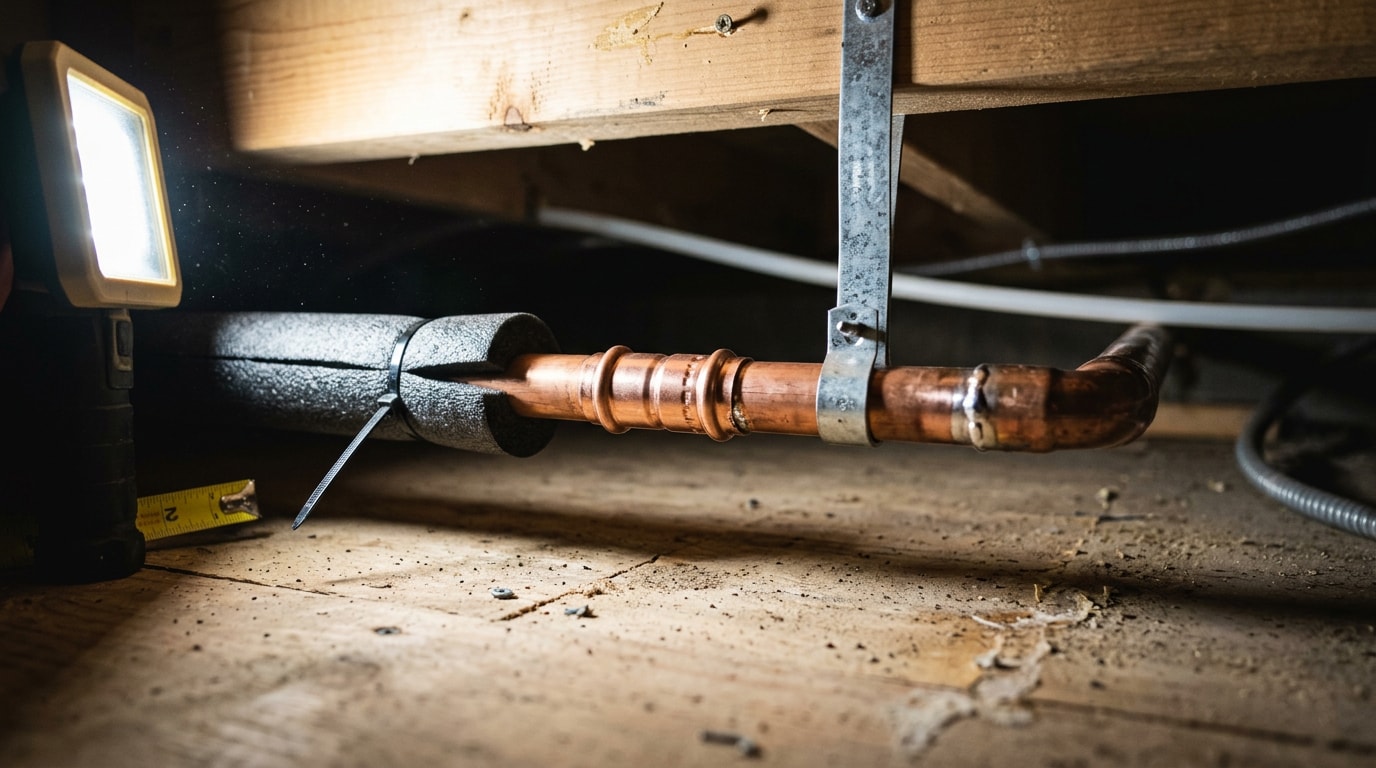
- Copper: drain and dry the line, cut out the bad section, then install a press or compression fitting, or solder in a new segment with lead free solder.
- PEX: cut the damaged segment with PEX cutters, install barbed fittings secured with crimp rings, then repressurize and check the joint.
Step by step detail on each material is covered in our guide to plumbing pipe repair.
When to Stop and Call a Licensed Plumber
Stop for slab leaks, main line breaks, anything behind finished walls, and any gas line.
Repairs must use approved materials, and significant replacements generally require a permit and inspection. California enforces the <a href="https://www.dgs.ca.gov/bsc/codes">California Plumbing Code, Title 24 Part 5</a>, with local jurisdictions adding their own amendments, so permit triggers vary by city. A licensed plumbing repair contractor pulls that paperwork as part of the job.
What Does It Cost to Fix a Plumbing Leak in 2026?
Most straightforward repairs land between $150 and $850, and the single biggest variable is access. A visible, reachable pipe sits near the bottom. Anything under concrete or behind finished surfaces climbs fast once demolition, cleanup and restoration enter the picture.
| Leak scenario | Typical range | Main cost driver |
|---|---|---|
| Accessible pipe or fitting | $150 to $550 | Simple access, short labor time |
| Behind wall leak | $400 to $1,500 | Drywall removal and surface restoration |
| Slab leak | $1,500 to $5,000 and up | Detection, concrete cutting, rerouting |
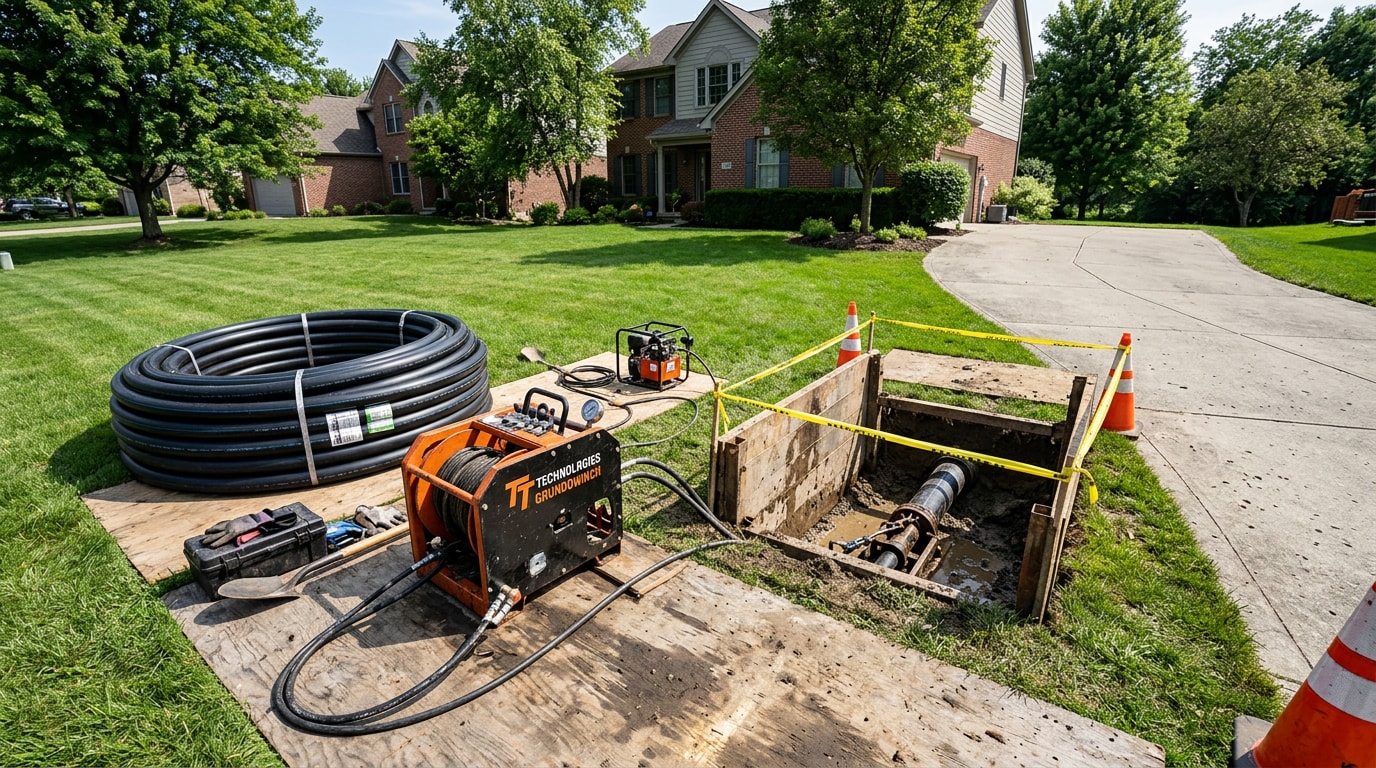
| Water supply line | $500 to $2,500 | Excavation and line length |
| Waste or drain line | $600 to $3,000 | Depth and contamination cleanup |
These are broad planning ranges, not quotes. They move with regional labor rates, pipe material and how much finish work has to be rebuilt afterward.
Two line items homeowners forget to ask about: leak location work billed separately from the repair, and restoration of drywall, tile or landscaping. Get both in writing on the estimate.
Confirm the company covers your city before scheduling. We work throughout San Jose and surrounding areas.
Prevent the Next One
A short routine prevents most surprises.
- Twice a year, walk the leak prone areas above looking for stains, smells and drips.
- Locate and label your main shut off valve now, while nothing is wrong.
- Replace rubber washing machine hoses with braided stainless steel on a schedule.
- Check static pressure with a $12 hose bibb gauge and have the pressure reducing valve serviced if it reads above 80 psi.
- Consider an automatic shutoff leak detection device for second homes and finished basements.
An annual visit from a plumber covers what you cannot see. Our full range of plumbing services includes inspection, repair and repiping, and you can request a free estimate at any point in the process.
FAQ
How do I know if I have a plumbing leak?
Run the meter test. Shut off all water, record the reading, wait at least an hour, then read again. Movement with nothing running means water is escaping somewhere in the system.
How much does it cost to fix a leaking pipe?
Most accessible leaking pipe repairs run $150 to $850. Slab, supply line and waste line work can reach several thousand dollars once detection, excavation and restoration are included.
How can I find hidden leaks in my home?
Pair the meter test with the isolation steps above: close the main shut off to separate indoor from outdoor, and close the water heater cold inlet to separate hot from cold. Combine that with bill spikes, musty odors and running water sounds to narrow the area.
How do I know if there is a leak behind my drywall?
Look for brown staining, bubbling paint, soft or spongy spots, and water sounds with fixtures off. Not every wall stain is plumbing. Roof leaks, window flashing and HVAC condensate cause similar marks.
Is a plumbing leak an emergency?
It is if water is actively flowing, touching electrical equipment, running over a finished ceiling, or coming from a hot water line. A slow drip into a cabinet can usually wait for a scheduled appointment, but only after you shut the fixture valve.
Does homeowners insurance cover a plumbing leak?
Policies commonly cover sudden and accidental water damage while excluding damage from long term seepage, and the failed pipe itself is often not covered even when the resulting damage is. Read your policy language and report the loss quickly.
Who is responsible for a leak between the meter and the house?
In most jurisdictions the utility owns the main and the meter, and the property owner owns the service line from the meter to the house. Your water provider can confirm where that line sits in your city.
How long does a leak repair take?
An accessible fitting or section of pipe is often a one to two hour visit. Behind wall and slab repairs typically take most of a day, plus separate scheduling for drywall, tile or concrete restoration.
Are leaks always visible?
No. Leaks behind walls, beneath slabs and underground often stay completely hidden and show up indirectly first, through a bill spike, a musty odor, a pressure drop or a sound in a wall.
Can a small leak seal itself?
No. Mineral deposits can temporarily crust over a pinhole and make a drip appear to stop, but the pipe wall is still failing and the leak returns, usually larger.
Reviewed by the licensed plumbing team at Gomez Sewer and Drain, serving San Jose, the Peninsula and surrounding Santa Clara and San Mateo County communities. Questions about a specific leak at your property can go straight to our team through the contact page.