A plumbing system is the network of pipes, valves, fixtures and fittings that brings clean water into a building and carries used water and waste out. Two forces run all of it: pressure pushes supply water in, and gravity pulls waste down and away. Once you can see where those two halves meet, almost every odd noise, smell and slow drain in the house starts to explain itself.
What Is a Plumbing System?
Your plumbing system is everything inside the property line: supply piping, the water heater, fixtures, traps, drain lines, vents and the sewer lateral.
The city water main in the street and the public sewer under it are not part of it. Those belong to the utility.
That boundary decides who pays for a repair, so it is the first thing a plumber establishes on a service call.
In a correctly built home, the pressurized supply side and the open drainage side never mix. Fixtures are the only place they meet, and even there a trap and a vent keep the connection one way.
How a Plumbing System Works: The Three Subsystems
Plumbers do not think about a house room by room. They think in three interlocking subsystems, because that is how faults travel.
A problem in one subsystem usually announces itself somewhere else entirely.
1. The Water Supply System
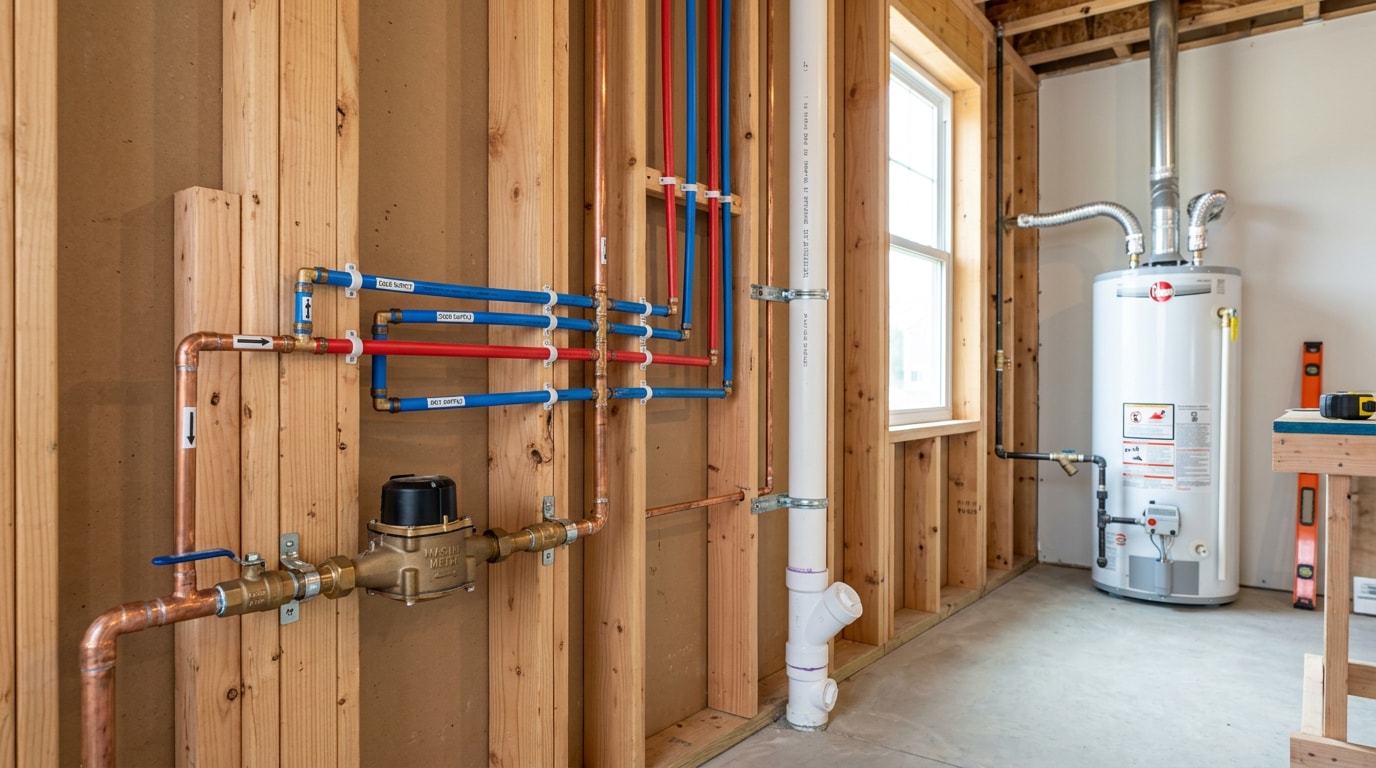
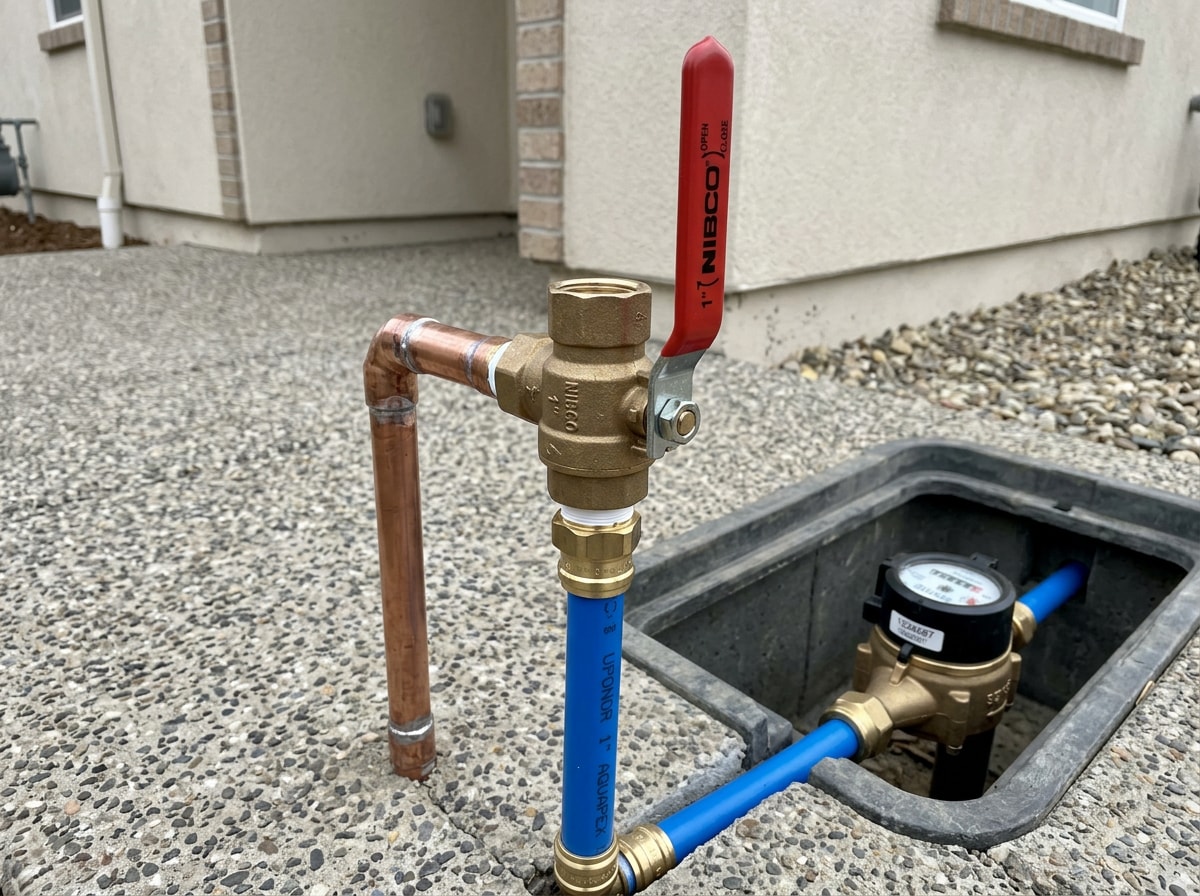
Water arrives from a municipal main or a private well, travels through a buried service line, and passes through the water meter.
Just past the meter sits the main shut-off valve, the single most useful piece of hardware in the house.
From there the line splits. One branch carries cold water straight to fixtures. The other feeds the water heater, after which hot and cold lines run side by side to every sink, shower and appliance.
This side of the system is closed and pressurized. That is why a supply leak keeps losing water whether or not anyone is home, while a drain leak only shows up when a fixture runs.
Residential static pressure usually sits between 40 and 80 psi. Sustained pressure above that range stresses fittings, braided appliance hoses and fill valves, and the standard remedy is a pressure-reducing valve at the service entrance.
2. The Drainage System
Drain piping is wider than supply piping and carries no pressure at all. It moves waste by slope alone.
That is why installers care so much about fall. Too little and solids settle. Too much and water outruns the solids it should be carrying.
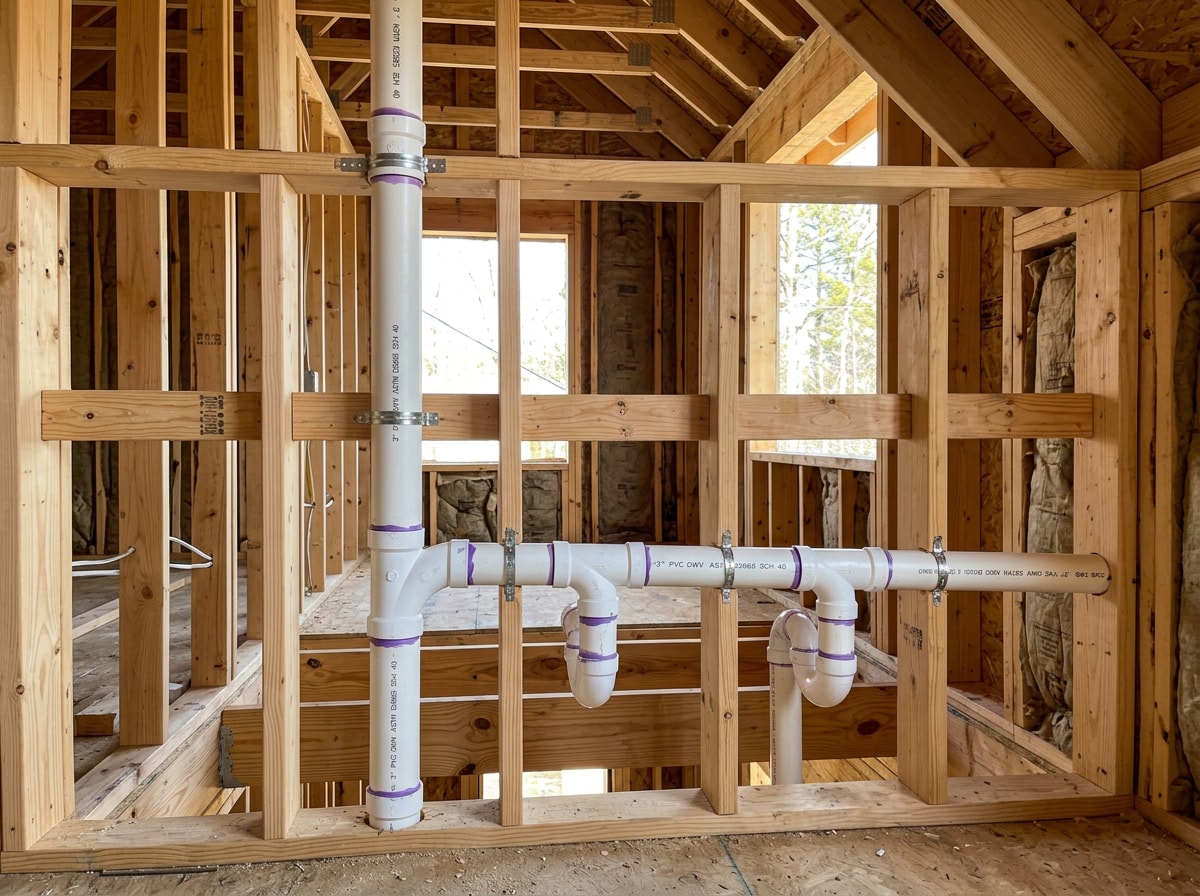
Branch drains from each fixture feed a vertical soil stack. The stack drops to the building drain below the lowest floor, which exits the foundation as the sewer lateral heading to the main sewer in the street.
The vocabulary trips people up:
- Drain pipes carry water from sinks, tubs and showers.
- Waste pipes carry discharge from toilets.
- Vent pipes tie into the same network and carry only air.
Together they form the drain-waste-vent (DWV) assembly.
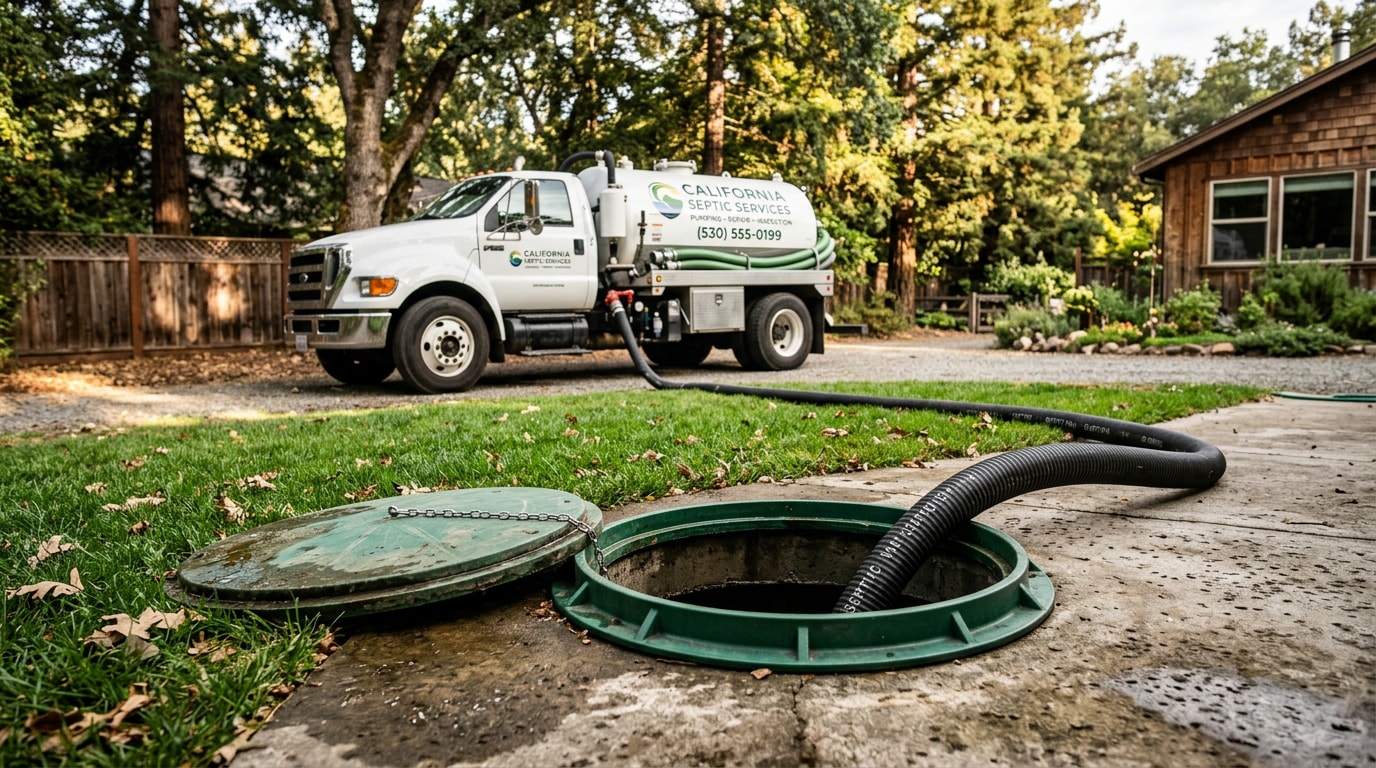
If your home is on a septic tank, everything upstream works the same way. Downstream now means a tank and drain field you own and maintain rather than a utility's responsibility.
3. The Venting System
Vent pipes do two jobs at once.
They let air into the drain lines so falling water cannot create the negative pressure that siphons a trap seal dry. They also carry sewer gas up through the vent stack and out above the roofline.
Here is the diagnostic payoff. Gurgling drains, several slow fixtures at the same time, and odor that comes and goes rarely mean a simple clog. They point toward a blocked vent or a restriction in the main line.
Where a conventional vent cannot be routed, such as an island sink or a finished basement bath, an air admittance valve can sometimes substitute. Traps must be vented, and AAV acceptance depends on which code edition your jurisdiction has adopted, so confirm locally first. The International Plumbing Code vent provisions set the baseline most states build from.
Symptom Triage: What the House Is Telling You
This is the table we wish every homeowner had before calling. It maps the symptom you notice to the subsystem actually at fault, based on the patterns our crews see week after week on Santa Clara County service calls.
| What you notice | Subsystem at fault | Usual cause | Homeowner or pro |
|---|---|---|---|
| Water bill jumps with no visible drip | Supply | Running toilet flapper, slab or irrigation leak | Meter test first, then pro |
| Toilet gurgles when the tub drains | Venting or main line | Blocked vent or partial main-line restriction | Pro |
| Two or more fixtures slow at once | Drainage, main branch | Buildup, grease or root intrusion | Pro, camera inspection |
| One fixture slow, others fine | Drainage, local branch | Clog at the trap or trap arm | Homeowner |
| Sewer odor in a rarely used bath | Drainage, trap | Trap seal evaporated | Homeowner, run water |
| Pipes bang when a valve closes | Supply | High static pressure, water hammer | Pressure test, then pro |
| Hot water runs out early, tank rumbles | Water heater | Sediment layer on the tank floor | Flush, or pro |
| Backup that returns within weeks | Sewer lateral | Offset joint, belly or root mass | Pro, sewer inspection |
Recurring items in that last group are worth a drain camera inspection) rather than another round of cabling. Cabling clears the blockage. Video tells you why it keeps coming back.
If you are already in that loop, Schedule a Free Inspection and get the line looked at before the next backup.
The Parts You Can Actually Reach
Most pipe runs are buried in walls, slabs and joist bays. These three components are not, and knowing them is what turns a burst line into an inconvenience instead of a disaster.
Shut-Off Valves
Valves come in a hierarchy.
The main water shut-off kills supply to the whole house. Look near the meter, in the garage or crawlspace, or in a curb box in the yard.
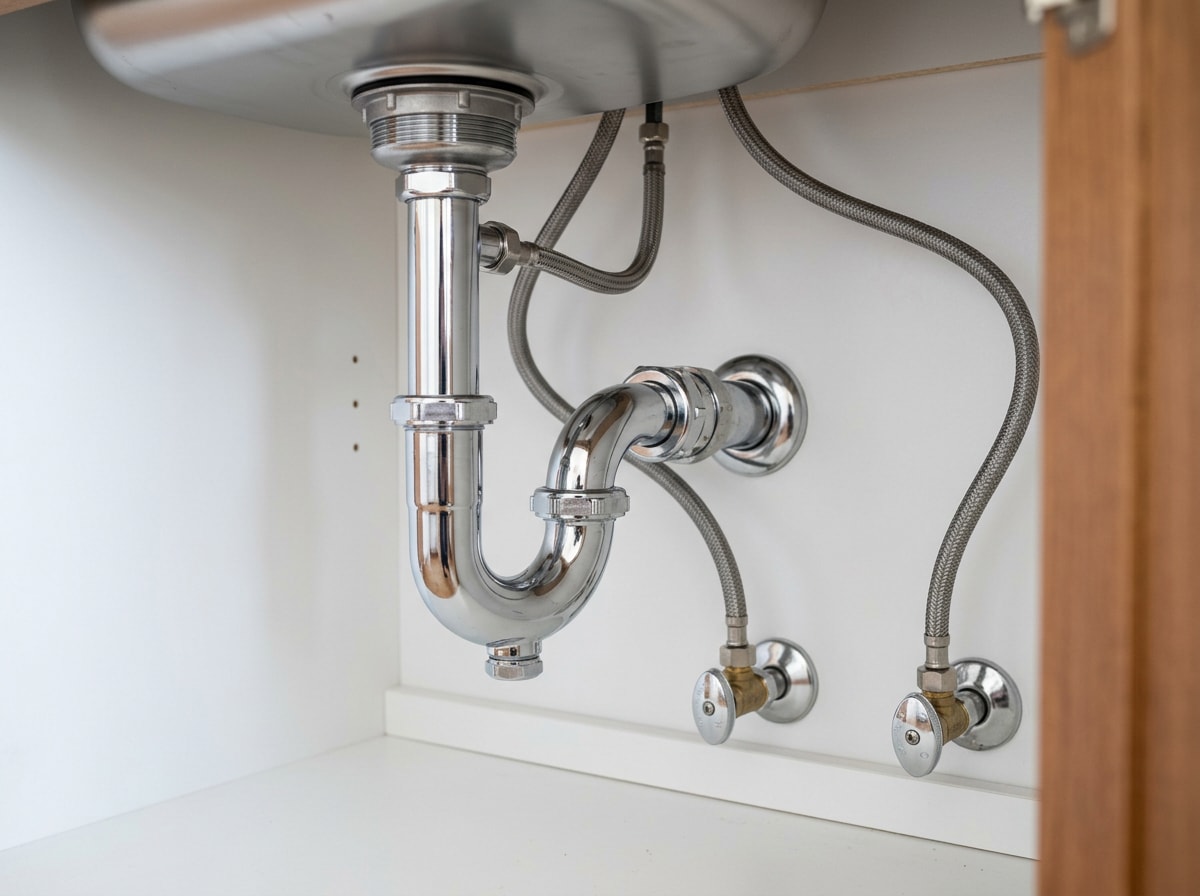
Below that, fixture stops live under sinks and behind toilets. They let you isolate one fixture without shutting down the house.
Find your main valve today, not during an emergency. Label it, keep the area clear, and show everyone in the household where it is.
Valves also seize. Close and reopen each one fully once or twice a year so mineral deposits cannot weld the stem in place. If a valve will not budge or weeps afterward, it needs replacing, which falls under routine plumbing repair.
Traps
Look under any sink and you will find a U-shaped bend, the P-trap. It holds a small pool of water that blocks sewer gas from rising into the room. Toilets have the same feature molded into the porcelain.
That is why a guest bath or basement floor drain eventually smells. The seal evaporates and leaves the drain wide open. Running water for thirty seconds every few weeks refills it.
Cleanouts
Cleanouts are capped fittings that give a plumber cable and jetter access to the main line. Common locations are the base of the stack, outside near the foundation, or a basement floor.
Expect "where is your cleanout?" to be the first question during a backup. Our guide to finding and using a plumbing cleanout walks through the usual hiding places.
No accessible cleanout means extra labor before any work starts, which is why installing one often pays for itself on the second call.
Plumbing Pipes and Materials
The fastest way to identify what is inside a wall is to ask which side of the system it serves.
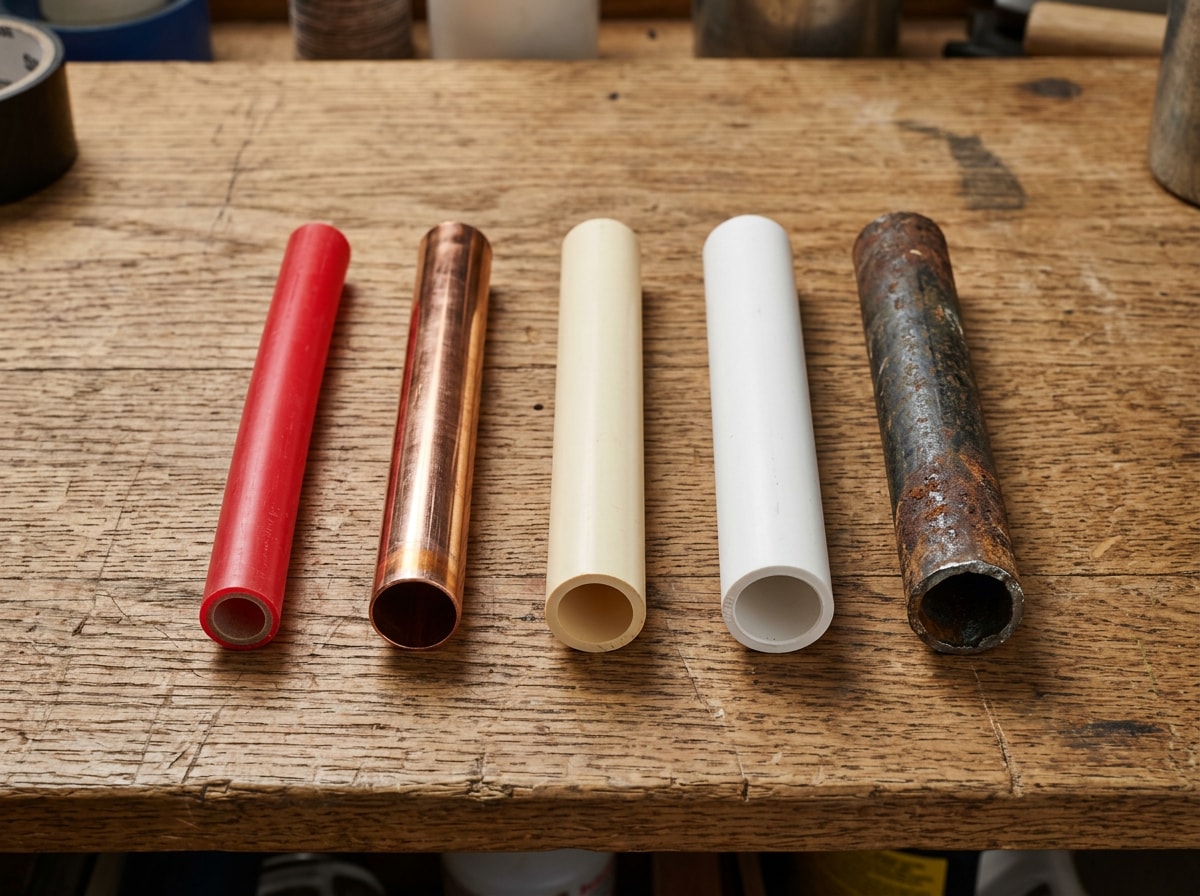
PEX, copper and CPVC carry pressurized water. PVC, ABS and cast iron handle drain, waste and vent duty. Galvanized steel shows up on both in older homes.
| Material | Use | Typical lifespan* | Common failure mode | DIY friendly | Installed cost |
|---|---|---|---|---|---|
| PEX | Supply | 40 to 50+ yrs | UV degradation, rodent damage | High | Low |
| Copper | Supply | 50 to 70+ yrs | Pinhole leaks in acidic water | Moderate | High |
| CPVC | Supply | 40 to 50 yrs | Brittleness with age | High | Low |
| PVC | DWV | 50 to 80 yrs | Joint failure, solvent errors | High | Low |
| ABS | DWV | 50 to 80 yrs | Cracking, UV sensitivity | High | Low |
| Cast iron | DWV | 75 to 100 yrs | Interior scaling, collapse | Low | High |
| Galvanized | Legacy supply | 40 to 60 yrs | Scaling, rust, pressure loss | Low | High |
*Lifespans are industry estimates and shift considerably with water chemistry, pressure and installation quality.
One warning worth remembering: joining copper directly to galvanized steel causes galvanic corrosion at the connection. A dielectric union between them is not optional.
A field note. In a 1950s house with unknown gray pipe, hold a magnet to it. Galvanized steel and cast iron grab. Copper and plastics do not.
Then check diameter. Supply runs are typically 1/2 inch to 3/4 inch, while drain lines start at 1 1/2 inches and go up.
Two materials are replacement questions rather than repair questions: polybutylene, and legacy lead service lines. The EPA's lead service line resources explain how lines get identified and why partial replacements are discouraged.
Gas Piping Belongs to the Plumbing Trade Too
Gas piping feeds cooktops, furnaces, water heaters and clothes dryers, usually through black iron pipe or CSST, finishing at a flexible appliance connector and an appliance-level shut-off valve.
Locate two things in advance: that appliance valve, and the shut-off at the gas meter.
Everything else here is hands off. Gas line work is licensed work in virtually every jurisdiction.
If you smell gas, leave the building first, then call the utility's emergency line from outside. That is not a troubleshooting situation.
Plumbing System Maintenance Schedule
Build a yearly rhythm and most failures give you warning.
Monthly
- Run water in unused fixtures to refill trap seals.
- Check under sinks for staining or a musty smell.
Twice a year
- Exercise every shut-off valve, main and fixture.
- Inspect braided hoses at the washer, dishwasher and refrigerator for weeping or corrosion at the crimps.
Annually
- Flush the water heater to clear sediment, more often on hard water, and check the anode rod that sacrifices itself to protect the tank lining. The Department of Energy's water heating guidance covers why this load accounts for roughly 18% of home energy use.
- Read the meter with everything off. Movement means a leak.
- Clear leaves and nesting debris from roof vent terminations after storm season.
Small leaks are not a rounding error. EPA's WaterSense program estimates the average household's leaks waste more than 9,300 gallons a year, and that about nine percent of homes leak 50 gallons or more per day.
Know where homeowner maintenance ends. System-wide symptoms, backups that return within weeks, and anything involving gas warrant a licensed plumber. A scheduled plumbing inspection catches the slow failures before they pick their own timing.
Common Plumbing System Mistakes to Avoid
Wipes labeled flushable clear the toilet but do not break down like paper. They snag on joints and roots, then collect everything arriving behind them.
Grease is the same story from the other end of the house. It leaves the pan as a liquid and solidifies against cool pipe. Starchy waste such as rice, pasta and potato peels swells and finishes the job.
Mixing pipe materials without the correct transition fitting invites corrosion. So does using PVC cement on ABS or ABS cement on CPVC, because each solvent is formulated for one resin.
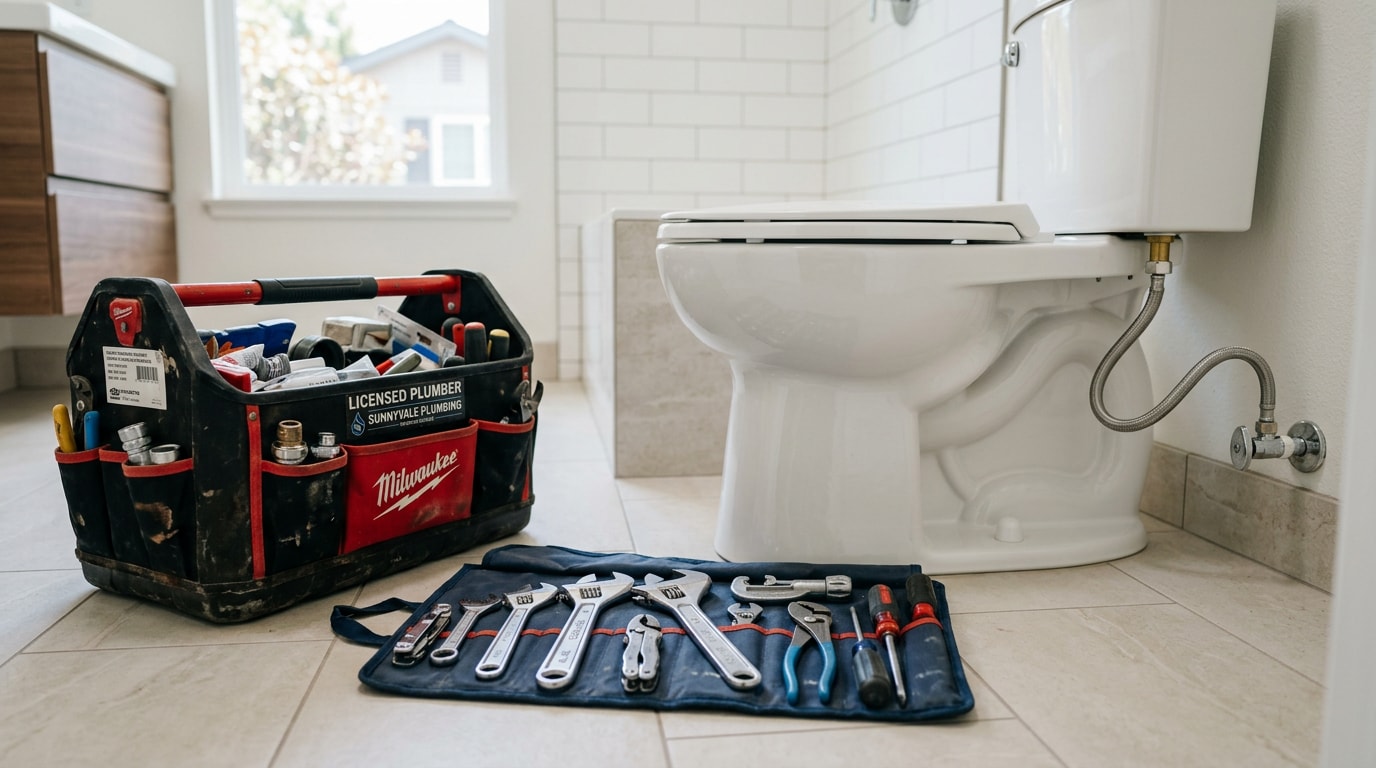
Over-tightening is the quiet mistake. Plastic P-trap nuts crack under a wrench, and an overtorqued compression fitting deforms the ferrule so it never seals again. Hand tight plus a quarter turn is usually right.
And close the shut-off before starting. Every plumber has a story about the repair that became a flood.
When to Call a Licensed Plumber
Call a pro when the symptom involves more than one fixture, returns after being cleared, or sits on the sewer side of the house.
Our team at Gomez Sewer and Drain handles the full range: plumbing services, main line drain cleaning, sewer line repair, water heater repair and emergency plumbing service when it will not wait until morning.
We work throughout San Jose and surrounding areas, and every diagnosis in this guide comes from licensed technicians who run these calls daily. Questions about your own system are welcome through our contact page.
FAQ
What is a plumbing system?
A plumbing system is the assembly of pipes, fixtures, valves and fittings inside a building that distributes potable water and removes waterborne waste. It stops at the property line. The water mains and sewers serving the neighborhood belong to the utility.
What are the 3 types of plumbing systems?
In building-code terms, the three are potable water supply, sanitary drainage and stormwater drainage. Residential guides usually describe supply, drainage and venting instead. Both are correct. One classifies by what the pipes carry, the other by function inside a single home.
What are the main components of a home plumbing system?
The service line and water meter, the main shut-off valve, hot and cold supply piping, the water heater, fixtures and their traps, branch drains, the soil stack, vent piping, cleanouts and the sewer lateral or septic tank.
What is a drain-waste-vent (DWV) system?
The DWV system is the combined network of drain pipes, waste pipes and vent pipes that moves wastewater out of a building by gravity while admitting air behind it. That airflow keeps drainage moving and stops trap seals from being siphoned dry.
Is there one main plumbing system in a home?
No. Supply, drainage and venting are separate but interdependent networks. A fault in one commonly surfaces as a symptom in another, which is why problems often appear nowhere near their cause.
How long does a plumbing system last?
It depends on material. Copper and cast iron often run 50 to 100 years, PEX and CPVC are generally rated for 40 to 50 years or more, and galvanized steel supply lines frequently fail between 40 and 60 years. Water chemistry, pressure and install quality move all of those numbers.
How do I find my main water shut-off valve?
Check where the service line enters the house first: garage wall, crawlspace, basement, or an exterior wall on the street side. If there is nothing there, look for a curb box at the property line near the meter. Label it once you find it.
What causes gurgling drains?
Air struggling to get past a restriction. A blocked vent, a plugged vent terminal, or a partially obstructed main line all produce it. A single gurgling fixture can be a local trap issue, but gurgling in several fixtures points at the main or the vent.
How often should a plumbing system be inspected?
Once a year for most homes, and once every year or two with a camera if the house has mature trees, cast iron or clay sewer piping, or a history of backups. Inspection before buying a home is the highest-value version of this.
Can I fix plumbing problems myself?
Single-fixture clogs, trap replacements, flapper swaps and hose changes are reasonable homeowner work. Anything involving gas, the main line, the sewer lateral, or pipe inside a wall or slab needs a licensed plumber, both for permits and for liability if a repair goes wrong.