If your house went up before 1980, the drain lines behind your walls and under your slab are probably cast iron plumbing, and most of that pipe is now at or past the end of its useful life. The symptoms show up years before the failure does. Here is how to read them, what each fix actually costs per year of service it buys, and where the surprise bills hide.
Key Takeaways
- Lifespan depends on location. Cast iron commonly lasts 50 to 100 years above ground but 25 to 50 years buried, where soil moisture and ground movement speed up decay.
- Build year is the first clue. Homes built before 1980, and especially before 1975, were almost always plumbed with cast iron drain lines.
- Replacement cost is a range, not a number. Expect roughly $8,000 to $50,000 or more, driven by home size, access (slab vs. crawlspace), and how much restoration is included.
- Cheap today is not cheap per year. A $2,000 spot repair on a system with five years left costs more annually than a full replacement that lasts 75.
- Insurance rarely pays for the pipe. Policies tend to respond to sudden damage and exclude gradual wear.
- Symptoms suggest, cameras confirm. No honest decision gets made without video of the inside of the pipe.
Signs Your Cast Iron Plumbing Is Failing
The clearest warning signs are slow drains at multiple fixtures, repeat clogs in the same line, sewer odor indoors, rust colored water, and damp spots or new cracks near the foundation.
Any one of those in a pre-1980 home on original pipe is reason enough to scope the line.
Age alone already puts the system on the replacement list. What the symptoms tell you is how urgent it is and roughly where the trouble sits.
- Slow drains at several fixtures. One sluggish sink is a local clog. Two or more points upstream to the main line or the stack.
- Repeat clogs on the same run. A line that re-clogs within months of snaking is scaled or deformed, not dirty.
- Sewer odor indoors. Escaping gas means a crack, a failed joint, or a dry trap. Where you smell it narrows the search.
- Rust colored water at drains or cleanouts. That is pipe material leaving the system.
- Yard changes. Unusually green patches, soft ground, or small depressions above a buried line suggest a leak.
- Pest activity. Roaches and rodents get in through breaks in buried pipe.
- Mold, musty smells, or foundation and wall cracks. These are consequence level signs. A cracked line under a slab has usually been leaking a long time.
Symptoms indicate. They do not diagnose. Only a sewer line inspection with a camera confirms wall thickness, scale, bellies, and breaks.
What the Camera Footage Actually Has to Show You
Most homeowners get handed a video and no vocabulary. Ask the tech to point out these four things on screen, because they drive the entire decision.
| What you see on video | What it means | Typical next step |
|---|---|---|
| Light surface rust, full round bore | Early corrosion, structure intact | Monitor, re-scope in 3 to 5 years |
| Heavy scale narrowing the bore | Flow restriction, wall still present | Descale, then re-scope to grade the wall |
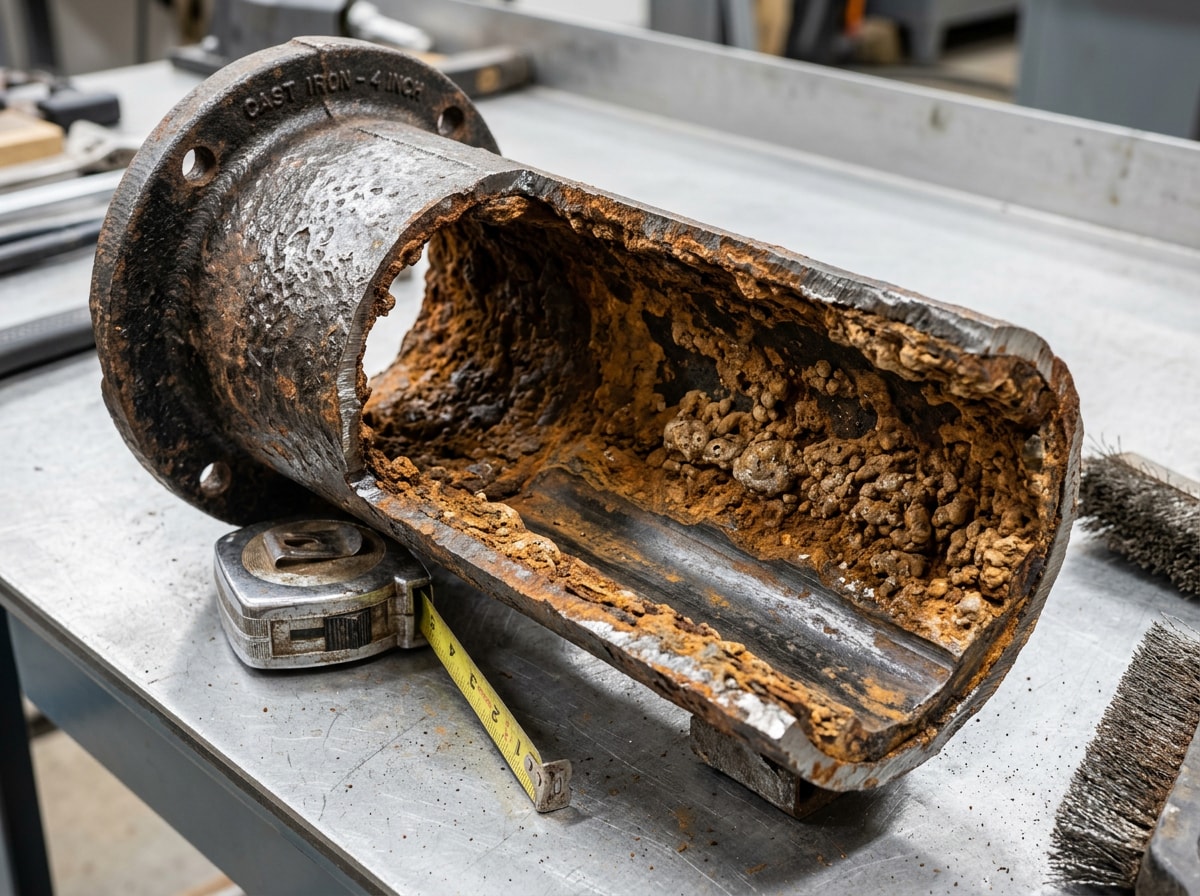
| Channeling at the invert (flat trough at the bottom) | Bottom of the pipe is gone or nearly gone | Replace that run; lining depends on remaining structure |
| Belly, offset joint, or collapse | Structural failure | Excavate and replace, lining will not fix grade |
That last row is the one contractors skip. A liner follows the existing line and grade, so it cannot correct a belly, and a collapsed host gives it nothing to cure against. NASSCO's rehabilitation guidance is blunt that the host pipe must be intact and structurally stable for lining to work. If someone offers to line your pipe without showing you footage first, treat that as a red flag.
Why Cast Iron Pipe Fails from the Inside Out
Corrosion in a drain line works in a direction most people do not expect. Waste water sits along the bottom of every horizontal run, so the invert thins first, sometimes until it opens into a trough.
Meanwhile rust and mineral deposits build up along the walls. That scale narrows the bore, catches solids, and turns a 4 inch line into roughly 2 inches of usable space. Joints packed with oakum and lead loosen as the surrounding metal degrades.
Location changes the math. Above ground, cast iron often delivers 50 to 100 years. Buried runs commonly fail between 25 and 50 years because of constant soil moisture and ground movement. Expansive clay, salt rich coastal soil, and tree roots all push toward the short end.
Material standards and installation specs for this pipe are still published by the Cast Iron Soil Pipe Institute, which is useful reading if a contractor is quoting new cast iron rather than plastic.
One more accelerant worth naming: repeated chemical drain cleaner use. It eats thin pipe faster than it clears the clog.
A Note from Our Crews
Across older Santa Clara County and Peninsula neighborhoods, the pattern our technicians see most often is not a dramatic collapse. It is a 1950s or 1960s home where the upstairs branches still look serviceable and the buried horizontal run under the slab is channeled through the bottom.
That is why we scope the full run rather than quoting off a single symptom. You can read more about how whole systems get staged in our guide to plumbing repiping services.
Repair or Replace: Run the Cost Per Year
The useful question is not "what is cheaper today." It is "what does each option cost per year of service it buys."
Here is that math using midpoints of commonly quoted ranges. Treat it as illustrative, not as a quote, since regional labor rates swing these numbers hard.
| Option | Typical quoted range | Realistic added service life | Rough cost per year |
|---|---|---|---|
| Spot repair, one failed section | $800 to $2,500 | 2 to 10 years on the rest of the system | $165 to $825 |
| Descaling (jetting or chain knocker) | $600 to $2,000 | 3 to 7 years of restored flow | $185 to $430 |
| Trenchless CIPP lining | $12,000 to $30,000 | 50 years design life | $240 to $600 |
| Full replacement with Schedule 40 PVC | $15,000 to $30,000 | 50 to 100 years | $150 to $450 |
Read the right-hand column, not the left. A spot repair on a system with five years left is one of the most expensive options per year on the board. A replacement that lasts three generations is one of the cheapest.
Ready to get real numbers for your house instead of ranges? Request a free estimate and we will scope the line first.
Common Repair Methods
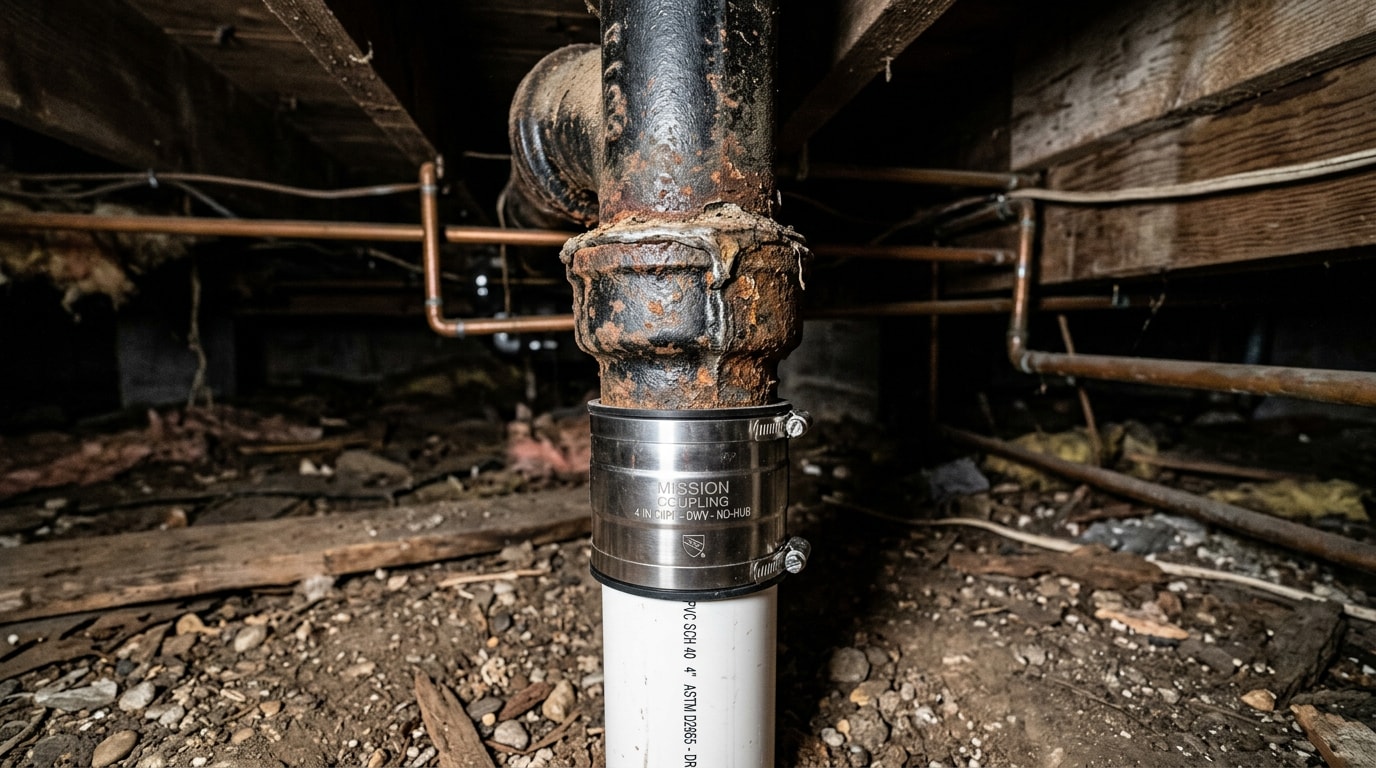
Spot repair cuts out a failed section and joins new pipe with no hub couplings. Right call for a single crack or short collapsed run. It does nothing for the rest of the system.
Descaling with chain knockers, cutters, or hydro jetting strips rust and buildup from the bore and restores flow. It buys time, but it also removes material from an already thin wall, so it is wrong on badly degraded pipe.
Localized lining rehabilitates a short damaged segment without digging, and only works where the host pipe still has structure.
Repair genuinely makes sense for isolated problems. Once damage shows up across multiple runs, sectional work starts costing more than a full sewer line replacement.
Trenchless vs. Traditional Methods
| Method | Best suited to | Typical 2026 cost | Duration | Disruption | Expected service life | Warranty norms |
|---|---|---|---|---|---|---|
| Trenchless CIPP lining | Corroded but structurally sound pipe | $12,000 to $30,000 | 1 to 3 days | Minimal, access through cleanouts | About 50 years | 10 to 50 yr material; voided by uninspected host pipe or later uncoordinated cuts |
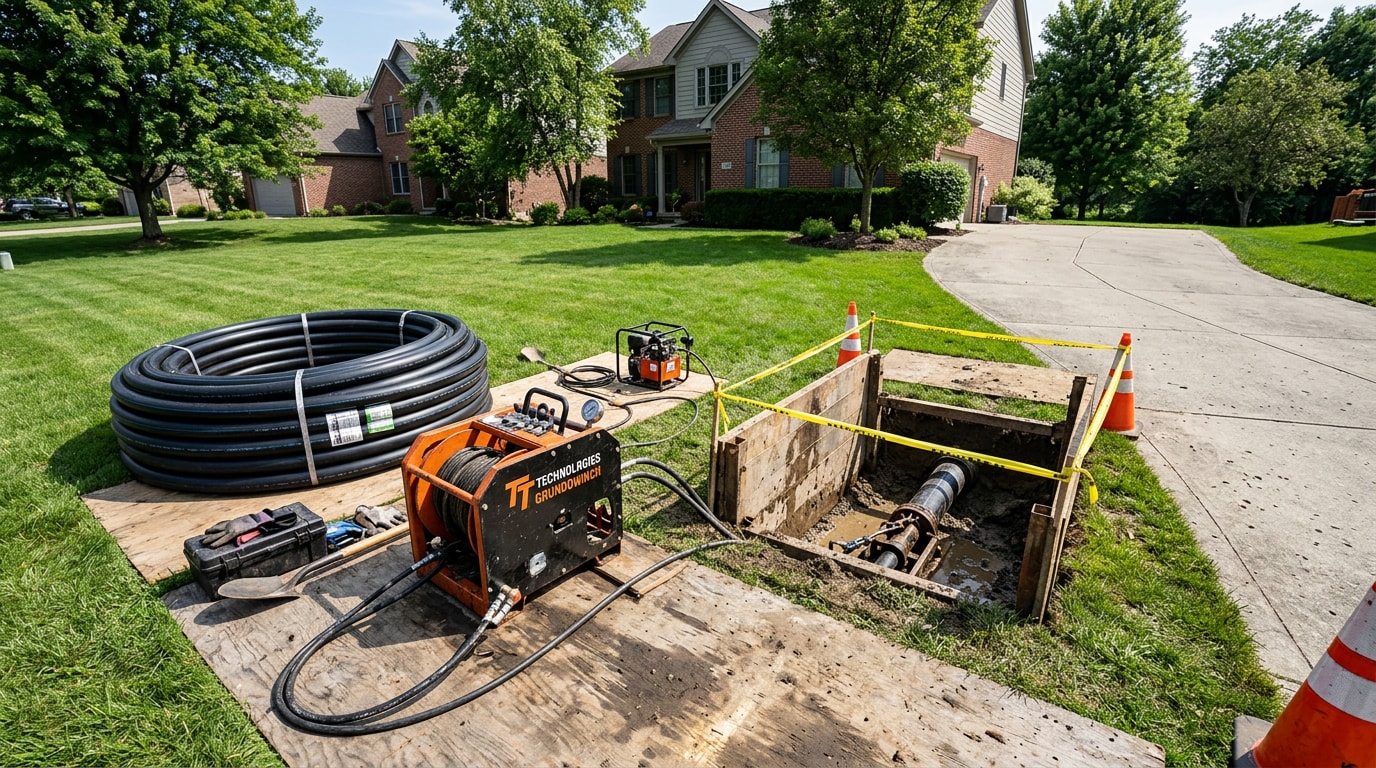
| Pipe bursting | Buried yard lines needing upsizing | $9,000 to $20,000 | 2 to 4 days | Two access pits | 50 to 100 years | 10 to 25 yr; voided by settlement outside spec |
| Open cut or under slab replacement | Collapsed, bellied, or severely damaged pipe | $10,000 to $25,000+ | 3 to 10 days | Heavy, slab cuts and flooring | 50 to 100 years | 5 to 25 yr workmanship; voided by DIY tie-ins or skipped permits |
If your line is a candidate for the no dig route, trenchless sewer repair avoids most of the restoration bill. If it is bellied, it will not.
What Should You Replace Cast Iron With?
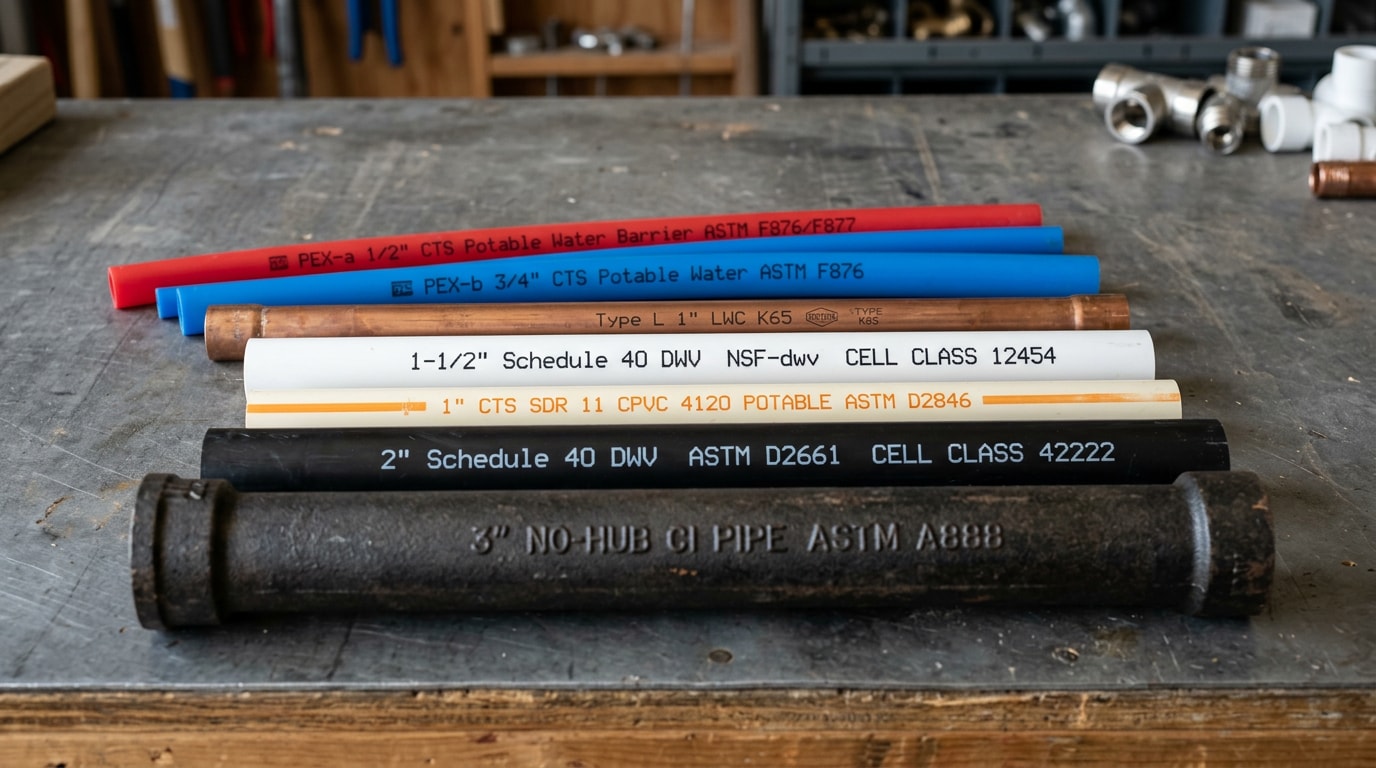
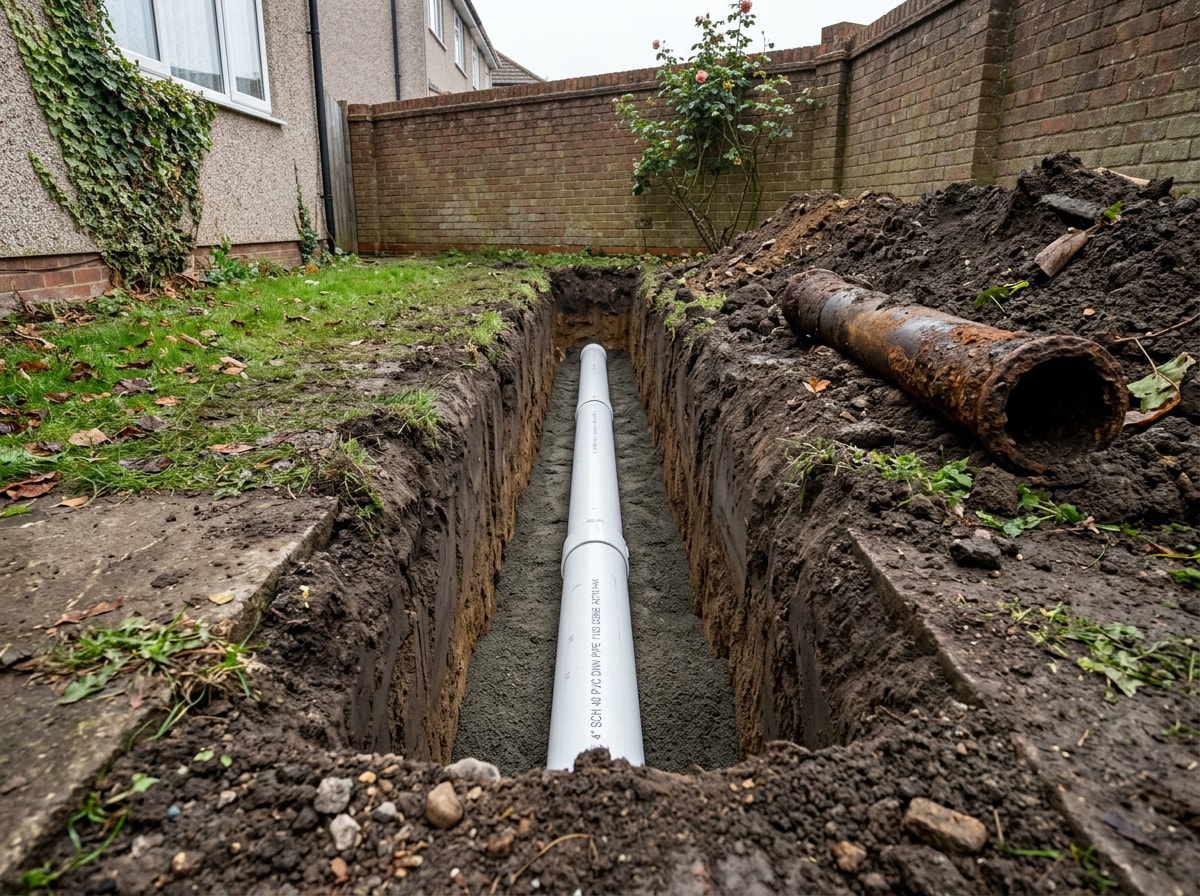
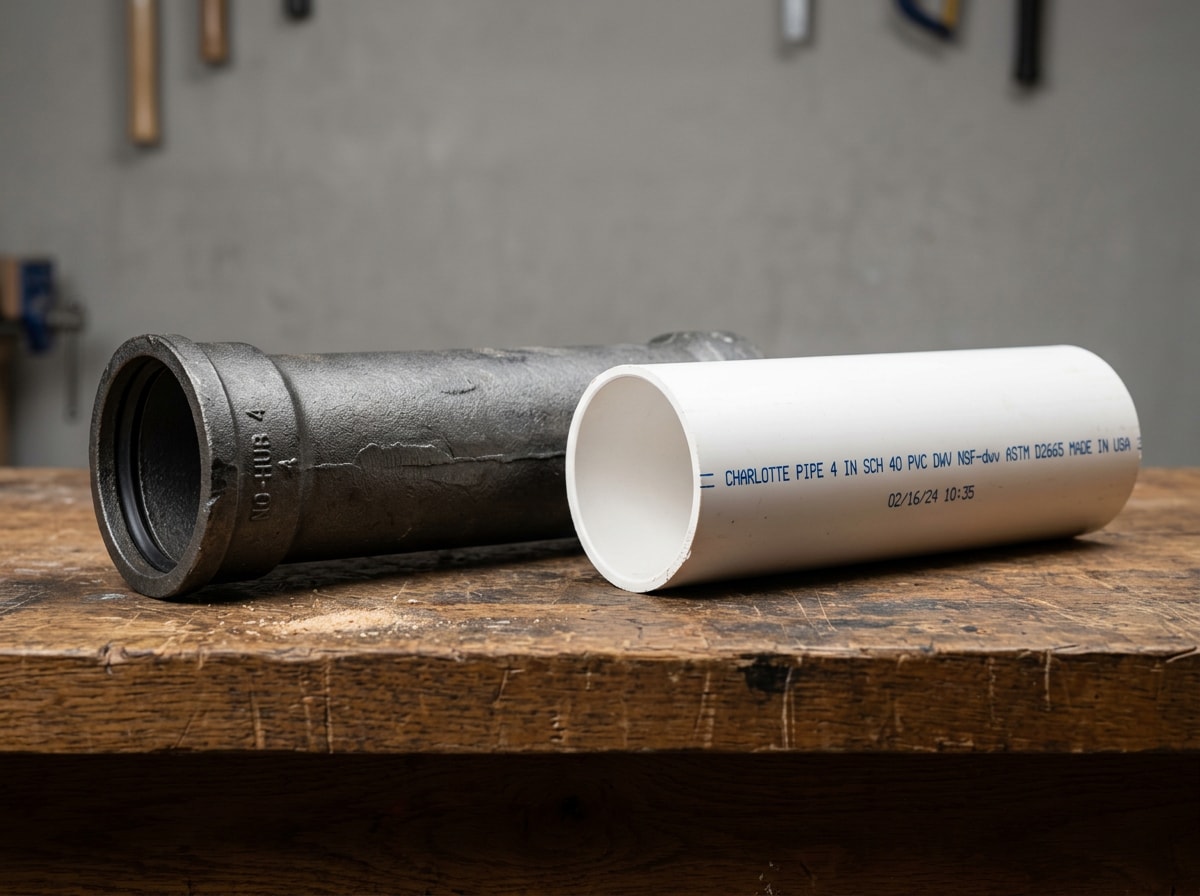
For residential drain, waste, and vent work, Schedule 40 PVC is the standard answer. It is light, corrosion proof, smooth walled, and the cheapest to install. ABS performs similarly and is common in some regions. Local code usually settles which one you use, so confirm before you sign.
Watch out for material lists that lump everything together. Copper and PEX are supply side materials for the water coming to your fixtures. They have no role in drain lines. If a repipe quote mentions them, it is covering a separate scope.
New cast iron still gets specified, and for good reason. In multi story homes, condos, and stacks running past bedrooms, its mass absorbs drainage noise in a way plastic does not. A common compromise is cast iron for the vertical stack and PVC for buried horizontal runs.
Vet Your Contractor
On a job this size, workmanship outweighs material choice. Two crews installing identical PVC can produce wildly different slope, support, joint quality, and restoration. Your screening is the best cost control you have.
Questions to Ask Every Contractor
- Are you licensed, bonded, and insured in this state, and can I see the certificates?
- Who pulls the plumbing permit, you or me?
- Will you provide camera footage before and after the work?
- Is the crew in house or subcontracted?
- Who is responsible for concrete, flooring, and drywall restoration?
- What is your written change order policy, and what triggers one?
- What is the warranty term, and does it transfer if I sell?
- How many linear feet does this written estimate actually cover?
Watch for the reverse signal too. A strong contractor asks you questions about the home's age, prior plumbing work, which fixtures act up, and what you have already tried. Confirm they actually work your city by checking the areas they serve, and look through completed project photos before you sign anything.
Clarify the Scope of Work
A complete written scope leaves nothing to interpretation. It should state:
- Linear feet replaced versus left in place
- Who pulls the permit and schedules inspection
- How many slab cuts are planned
- Whether concrete is restored to finish grade
- Who repairs flooring and drywall
- Whether a new cleanout is installed
- Whether final camera verification happens before final payment
The most common cost surprise is restoration. Plenty of bids cover the pipe, the trench, and a raw concrete patch, then stop. Tile, hardwood, baseboards, paint, and landscaping come back as a separate bill from a separate trade. Ask in writing where the plumbing scope ends.
Warranty and Insurance
Keep these two apart in your head.
A workmanship warranty comes from your contractor and typically runs 5 to 25 years. A material warranty comes from the pipe or liner manufacturer and can run longer. Ask what each covers, whether labor and excavation are included in a callback, and whether coverage transfers to a buyer. Transferability is worth real money at resale.
Homeowners insurance works on a different principle. Policies generally respond to sudden and accidental water damage and exclude gradual wear and tear. That is why a carrier may pay to dry out and rebuild the bathroom while declining the pipe replacement that caused the loss. Tear out and access costs often land in a gray area between the two.
Policy language and state rules vary. Read your own policy, and for California homeowners the Department of Insurance publishes a plain language residential property claims guide. Nothing here is a coverage determination.
Frequently Asked Questions
How do I know if my house has cast iron pipes?
Construction before 1975 strongly suggests cast iron drain and sewer lines. Identify it physically: cast iron is dark gray to black, very heavy, and gives a dull thud when tapped, while PVC sounds hollow. Check the vertical stack in a garage, attic, or laundry area. Pipe under a sink has often already been swapped and will mislead you.
What is the expected lifespan of cast iron drain pipes?
Typically 50 to 100 years, depending on use and environment. Hard water, heavy grease, and chemical drain cleaners shorten it. Buried and under slab runs sit at the short end, with many failing closer to 25 to 50 years.
What is the average cost to replace cast iron pipes?
Whole home repipes are commonly quoted between $15,000 and $30,000, driven by home size, access, and scope. Partial and above ground jobs run materially lower. Get at least two written estimates, since regional labor markets move these numbers a lot.
Does cast iron plumbing need replacing if nothing is wrong?
Not automatically. If the camera shows a round bore, intact walls, and correct grade, you monitor it and re-scope in a few years. Replace when footage shows channeling, bellies, or breaks, not because of the calendar alone.
Can cast iron pipes be lined instead of replaced?
Yes, when the host pipe still has structure. Lining is not an option for collapsed, heavily channeled, or bellied runs, because the liner cures against the existing pipe and follows its existing grade.
Can you connect PVC to existing cast iron?
Yes. Shielded no hub couplings or transition couplings join the two materials, and mixed systems are normal during phased replacement. The joint has to be properly supported, which is one of the first things an inspector looks at.
Is cast iron plumbing a health hazard?
The pipe itself is not a drinking water concern, since residential cast iron is a drain material, not a supply material. The real risks are sewer gas from cracks and mold from hidden leaks, both of which argue for scoping rather than waiting.
Do chemical drain cleaners damage cast iron?
Repeated use does. Caustic and acidic cleaners attack already thin walls, and they rarely clear scale, which is what actually causes most repeat clogs in old pipe. Mechanical cleaning is the safer route, which is why a drain camera inspection before cleaning is worth the hour.
Can homeowners insurance cover replacing cast iron pipes?
Usually the resulting damage, rarely the pipe. Insurers treat decades of corrosion as wear and tear, though a sudden break causing water damage may trigger coverage for repairs and sometimes tear out costs.
How long does a cast iron replacement take?
Trenchless lining is often 1 to 3 days. Pipe bursting runs 2 to 4 days. Under slab excavation runs 3 to 10 days, plus restoration time for concrete, flooring, and paint that may be handled by other trades.
Next Step
If your drains are slow, your line clogs on a schedule, or your house is simply old enough to qualify, start with footage, not a quote. We scope the line, grade what we see, and give you the repair and replacement numbers side by side.
See what we do on the plumbing and sewer and septic side, browse the rest of Gomez Sewer and Drain, or get in touch to schedule an inspection.