Waterworks plumbing means two different things depending on who says it: the buried municipal infrastructure that moves treated water under your street, and the many local plumbing companies that use "Waterworks" in their name. This guide covers the infrastructure side and, more usefully, the exact point where it hands off to the pipes you own. Get that handoff line wrong and you can end up paying for a repair your water utility would have covered.
Waterworks vs Plumbing: The Line That Decides Who Pays
Waterworks is the utility-scale infrastructure that collects, treats, stores, distributes and disposes of water for a whole community.
Plumbing is the piping, valves and fixtures inside a property line.
The simplest way to draw the line: waterworks is everything the utility owns up to the meter, and plumbing is everything past it.
That distinction is not academic. It changes which materials and standards apply, which trade does the work, and who gets the bill.
Waterworks also differs from fire-protection piping, which is sized and listed for suppression flow and carries its own approval requirements. It differs again from industrial process piping, which is driven by what is moving through the pipe rather than by drinking-water rules.
Waterworks itself splits in two. Potable systems handle treated supply and distribution. Wastewater and stormwater systems handle what leaves the property. Most residential plumbing services touch both ends without ever entering the utility's side of the system.
Who Owns What: Utility Side vs Your Side
Ownership splits vary by city, so confirm with your local water department before you dig. The pattern below is the common one in most US systems.
| Component | Usually owned by | Who typically pays for repair |
|---|---|---|
| Water main under the street | Water utility | Utility |
| Corporation stop at the main | Water utility | Utility |
| Service line from main to curb stop | Water utility | Utility |
| Curb stop / meter box | Water utility | Utility |
| Water meter | Water utility | Utility |
| Service line from meter to house | Property owner | Owner |
| Main shutoff valve at the house | Property owner | Owner |
| Pressure reducing valve | Property owner | Owner |
| Backflow preventer on a private line | Property owner | Owner |
| Sewer lateral from house to main | Property owner in most cities | Owner |
The two lines people get wrong most often are the service line past the meter and the sewer lateral. Both are buried, both look like "city pipe," and both are usually yours.
Key Components of a Waterworks System
A waterworks system runs as a chain, and each link has a job.
- Water sources. Surface water from rivers and reservoirs, groundwater from aquifers, or desalinated seawater in some coastal regions.
- Treatment plant. Raw water is screened, clarified, filtered and disinfected. Treated public water must meet enforceable federal limits before it enters the distribution network, set out in EPA's National Primary Drinking Water Regulations.
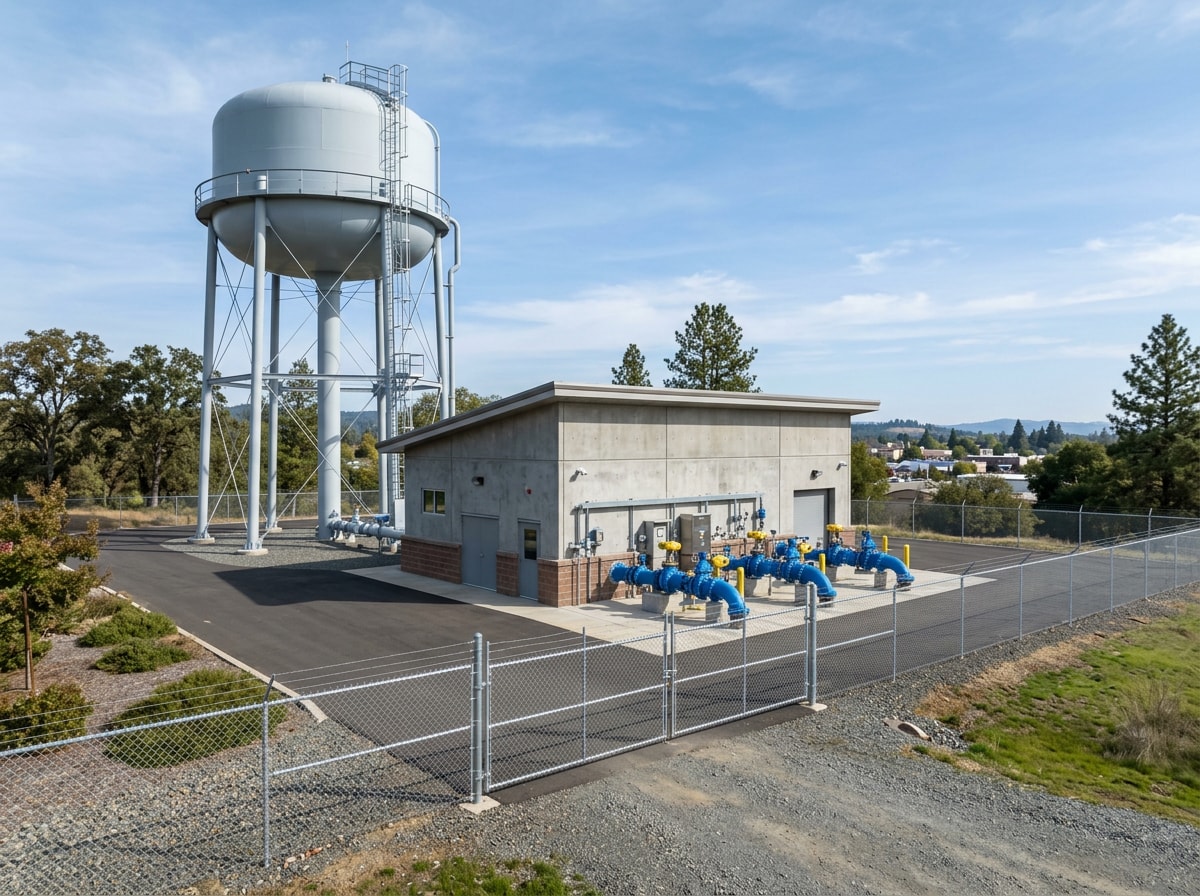
- Storage tanks. Elevated tanks and ground reservoirs buffer demand peaks and hold pressure steady overnight.
- Pump stations. These lift water uphill, boost pressure in flat or outlying zones, and keep flow moving where gravity cannot.
- Water mains and pipelines. The trunk and branch lines that move treated water under streets toward neighborhoods.
- Service line and meter. The handoff point. The utility runs a service line from the main to your meter. Everything downstream is yours.
- Drainage and collection systems. Sewers and storm drains carry used water and runoff back out for treatment or discharge.
If you have ever had a pressure complaint, a meter replacement or a wet patch in the front yard, you have touched this chain directly. For a closer look at what happens after the meter, see our guide to how a plumbing system works.
How to Tell if the Problem Is on the Utility Side
This is the part most waterworks articles skip, and it is the part a homeowner actually needs. Run these four checks before calling anyone.
- Ask a neighbor. If two or more houses on the block lost pressure at the same time, it is a main or a utility valve, not your plumbing.
- Check the meter with everything off. Shut every fixture, then watch the meter's low-flow indicator for 15 minutes. Movement with no water running means a leak somewhere on your side.
- Test static pressure at an outside hose bib. A screw-on gauge costs about as much as a pizza. Plumbing codes generally require a pressure reducing valve when static pressure at the building exceeds 80 psi, so a reading well above that points to a failed or missing PRV, which is your equipment, not the utility's.
- Look at where the water is surfacing. Water bubbling up between the curb and the meter box usually means a utility-side repair. Water surfacing between the meter and the house is almost always the owner's service line.
In our own field work, the single most common "the city must have done something" call turns out to be a partially closed valve or a worn pressure reducing valve on the owner's side, found in minutes with a gauge and a meter check. The second most common is a slow service line leak that never surfaces because the water follows the trench back toward the street. A plumbing inspection catches both before they become a flooded yard, and a sewer line inspection does the same for the lateral.
If the water is already moving fast, skip the diagnostics and call for emergency plumbing service.
Schedule a free inspection and we will confirm which side of the meter your problem sits on before any digging starts.
Waterworks Fittings: The Spec Details That Cause Schedule Slips
Most waterworks delays are not caused by labor or weather. They are caused by a fitting that showed up with the wrong end connection, the wrong material or the wrong standard stamped on it.
Two spec decisions prevent the majority of those problems: how the fitting joins the pipe, and what it is made of.
Flange and Joint Types
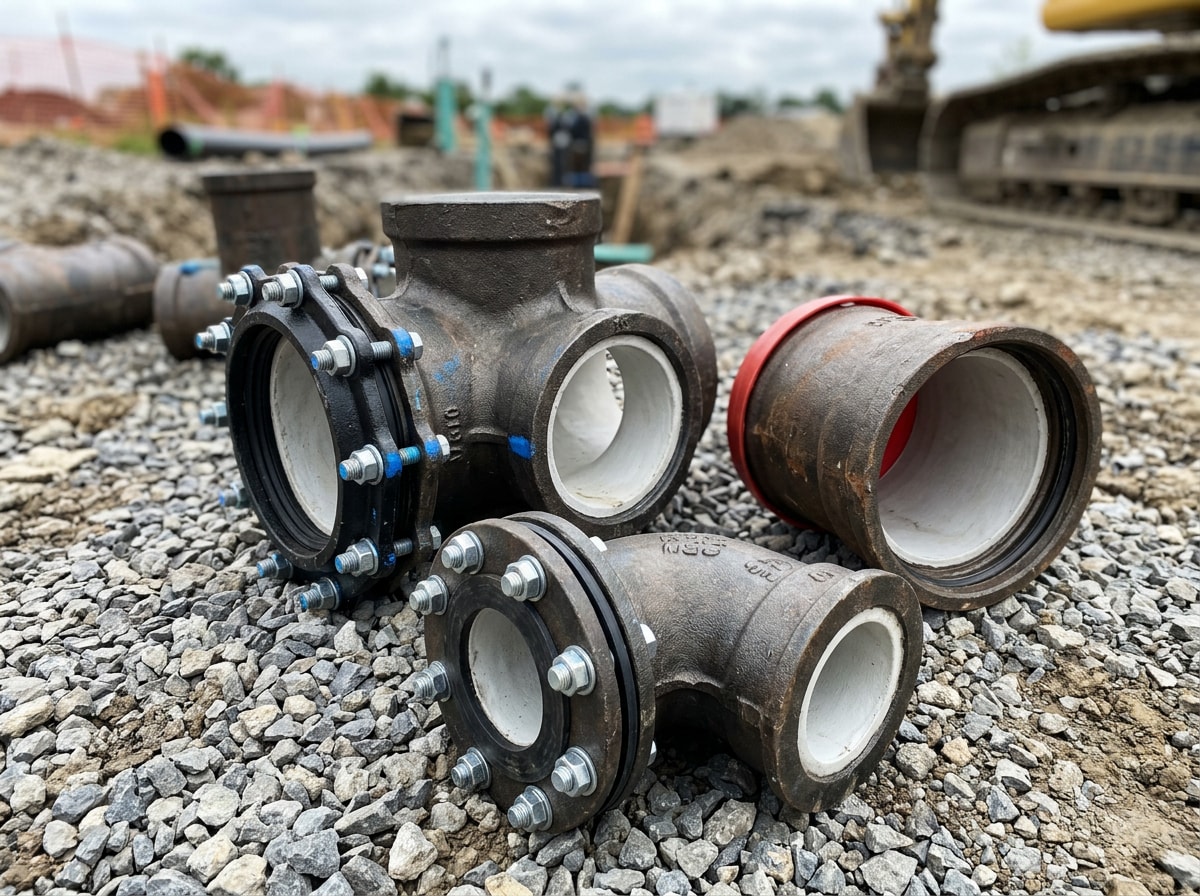
Flanged connections seal reliably under pressure and come apart again for service, which matters at pump stations, vaults and meter pits. The common types:
- Weld neck flange. Tapered hub, best for high pressure and cyclic loading.
- Slip-on flange. Slides over the pipe end, cheaper and easier to align, lower pressure ceiling.
- Socket weld flange. Small diameter, high integrity service.
- Threaded flange. No welding required, suited to lower pressure lines.
Buried waterworks relies on other joining methods too:
- Mechanical joint (MJ) with glands and tee-head bolts
- Push-on joint for fast pipeline assembly
- Restrained joint where thrust is a concern
- Grooved and butt-weld ends in plant settings
The end connection is not a detail. It changes the part number and it changes the accessory list. Gaskets, bolt sets, glands and restraint kits all follow from it, and forgetting them is the classic reason a crew stands around a trench.
Materials, Linings and Coatings
Material choice should follow site conditions, not habit.
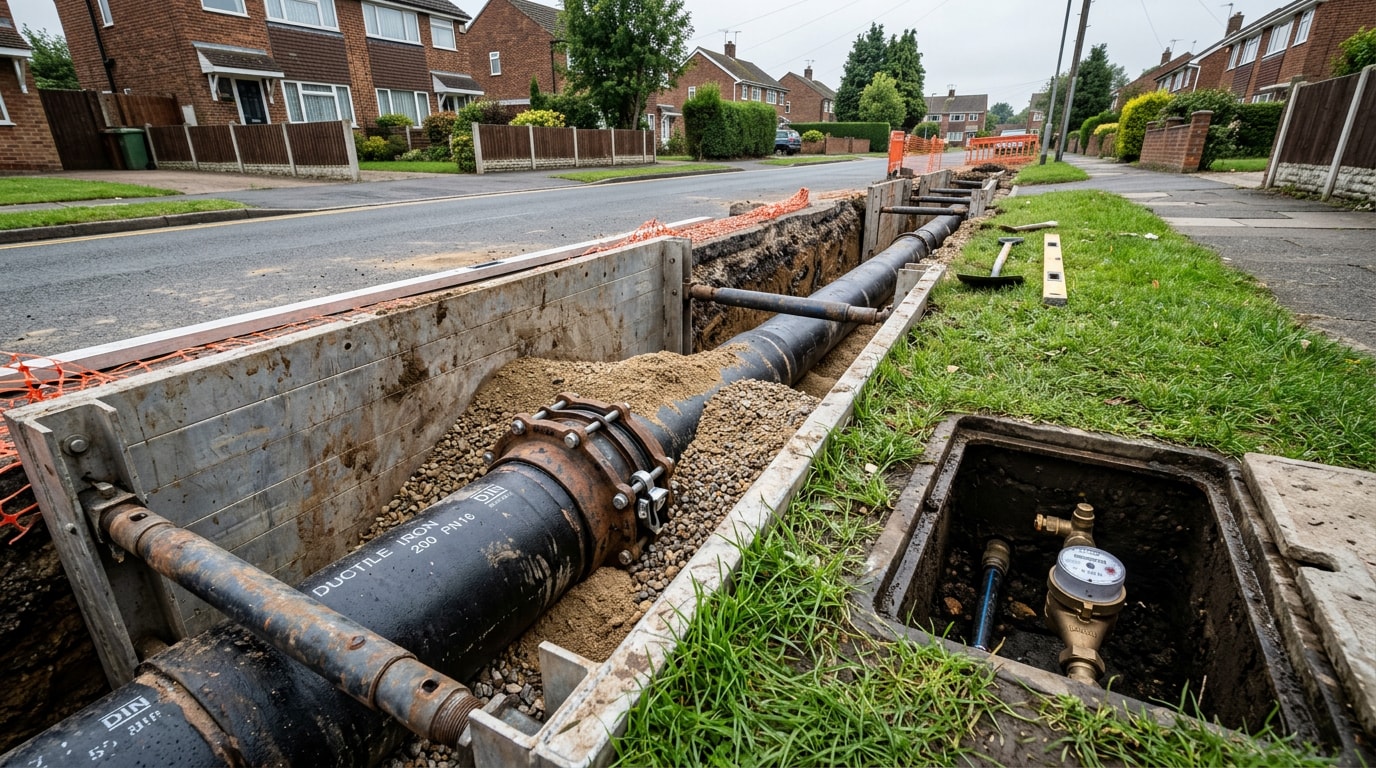
- Ductile iron dominates buried mains.
- Carbon steel suits large transmission and plant piping.
- Stainless, brass and bronze show up at valves and trim.
- PVC pressure pipe and HDPE serve distribution and service lines where corrosion risk is high.
Aggressive soils, stray current and unusual water chemistry push you toward different linings and coatings: cement-mortar lining, polyethylene encasement, fusion-bonded epoxy. The authority having jurisdiction usually has the final say.
For anything touching potable water, certification matters. Materials generally need to meet NSF/ANSI/CAN 61, which sets health-effects criteria for products in contact with drinking water and relies on independent testing rather than a self-declared claim.
C110 vs C153 Ductile Iron Fittings
Two ANSI/AWWA standards cover most buried fitting work, and they are not freely interchangeable. C110 covers full-body fittings; C153 covers compact fittings in sizes from 3 in. through 64 in. for potable water, wastewater and reclaimed water.
| AWWA C110 | AWWA C153 | |
|---|---|---|
| Body style | Full body, heavier wall | Compact, reduced body |
| Handling | Heavier, more freight weight per pallet | Lighter, easier to place by hand |
| Space and fit | Needs more trench clearance | Fits tight vaults and congested crossings |
| Typically specified | Legacy systems, higher pressure class, owner standards | New distribution work, cost and space driven jobs |
| On the purchase order | State standard, size, pressure class, end type, lining and coating | Same, plus written approval for any substitution |
Swapping C153 compact fittings in where C110 was specified looks like easy savings, and on straight runs an engineer will often allow it. It gets rejected at restrained crossings and anywhere the owner's standard names full-body fittings specifically. Get the approval in writing before the order ships, because a rejected fitting on site is a second mobilization, not a credit.
Plumbing Services on Your Side of the Meter
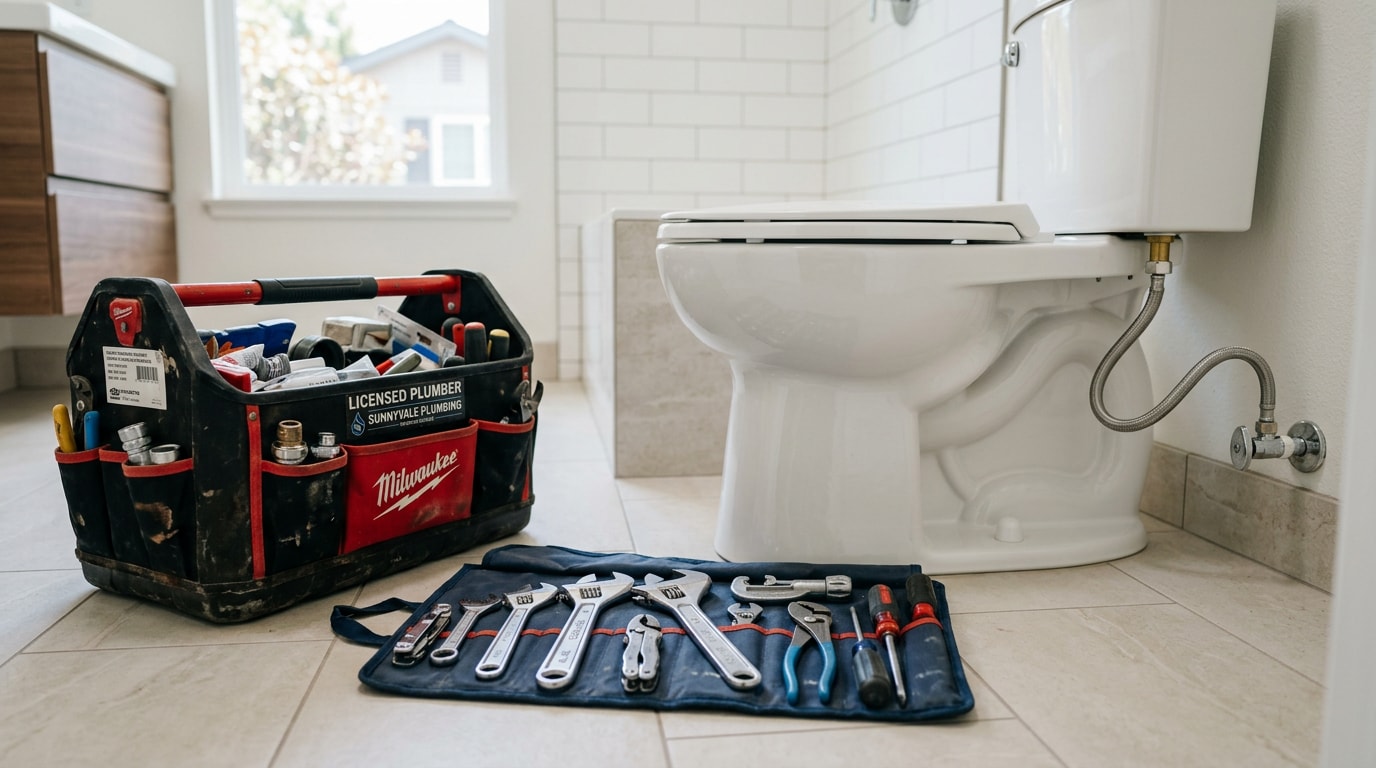
Inside the property line, work breaks into a familiar set of categories:
- Plumbing repair for leaking supply lines, failed valves and running toilets
- Drain cleaning and blockage clearing
- Water heater installation and repair
- Sewer line repair, including camera inspection and trenchless methods
- Fixture installation for sinks, showers, toilets and appliances
- Backflow preventer installation where cross-connection control is required
- Emergency work for burst pipes, backups and sudden loss of water
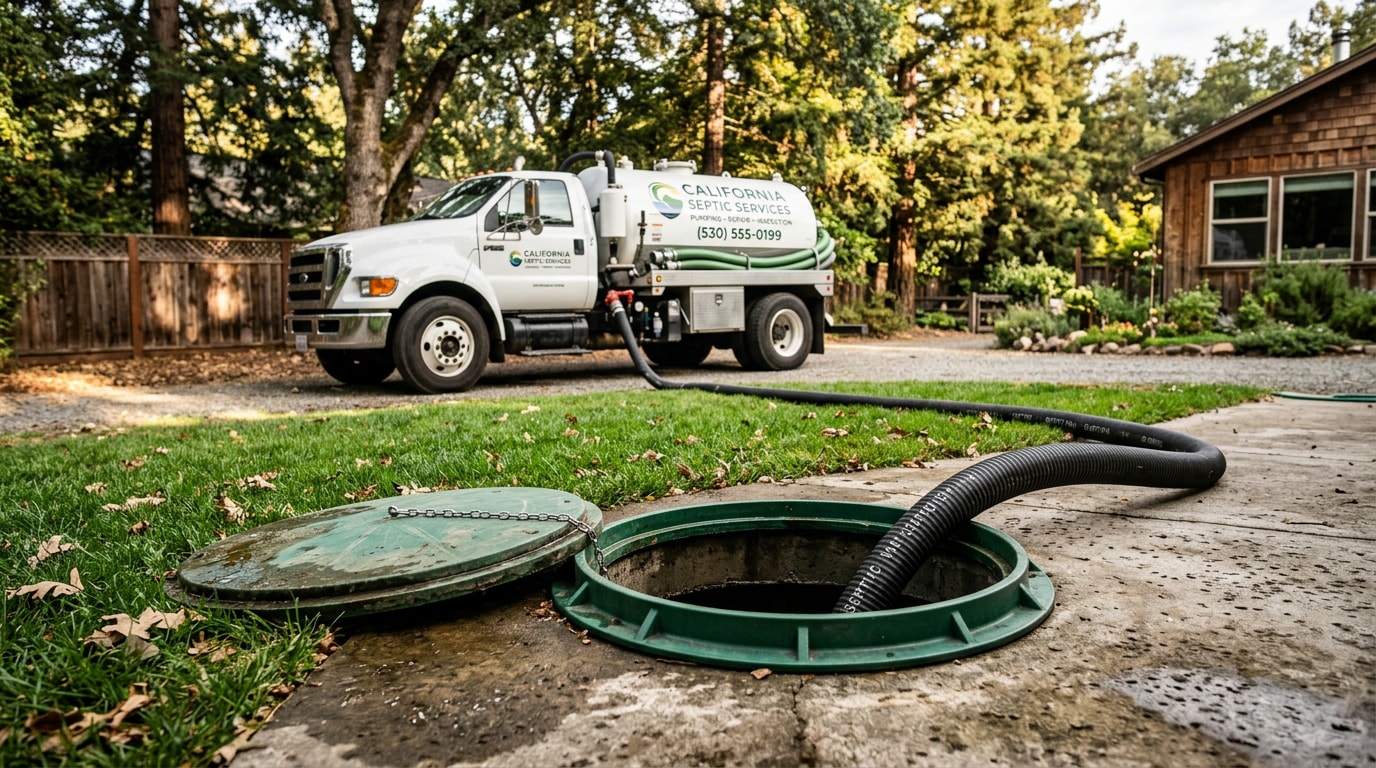
A few of these sit right on the boundary with the utility side. Service line repairs, meter-adjacent leaks, main shutoff valve replacement and backflow prevention all involve the waterworks connection, and responsibility varies by municipality. Fixture work, drain cleaning and water heaters are purely in-building.
Licensing and scope rules differ by city, so check what applies where you live. We work across San Jose and surrounding areas, and you can see the rest of what we do on the Gomez Sewer and Drain homepage.
FAQ
What is the difference between plumbing and waterworks?
Waterworks is the city-scale water supply system: reservoirs, treatment plants, pumps, storage and mains. Plumbing is what sits inside a building and on the private lot: pipes, valves, water heaters, fixtures and drains. Waterworks delivers water to the property line, plumbing distributes it once it arrives.
What does "waterworks" mean on a fitting or parts list?
It means the part is made for buried municipal water and sewer work rather than in-building plumbing. Waterworks parts are specified to AWWA standards, come in mechanical joint, push-on, restrained and flanged ends, and are usually sized in nominal pipe sizes of 3 in. and up.
Who is responsible for the water service line to my house?
In most cities the utility owns the main, the tap and the line up to the meter or curb stop, and the property owner owns the line from there to the house. Some utilities draw the line at the property boundary instead. Call your water department and ask where their responsibility ends before you authorize a repair.
What are the different types of plumbing services?
General repairs, drain cleaning, water heater work, sewer line repair and replacement, fixture installation, gas fitting where licensed, and emergency service for bursts, leaks and backups. Most companies group these into scheduled maintenance, repairs, installations and after-hours call-outs.
What is the difference between residential and commercial plumbing?
Residential plumbing covers kitchens, bathrooms and household appliances on a single supply. Commercial plumbing deals with larger supply systems, multiple restroom groups, grease interceptors, backflow assemblies and heavier fixtures, usually with stricter code review and scheduled testing.
Do you offer plumbing services for businesses?
Yes. Commercial work typically includes fixture installation, water heater maintenance and replacement, drain and sewer line repair, and after-hours emergency support. Scope depends on licensing and the size of the building's systems.
What is a backflow preventer and do I need one?
It is an assembly that stops water from flowing backward out of your plumbing into the public supply. Utilities commonly require one on irrigation systems, fire lines, commercial buildings and any property with a cross-connection risk, and many require annual testing by a certified tester.
How do I know if a buried leak is mine or the city's?
Shut off every fixture and watch the meter. If the meter is still registering flow, the leak is on your side. If water is surfacing between the curb and the meter box, or neighbors lost pressure at the same time, report it to the utility first.
Why does my water pressure drop at certain times of day?
Peak demand in the distribution zone can pull system pressure down in the morning and early evening. If the drop is only at your property, suspect a failing pressure reducing valve, a partly closed shutoff, or corrosion-restricted galvanized pipe, all of which are on your side of the meter.
---
Reviewed by the licensed field team at Gomez Sewer and Drain, who diagnose service line, meter and sewer lateral issues across Santa Clara and San Mateo County every week. Questions about your own line? Contact us and we will walk you through the meter check before scheduling anything.