The home plumbing guide mrshometips readers keep bookmarked comes down to one habit: about 20 minutes a month spent looking at six specific spots. Catch a supply line while it is weeping and you replace a $12 part. Miss it for six weeks and you are replacing a cabinet base, the flooring under it, and the drywall behind both.
Your 20-Minute Monthly Plumbing Check
Walk the house in the same order every time and it becomes muscle memory: under every sink, then the water heater, then laundry, then toilets, then the meter.
Most guides still quote the old EPA figure of 10,000 gallons lost per home per year. The current number from EPA WaterSense is tighter and worth knowing: the average household's leaks can account for more than 9,300 gallons of water wasted every year and nine percent of homes have leaks that waste 50 gallons or more per day . Those leaks usually need only a few tools and cheap hardware to fix, and correcting them can cut about 10 percent off a water bill . You can see the full at-home checklist on the EPA's Fix a Leak Week page.
| Checkpoint | How often | What normal looks like | Warning sign | DIY or pro |
|---|---|---|---|---|
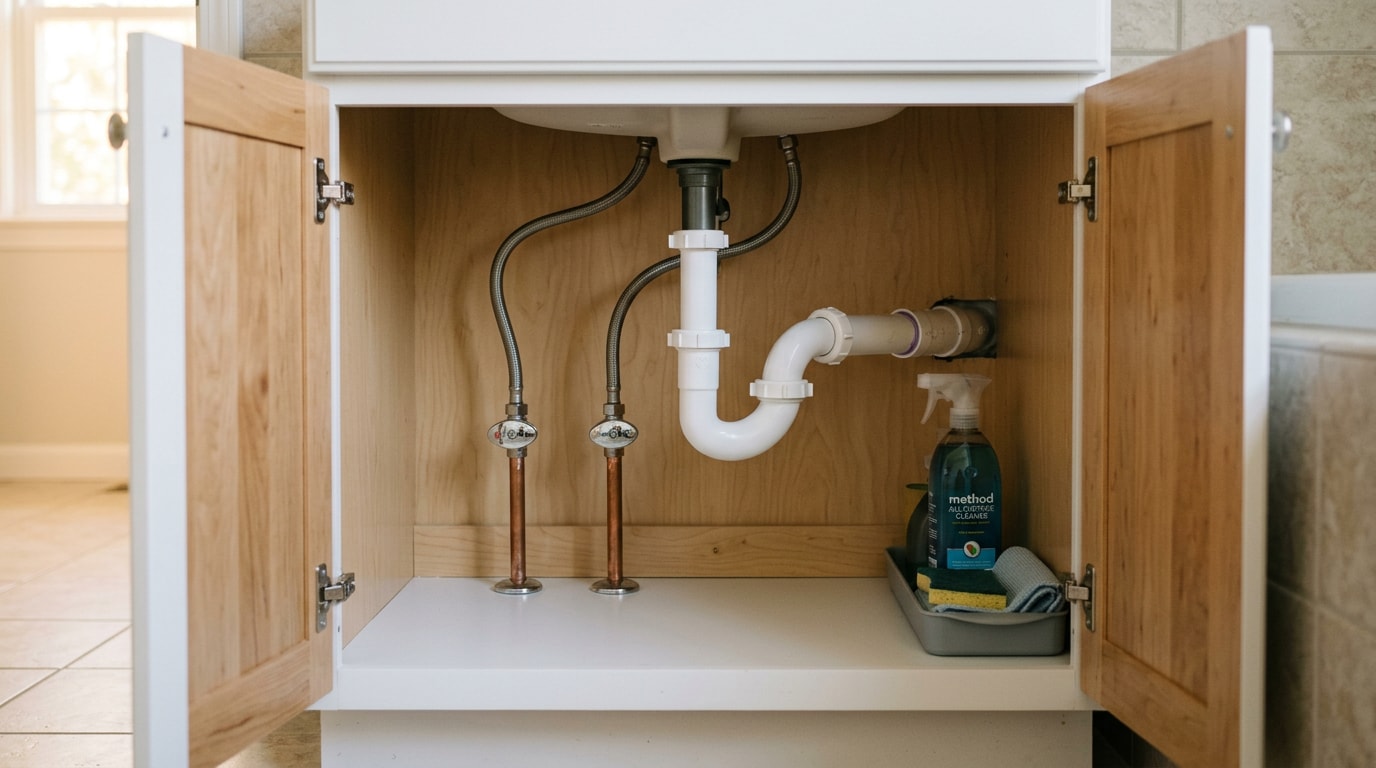
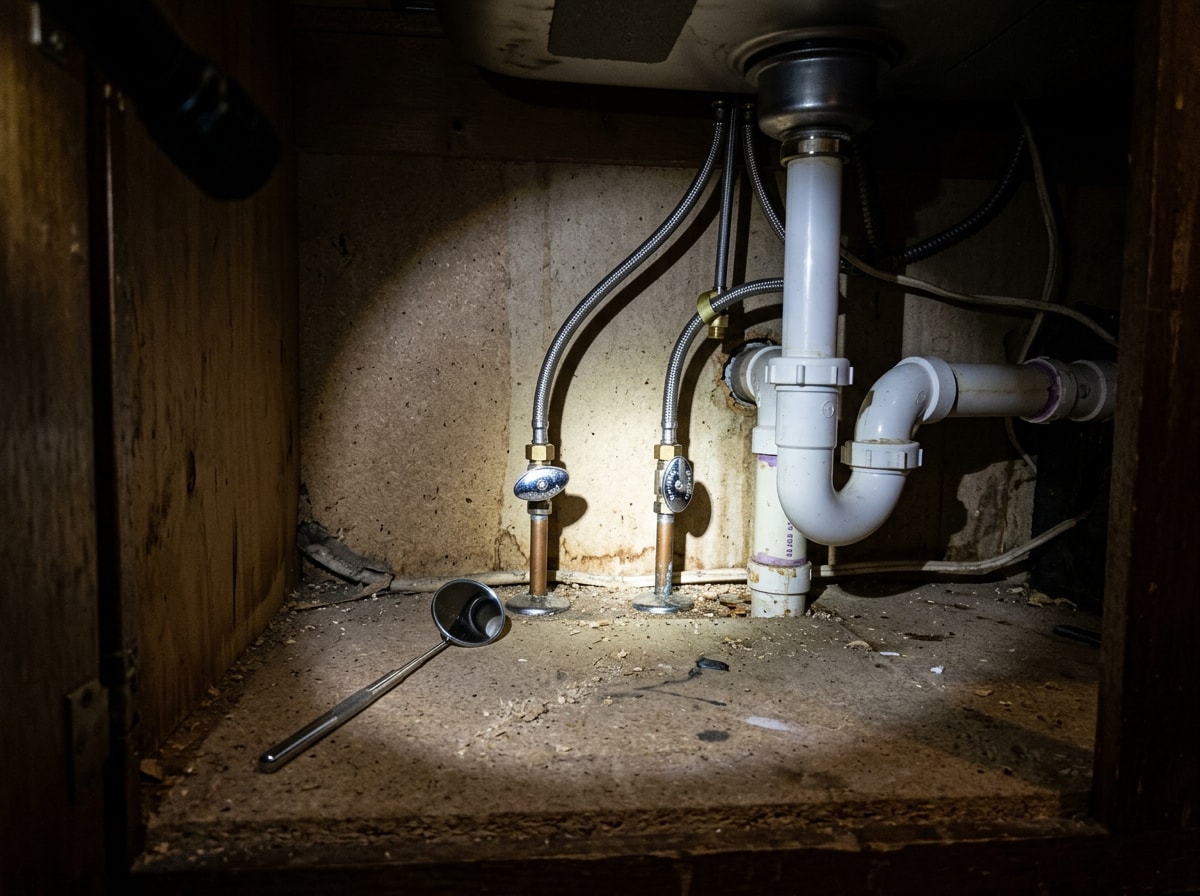
| Under-sink supply lines and traps | Monthly | Dry cabinet floor, no staining | Damp wood, white crusting, soft particleboard | DIY: tighten or replace the line |
| Water heater T&P valve and base | Monthly | Dry discharge pipe, dry pan | Any drip or steady seep | Pro if it keeps discharging |
| Washing machine hoses | Monthly | Firm, flexible, dry couplings | Bulges, cracks, moisture at the connection | DIY: swap to braided stainless |
| Toilet base and tank | Monthly | No rocking, no pooling | Water at the base, phantom refills | DIY flapper, pro for a wax ring |
| Main shut-off valve | Quarterly | Turns without force | Seized, weeping at the stem | Pro |
| Water meter (silent-leak test) | Monthly | Dial still with all water off | Dial creeping | Investigate, then pro |
Run the meter test last. Turn off every fixture, note the reading, wait 20 minutes, read again. Movement means water is going somewhere you cannot see.
On service calls around San Jose and the surrounding areas, the failures our techs find first are almost never dramatic. They are chalky, stiffening supply lines under a guest bathroom vanity that nobody has opened in two years.
If the walkthrough turns up something you cannot trace, a professional plumbing inspection will find it faster than guessing.
The Plumbing Toolkit You Actually Need
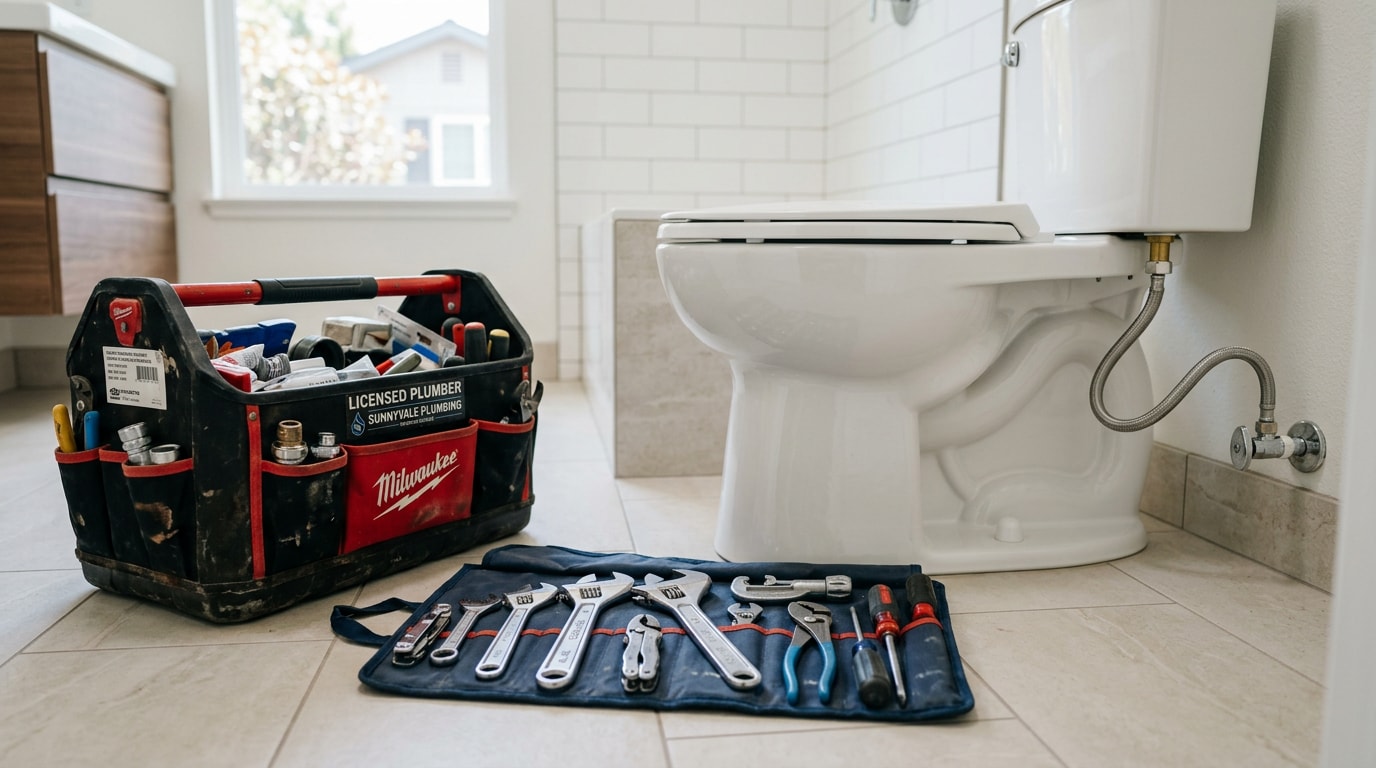
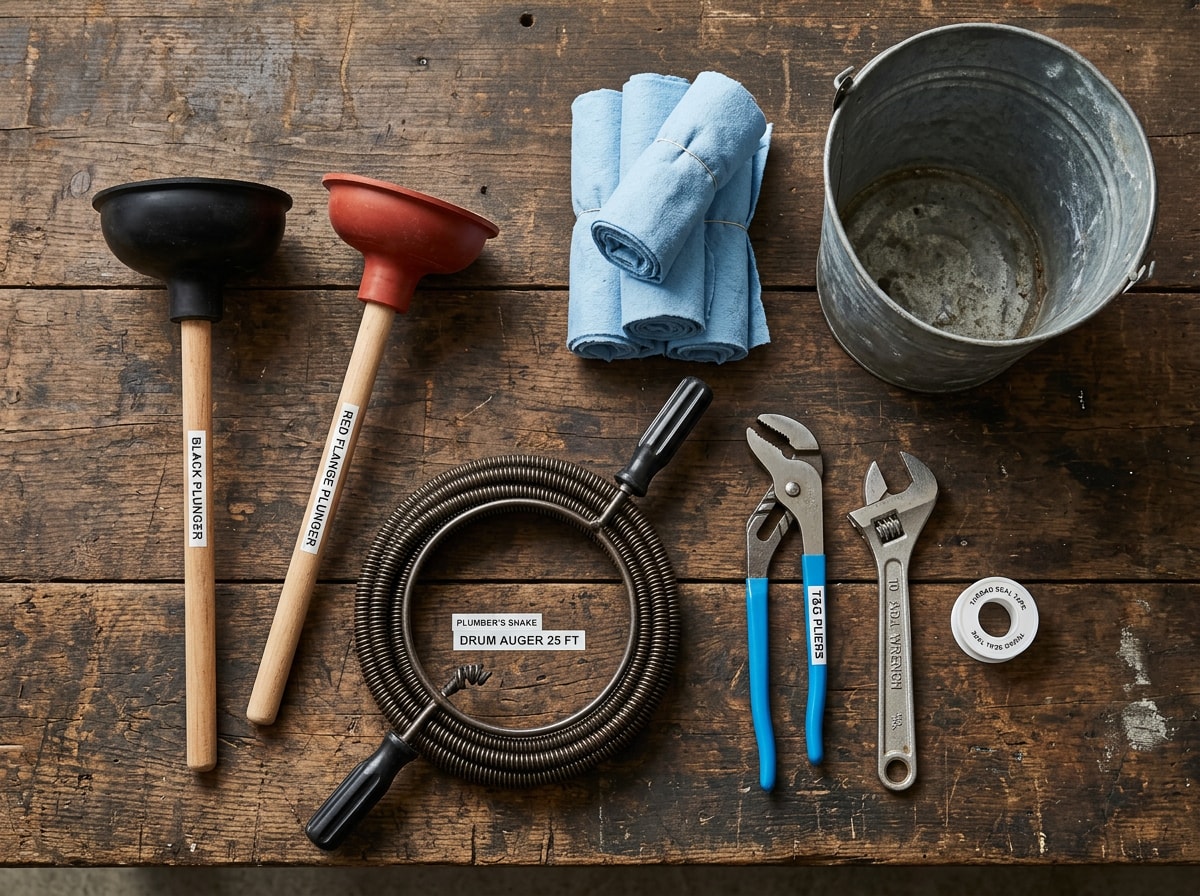
You do not need a professional's van. Six to eight tools cover nearly every minor household issue and every task in this guide. Keep them together in a bucket so you stop improvising with a butter knife at 9 p.m.
- Cup plunger. The flat-bottomed one, for sinks, tubs, and showers.
- Flange plunger. The soft rubber sleeve folds down and seals a toilet's drain opening. Two plungers, not one. They are not interchangeable.
- Tongue-and-groove pliers. For gripping pipe and loosening stubborn nuts under a sink.
- Hand auger. A 25-foot drum auger clears what a plunger will not.
- Adjustable wrench. Supply nuts and compression fittings.
- PTFE thread seal tape. Cents per roll, seals threaded joints.
- Bucket, rags, and a real flashlight. The three things you always wish you had grabbed first.
Skip bargain-bin plungers. Thin rubber loses its seal, and a plunger that cannot hold suction cannot move a clog.
Fix the Big Three: Clogs, Drips, and Running Toilets
Three problems account for most homeowner call-outs. All three are within reach of the kit above, and all three have a clear stopping point.
Clogged Drains
Work up the ladder, not down it.
- Pour a kettle of boiling water in slowly, in stages.
- Follow with half a cup of baking soda, then half a cup of vinegar. Wait 10 minutes, flush with hot water.
- Plunge. Seal the overflow hole with a wet rag first, or you are just pushing air in a circle. Keep the cup fully submerged. Twenty firm strokes, then check.
- Auger. Feed the cable down until you hit resistance, crank clockwise to bite, then pull back slowly.
Leave the chemical drain cleaner on the shelf. Many products rely on lye, and the NIH poison information library notes that sodium hydroxide is found in household drain cleaners and can burn skin, eyes, and the airway on contact. Caustics also tend to bore a channel through a clog instead of removing it, which is why the same drain slows again three weeks later.
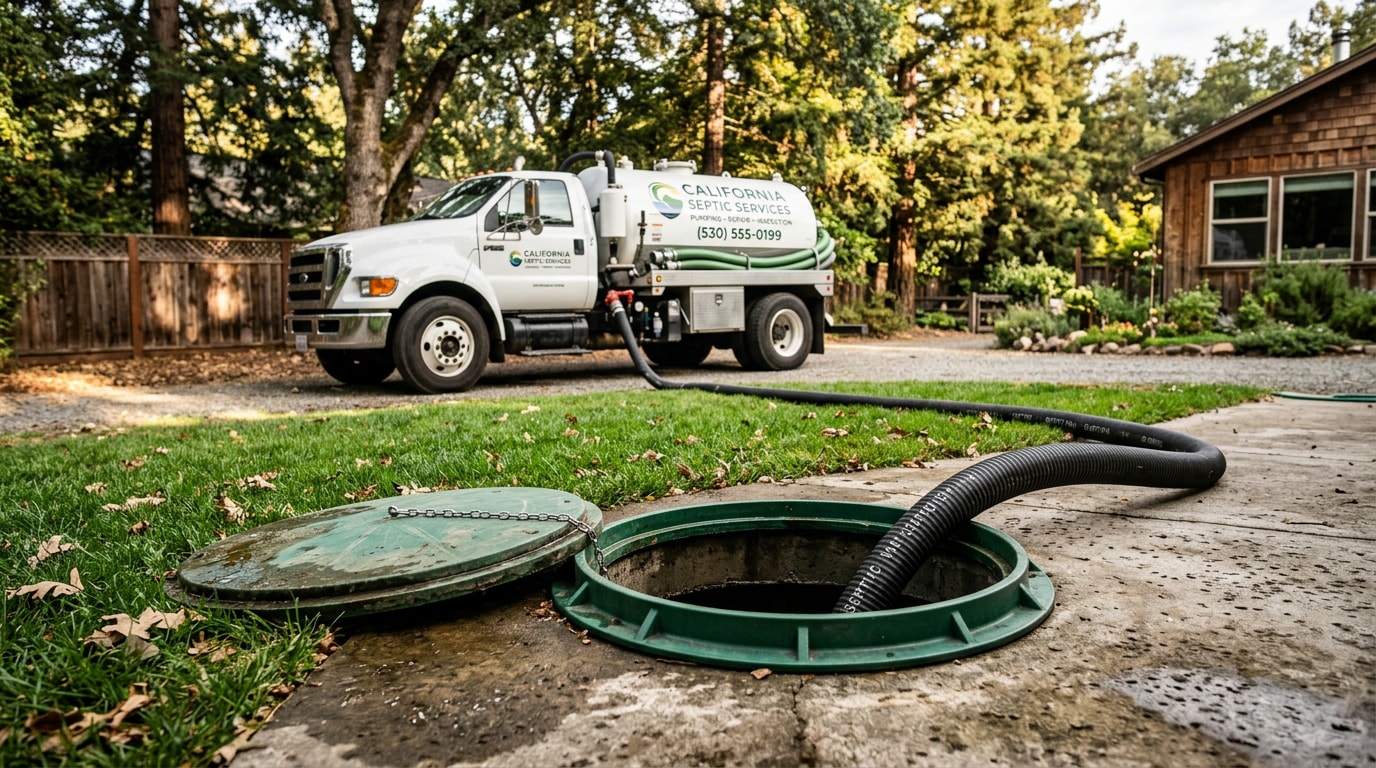
Stop and call if two or more fixtures back up at once, or if a floor drain gurgles when you flush. That is a main line problem, not a fixture problem, and it needs drain snaking or a camera run rather than another round of plunging. Knowing where your plumbing cleanout sits will save the crew time when they arrive.
Leaky Faucets
A drip that sends people to the phone is often a 90-second job with a #2 Phillips and a washer that costs less than a coffee.
- Shut off the angle stops under the sink.
- Open the tap to bleed pressure.
- Plug the drain so nothing small disappears.
- Identify the type before you shop: compression, cartridge, ball, or ceramic disc.
Compression faucets take a washer. The rest take a cartridge or seal kit matched to the brand. Getting that right saves a second trip to the hardware store. If the body itself is pitted or the finish is failing, fixture replacement beats rebuilding it twice.
Running Toilets
Diagnose in order.
- Lift the lid and watch a flush. If the flapper does not drop flat and seal, that is your culprit. Shut off the fill, flush to empty, unclip, swap, and reconnect the chain with a little slack.
- If the flapper seals and water still runs, suspect the fill valve, then the float height.
- For a silent leak, put a few drops of food coloring in the tank and wait 10 minutes without flushing. Color in the bowl means the flapper is passing water.
What a Hidden Leak Actually Costs You
The repair is almost never the expensive part. A failed supply line is cheap. Six weeks of unnoticed dripping behind a vanity is not.
Water damage compounds quietly. Mold can establish inside a wall cavity before anything shows in the room. Remediation sometimes means moving out for a few days. Insurance may cover part of it, may raise your premium, and may decline the claim entirely if the leak is ruled long-term neglect.
That is the whole argument for prevention. A leak found in month one is a part. The same leak found in month six is a contractor.
Seasonal Plumbing Maintenance Calendar
Modern piping is genuinely durable. That holds right up until the first hard freeze, which does not care how new your plumbing is.
Fall and Winter
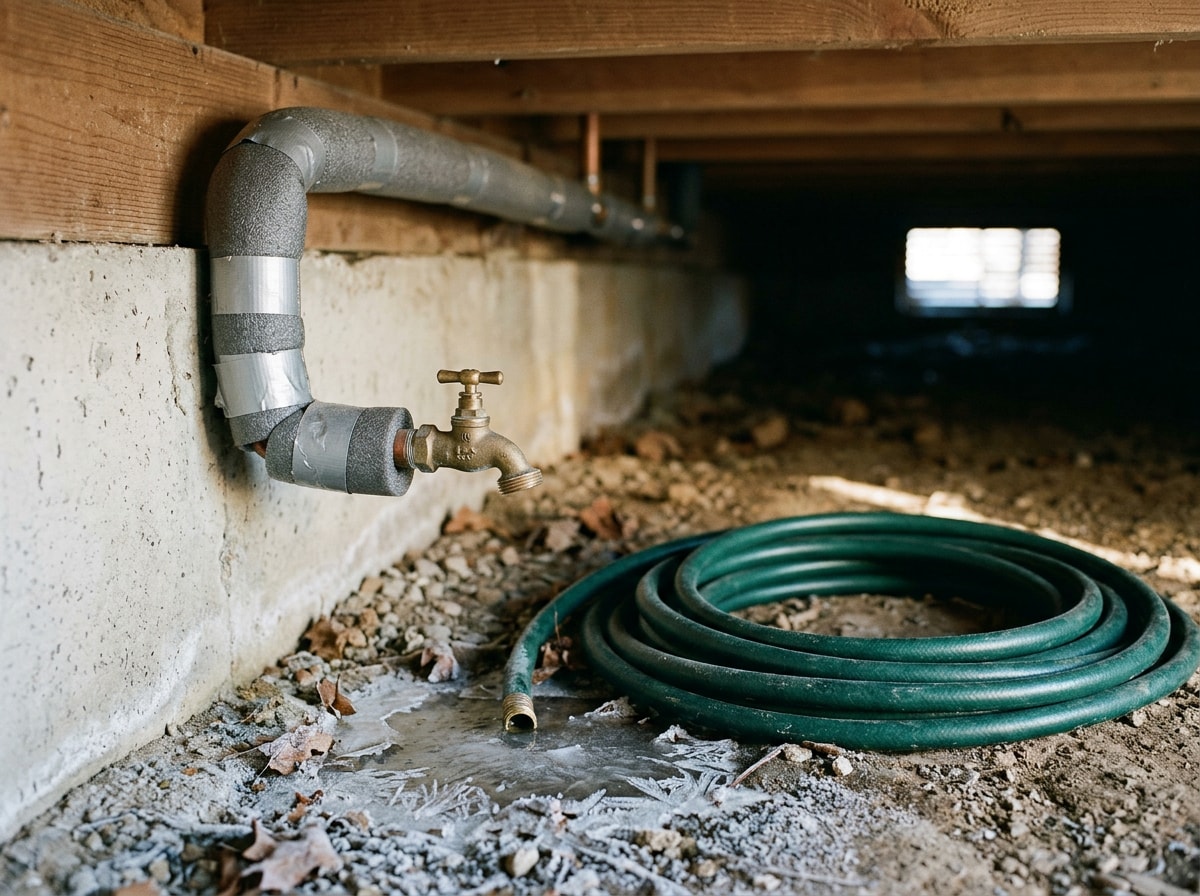
- Disconnect and drain garden hoses so trapped water cannot split the spigot.
- Shut off exterior faucets at the interior valve, then open the outside tap to bleed the line.
- Sleeve exposed pipe in crawl spaces, attics, and garages. DOE building science guidance notes that pipes in exterior walls need insulation and air sealing so cold air cannot flow around them.
Spring and Summer
- Pour a bucket of water into the sump pit and confirm the pump kicks on and discharges.
- Flush a few gallons of sediment from the water heater drain valve. Rumbling or popping from the tank usually means sediment, and it is a common reason units need water heater repair early.
- Check outdoor spigots for drips once they are back in service.
If a pipe does freeze, thaw it with a hair dryer or heat tape, working from the fixture back toward the blockage. Never use an open flame.
When to Stop and Call a Plumber
Some symptoms are not DIY territory, and recognizing them is a skill in itself.
- No water at any faucet. That points past fixture shutoffs to the main: a closed valve, a frozen service line, or a burst pipe. This is emergency plumbing territory.
- Whole-house low pressure. Usually a failing pressure regulator or corroded galvanized pipe.
- Anything involving gas. Water heater connections, flues, unions. Call a licensed plumber or your utility.
- Sewage backing up into tubs or floor drains. Treat it as a health hazard, not a clog, and get a sewer line inspection.
- Old pipework that needs heat. Sweating a joint on aged copper can stress neighboring joints, and they sometimes blow out days later.
One thing to do today, before any of it happens: find your main water shut-off valve, confirm it turns, and make sure everyone in the house knows where it is. Time yourself getting to it. If it takes more than 60 seconds, move whatever is in the way.
If you would rather have a second set of eyes on it, schedule a free inspection with our team. You can also browse the full range of plumbing services or start at our homepage.
FAQ
What are the basics of home plumbing?
Two systems. Pressurized supply lines bring water in, and gravity-fed drain, waste, and vent piping carries it out. Almost all homeowner maintenance is checking supply connections for moisture and keeping drains flowing.
Do I need special tools for basic home plumbing?
No. A cup plunger, a flange plunger, and tongue-and-groove pliers solve most household problems. Add a hand auger and an adjustable wrench and you have covered nearly every repair in this guide.
Should I use chemical drain cleaners?
Not as a default. They can damage older and plastic pipe, they often bore a hole through a blockage instead of clearing it, and lye-based formulas cause chemical burns. Use hot water, baking soda and vinegar, a plunger, then an auger.
How often should I check my plumbing?
Do the 20-minute walkthrough monthly. Book a professional inspection roughly once a year, more often for homes with galvanized or polybutylene pipe or a history of leaks.
What are the most common signs of plumbing problems?
An unexplained water bill spike, a musty odor, several drains slowing at once, discolored water, dropping pressure, and banging or hissing inside walls. Any one of them justifies a look before it becomes visible damage.
Where is my main water shut-off valve?
Usually where the supply line enters the house: a basement or crawl space wall, a utility closet, a garage, or an exterior ground box near the street. In much of California it is commonly at an outside wall or in a meter box at the curb.
How do I test for a silent toilet leak?
Put a few drops of food coloring in the tank and do not flush for 10 minutes. Color in the bowl means the flapper is leaking. A new flapper is a five-minute fix.
Can I do my own plumbing repairs?
Fixture-level work like flappers, washers, supply lines, and drain clearing is fair game for homeowners. Anything involving gas, the main line, sewer laterals, or permitted alterations should go to a licensed plumber.
This guide is maintained by the licensed plumbing team at Gomez Sewer and Drain, serving Santa Clara County and the Peninsula. Questions about something you found during your monthly check? Contact us and we will tell you straight whether it can wait.