I'll research the SERP before revising. Now confirming authoritative external sources. Verifying remaining source URLs.
Gas plumbing is the licensed side of the trade that moves fuel instead of water, and the side where a small mistake becomes a fire, an explosion, or a carbon monoxide call. Most homeowners meet it exactly once: when they add a range, swap a water heater, or smell something sour near the furnace. Here is what the work covers, what it costs in 2026, and how to tell a qualified gas fitter from someone with a pipe wrench and confidence.
Visit Gomez Sewer and Drain to see our services and request a free estimate.
Gas Plumbing in 60 Seconds
- What it is: installing, repairing, testing, and capping the fuel piping between your gas meter and every gas appliance.
- Who can legally do it: a plumber holding gas-specific licensing or an endorsement, depending on your state.
- What it almost always requires: a permit, a pressure test, and an inspection, even on a short run.
- What it usually costs: roughly $300 to $800 for a short appliance hookup, $1,500 to $5,000 and up for whole-home piping.
- What it is not: a weekend project. Fuel gas is one of the few home systems where an error has no second chance.
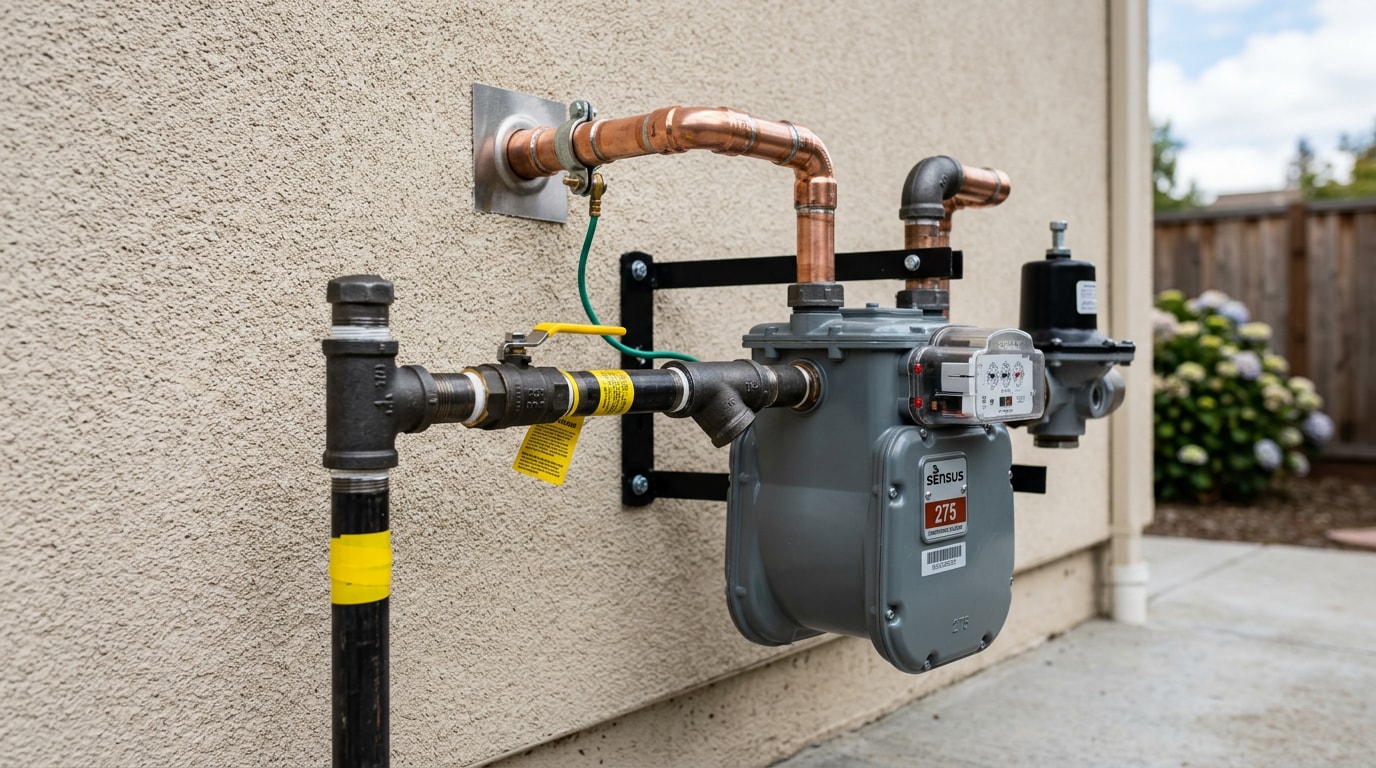
Gas lines carry fuel from the utility main to your meter, where pressure is reduced. From there, branch lines and short drops feed the water heater, furnace, range, dryer, and fireplace. The U.S. Energy Information Administration reports that about 60% of U.S. homes use natural gas for heating, water heating, cooking, or clothes drying, so this system sits quietly inside most houses.
Gas Plumbing Services Homeowners Actually Call For
Nearly every call lands in one of these buckets, and each has a trigger behind it:
- New gas line installation: adding a range, dryer, pool heater, fire pit, or standby generator.
- Gas line repair and replacement: corroded pipe, failed joints, damaged or undersized runs.
- Gas leak detection: you smell gas, or the bill jumped with no change in habits.
- Appliance hookups and fuel conversions: electric to gas, or propane to natural gas.
- Gas line relocation: kitchen remodels that move a wall or shift an appliance.
- Cap-offs: safely retiring a line you no longer use.
- Inspection and pressure testing: before a sale, after a remodel, or after any ground movement.
Licensed crews handle both natural gas and propane. Many of these jobs arrive bundled with other work, which is why gas piping often shows up inside a plumbing installation) or a water heater installation) scope rather than as a standalone ticket.
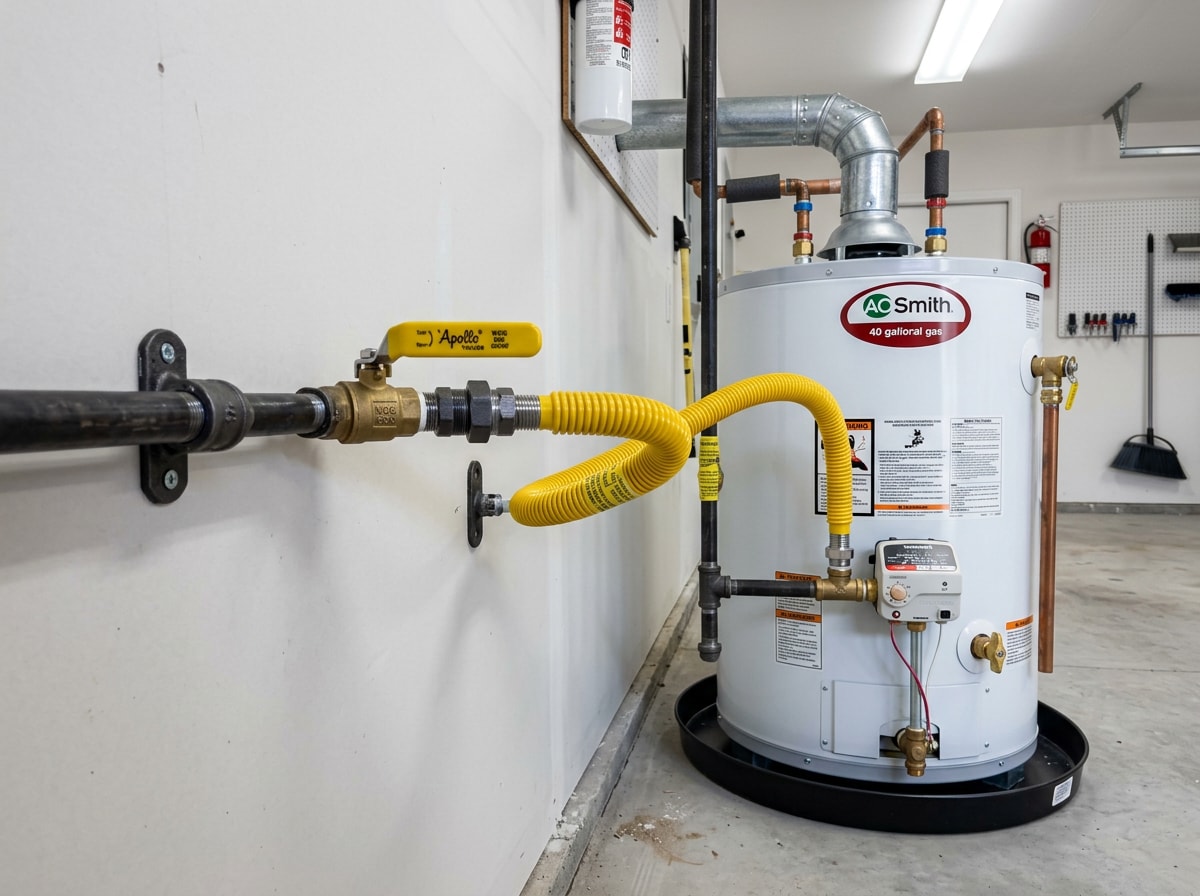
Warning Signs You Need Gas Line Repair
If you smell gas, leave first. Do not flip switches, unplug anything, or use a phone indoors. Once you are outside and well away from the building, call the gas utility emergency line and 911. A plumber comes after the utility clears the scene, never before.
Signs worth acting on:
- Rotten-egg or sulfur odor.
- Hissing or blowing sound near a line, meter, or appliance.
- Dead or discolored plants in a green area over a buried line.
- Bubbling in puddles or standing water.
- Dirt or dust blowing from a hole in the ground.
- An unexplained spike in the gas bill.
- Pilot lights or burners that will not stay lit, or yellow instead of blue flames.
- Headaches, nausea, or dizziness indoors, which can also point to carbon monoxide.
That last one deserves its own response. Suspected CO exposure means fresh air immediately, then 911. The Consumer Product Safety Commission lists the symptoms and prevention steps for CO poisoning and recommends annual service on fuel-burning heating equipment. If the situation is live and unsafe after hours, that is an emergency plumbing service) call, not a next-week appointment.
Gas Line Installation: Process, Materials, and Sizing
A correct install follows the same sequence every time:
- Pull the permit with the local building department.
- Shut off supply at the meter.
- Calculate appliance load and size the line for it.
- Route, run, join, and seal the pipe.
- Pressure test the system and hold it for the required interval.
- Pass inspection, restore gas, then fire and test each appliance individually.
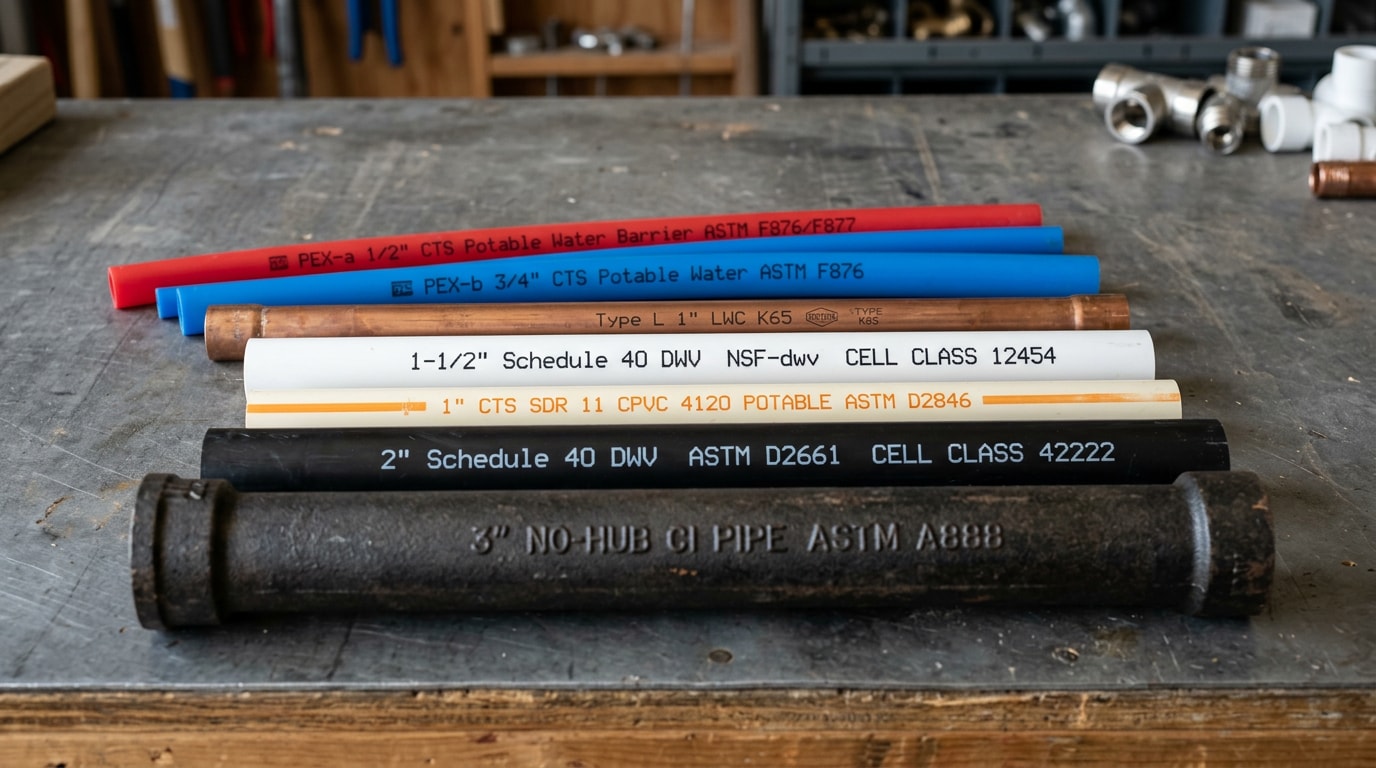
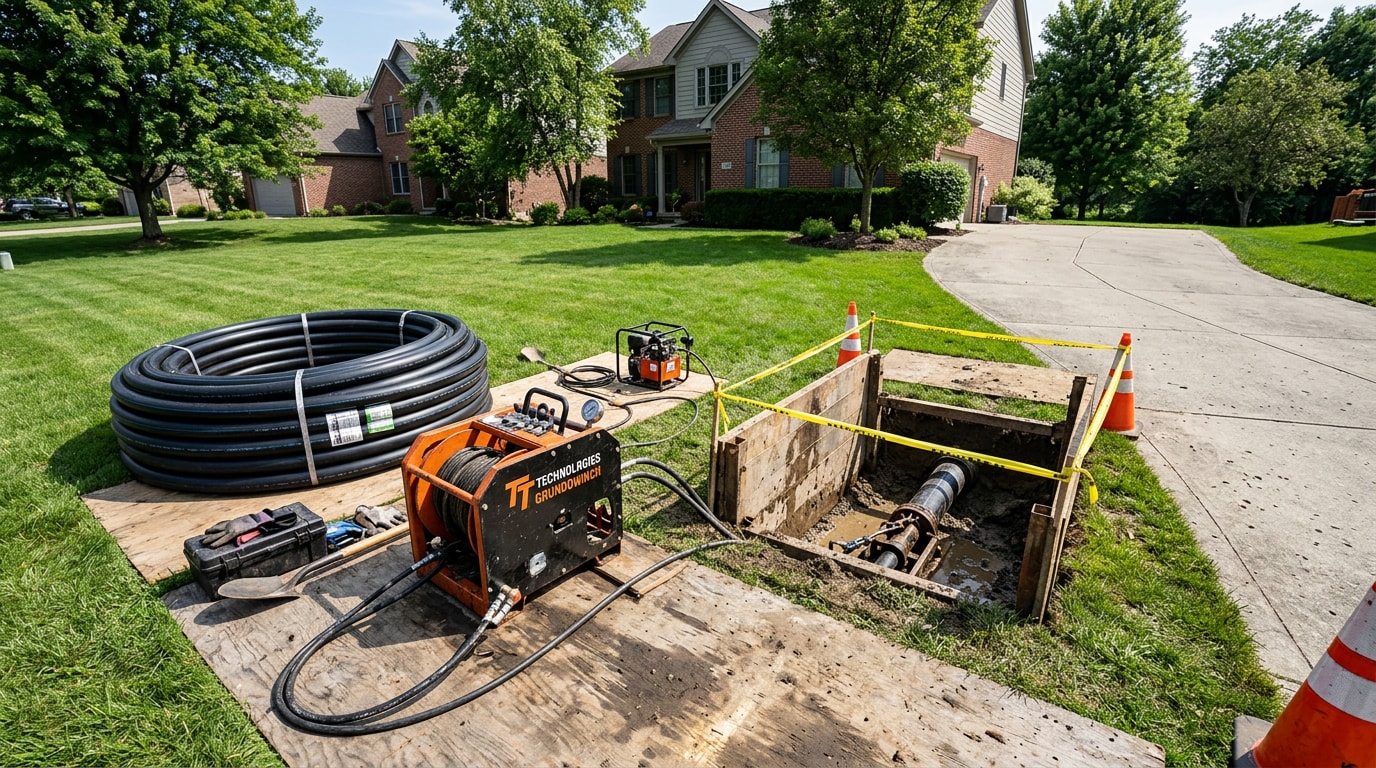
Material depends on where the pipe lives. Black iron is the indoor workhorse. CSST, or corrugated stainless steel tubing, threads through finished walls on retrofits and has specific bonding requirements. Polyethylene is the standard for buried runs. Galvanized steel still appears in older homes and is allowed in some jurisdictions but restricted in others.
Sizing Is Where Most Jobs Go Wrong
Material gets all the attention. Sizing causes the callbacks.
Every appliance draws a certain input in BTU per hour, and the line has to deliver that much fuel at the far end of the longest run. Undersize it and burners run weak, the furnace short-cycles, and the water heater never recovers properly.
| Appliance | Typical input rating (BTU/hr) |
|---|---|
| Clothes dryer | 20,000 to 35,000 |
| Tank water heater, 40 to 50 gal | 32,000 to 50,000 |
| Range or cooktop | 50,000 to 70,000 |
| Outdoor grill | 50,000 to 80,000 |
| Fire pit | 50,000 to 100,000 |
| Forced-air furnace | 60,000 to 120,000 |
| Tankless water heater | 150,000 to 199,000 |
| Standby generator, 20 to 22 kW | 200,000 to 300,000 |
Check the nameplate on your specific unit, since ratings vary by model.
Two items on that list cause most of the surprise change orders: tankless water heaters and standby generators. A single tankless unit can demand more fuel than a furnace and a range combined, which frequently forces a larger branch line, and occasionally a meter upgrade from the utility. On our tankless water heater installation) jobs around Santa Clara County, the gas line and meter capacity check happens before the unit is ordered, because finding out afterward costs the homeowner a second mobilization.
Buried work has one more rule. Call 811 at least two business days before any digging so utilities get located and marked. PHMSA explains the call-before-you-dig process, and it is free and required by law in all 50 states.
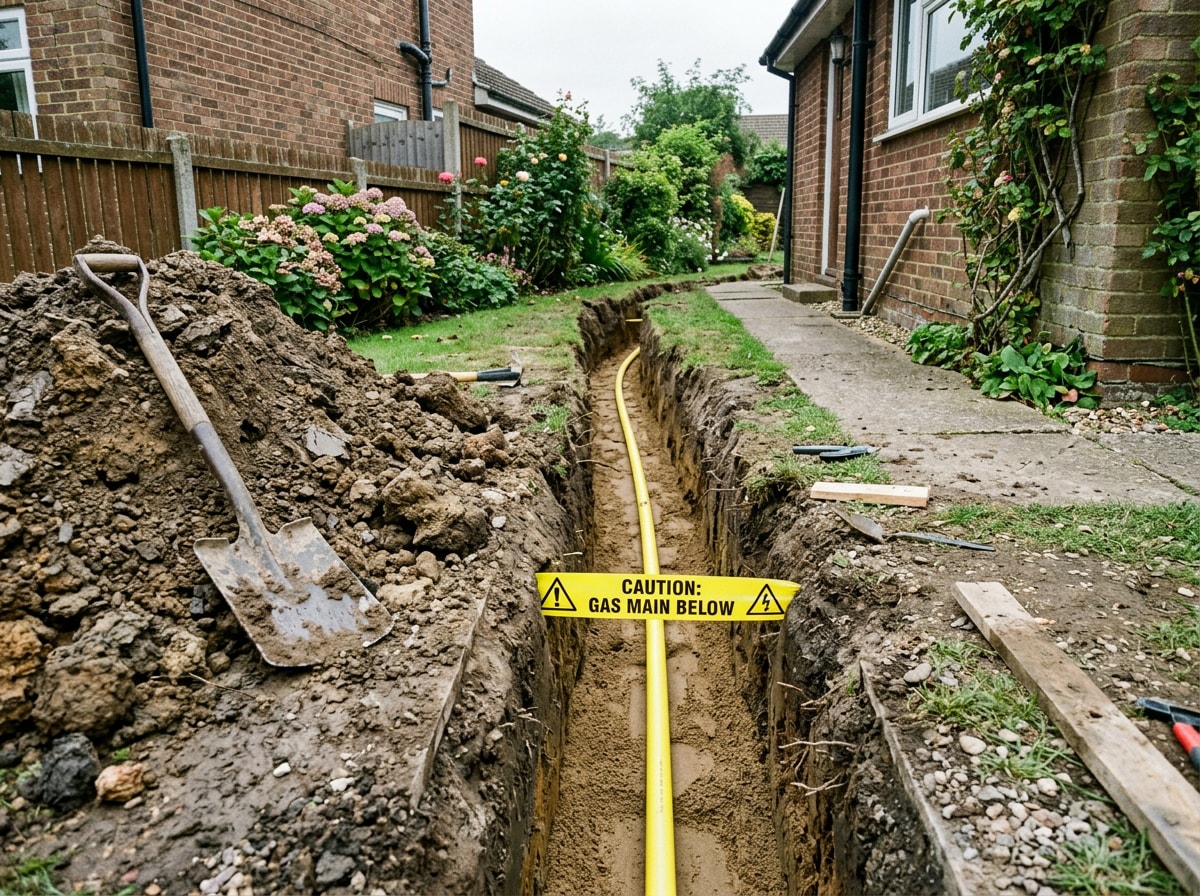
Gas Plumbing Costs in 2026
These are national planning ranges compiled from 2026 cost-estimating data. Treat them as a sanity check, not a quote. Labor in the Bay Area runs above national averages, so expect the upper end of each range locally.
| Job type | Typical range |
|---|---|
| Appliance hookup, short run off an existing line | $300 to $800 |
| Standard branch run, 20 to 50 linear ft | $500 to $1,500 |
| Longer run, 50 to 100 linear ft | $1,000 to $2,500 |
| Whole-home piping, meter to multiple appliances | $1,500 to $5,000+ |
| Leak detection and pressure testing | $75 to $400 |
| Underground spot repair | $600 to $2,000 |
| Underground line replacement | $1,500 to $5,000+ |
| Cap-off of an unused line | $75 to $250 |
| Permit and inspection | $50 to $500 |
| Pipe material | Installed cost per linear foot |
|---|---|
| Polyethylene, buried | $8 to $20 |
| Black iron | $15 to $30 |
| CSST, flexible stainless | $18 to $30 |
| Galvanized steel | $15 to $35 |
Four things move the final number: total run length, combined appliance load and the pipe size it demands, accessibility through crawl space, slab, or trench, and local permit and inspection requirements. Budget separately for access work. Opening and patching drywall or cutting and restoring concrete often adds $500 to $2,500 on its own.
If a larger repipe is on the table and the timing is bad, spreading the cost is sometimes smarter than deferring the work.
Why the License Matters More Here Than Anywhere Else
Badly joined fuel pipe fails quietly. There is no drip on the ceiling to warn you.
Beyond the obvious fire and CO risk, unpermitted gas work creates two slow-burning problems. An insurer can use it as grounds to contest a claim. And it reliably surfaces during a resale inspection, usually as a repair credit you fund at the worst possible moment.
Vetting takes five minutes:
- Ask to see the gas-specific license or endorsement, not just a general contractor number.
- Confirm liability insurance and workers' compensation.
- Confirm the contractor pulls the permit in their name, not yours.
- Ask whether the pressure test and inspection are included in the quoted price.
- Get the scope in writing, including pipe material and size.
Anyone who offers to skip the permit to save you money is telling you how they handle everything else. If you want a deeper framework for comparing bids, our guide to how a plumbing system works) covers how the gas, supply, and drain systems interact in a typical home.
Gas Plumbing in San Jose and the Peninsula
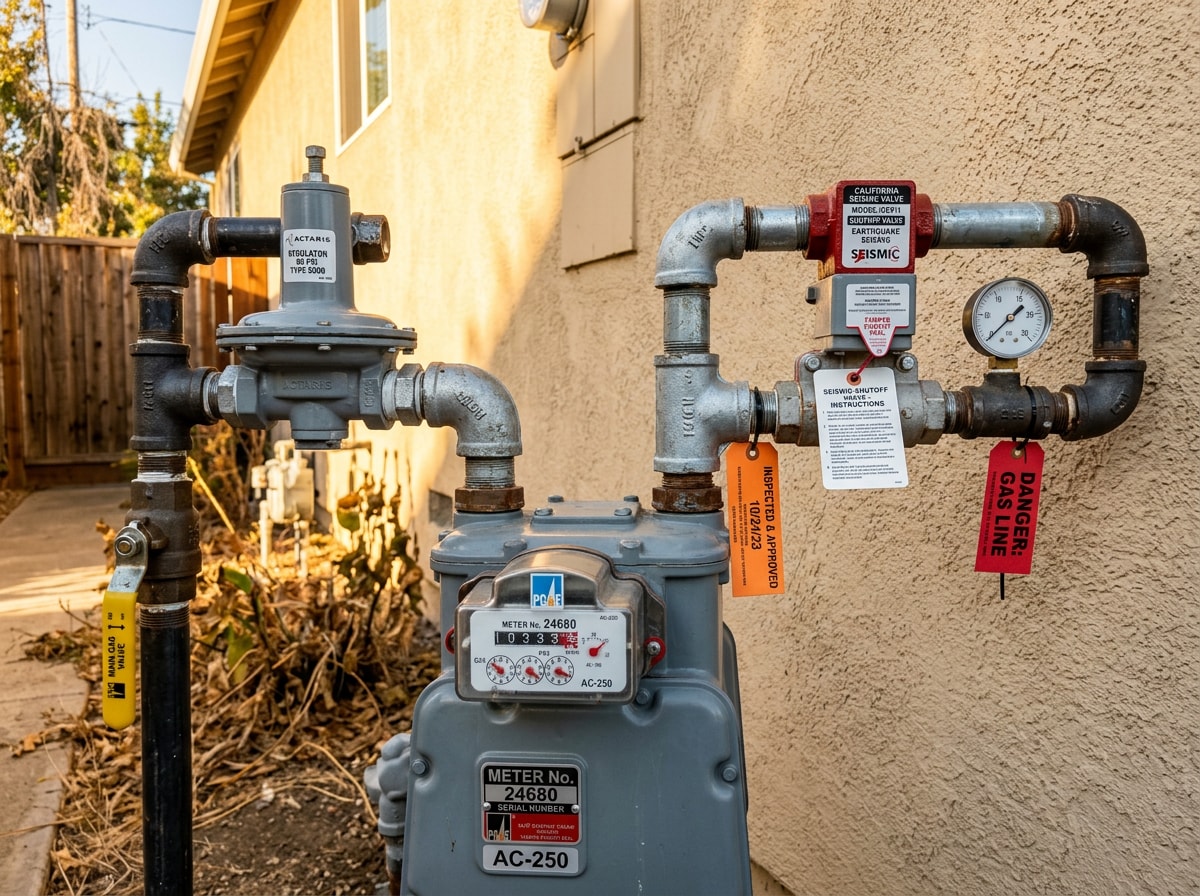
Local conditions change the job. Bay Area soil moves, which stresses buried pipe over time, and several local jurisdictions have adopted seismic gas shutoff valve requirements tied to certain permits or property transfers. Confirm the current rule with your city before you plan the work, since requirements differ block to block across county lines.
Housing stock matters too. Postwar homes in Santa Clara) and Campbell) often still carry original galvanized runs sized for a furnace and a water heater, nothing more. Add a tankless unit and a 36-inch range to that system and the sizing math stops working immediately.
Gomez Sewer and Drain handles gas piping, repair, and testing across San Jose and surrounding areas), Palo Alto), Los Gatos), Sunnyvale), Menlo Park), and Redwood City). You can see the full range of plumbing services) on our site, browse recent projects), or start from the homepage).
Planning a range swap, a tankless upgrade, or a generator feed? Request a free estimate and we will size the line before anyone orders equipment.
FAQ
Do plumbers work on gas lines?
Yes, with a qualifier. Most jurisdictions classify gas piping as plumbing work, so licensed plumbers routinely install and repair it. The individual still needs gas-specific certification or a license endorsement, so confirm that credential before work starts.
Can I install a gas line myself?
In most jurisdictions, no. Fuel gas piping requires a licensed installer, a permit, and an inspection, and DIY work can void both your insurance and your appliance warranty. Even where a homeowner permit exists, the line still has to pass a pressure test and inspection.
Do I need a permit to run a gas line?
Almost always. Any installation, extension, relocation, or material change to a gas system typically requires a permit and inspection, even for a short run to a single appliance. Permit fees commonly land between $50 and $500 depending on the city.
What pipe is used for gas lines?
Black iron is standard for indoor runs, CSST is common for retrofits through finished walls, and polyethylene is used underground. The final connection to a movable appliance is made with an approved flexible appliance connector, never with rigid pipe or CSST.
How long does a gas line installation take?
A short appliance hookup off an existing line is usually a half-day to a full day. A longer branch run or whole-home piping takes two to four days, plus waiting time for the inspection before gas is restored.
What causes gas leaks?
The usual culprits are corroded or aging pipe, degraded brass or flexible appliance connectors, loose joints, and ground movement stressing buried lines. Accidental strikes during digging, landscaping, or remodeling cause a large share of residential leaks.
How often should gas lines be inspected?
An annual professional inspection is the common recommendation, and it pairs well with annual appliance service. Schedule one immediately after any warning sign, after a remodel that opened walls or moved appliances, and before closing on an older home. A full plumbing inspection) can cover the gas system at the same visit.
Who is responsible for the gas line from the meter to the house?
In most service territories the utility owns the service line up to and including the meter, and the property owner owns everything downstream of it. That means house piping, appliance drops, and shut-off valves are your responsibility. Confirm the exact demarcation with your utility, since it varies.
Does homeowners insurance cover gas line damage?
It depends on the cause. Many policies cover sudden accidental damage from a covered peril but exclude gradual corrosion, wear, and unpermitted work. Read your declarations page or ask your agent before you assume coverage.
What are the benefits of adding a gas line?
No more refilling propane cylinders, and natural gas is usually a cheaper ongoing fuel than electricity for heating and hot water. Gas equipment also keeps working through many power outages. A new line opens the door to gas ranges, outdoor grills, fire pits, and standby generators.
About This Guide
Written and reviewed by the field team at Gomez Sewer and Drain, a licensed plumbing and drain contractor serving San Jose, the South Bay, and the Peninsula. The cost ranges, sizing figures, and job sequences above reflect current 2026 pricing data and our own crews' work on residential gas piping, water heater swaps, and remodel relocations. Questions about your specific system, or want it looked at before you buy equipment? Get in touch with us here.